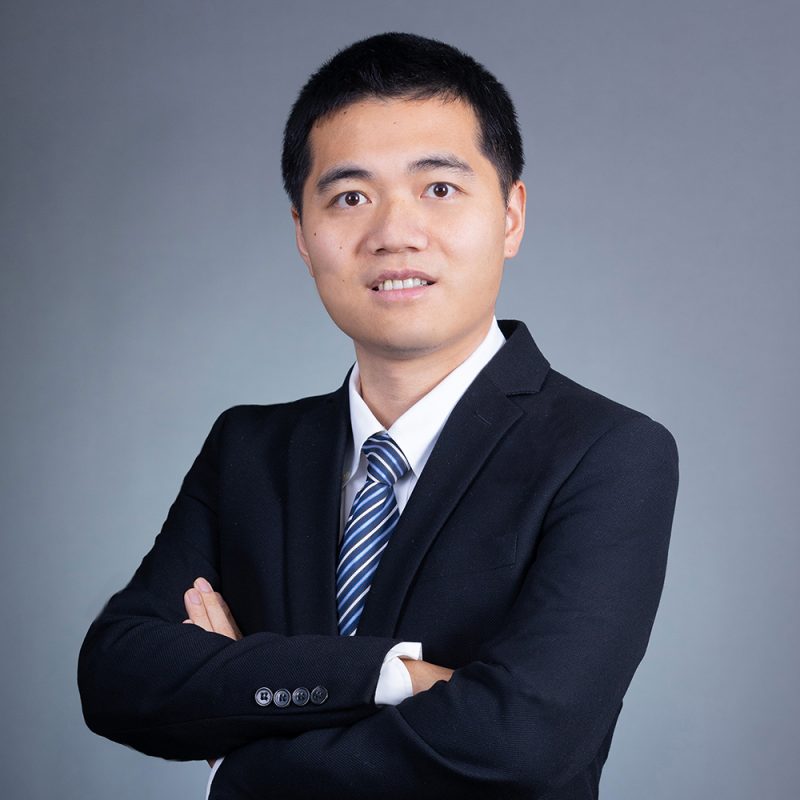



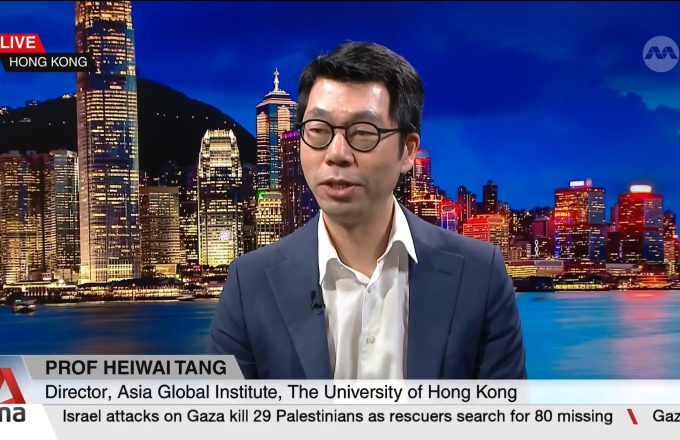
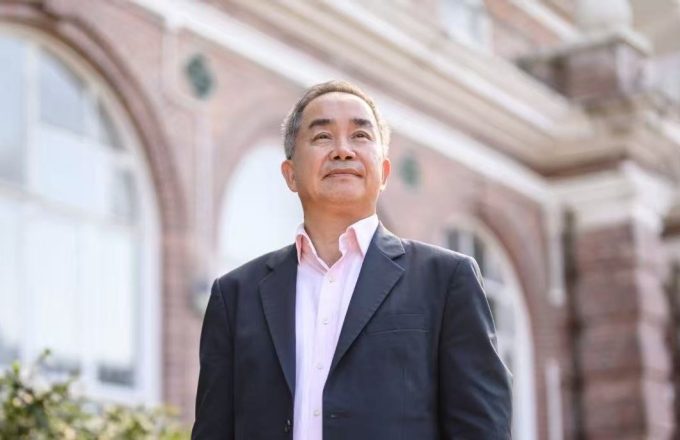
Prof. Heiwai Tang, Associate Dean of HKU Business School and Director of the Asia Global Institute, recently spoke on CNA. He shared his analysis of the evolving US-China trade war and the impacts these changes will have on businesses in Hong Kong, the Greater Bay Area, Mainland China, and beyond. Prof. Tang spoke on the impact of the latest tariffs: Greater Bay Area: The Guangdong Province, a hub for high-tech manufacturing, shows stronger resilience to trade shocks compared to other regions in China due to generally higher profit margins. Domestic Growth: China Private Consumption has been lower than 40% of its Nominal GDP. China needs to boost domestic consumption, a critical driver of economic stability to fight off the external pressures. Multilateralism: China remains committed to a multilateral, open trading system even as U.S.–China tensions rise and geopolitical strains prompt it to diversify partnerships beyond the United States. Hong Kong: The depreciation of the US dollar against non-RMB currencies could attract more tourists and bolster local consumption. Prof. Tang explained that businesses must adapt to these challenges, and therefore, we need a strategic approach to foster greater multilateral engagement.
14 Apr 2025
Faculty
US President Donald Trump’s latest tariff hikes have intensified global trade tensions, reflecting the US President’s economic pressure tactics and long-term strategic goals. Professor Zhiwu Chen, Chair Professor of Finance at HKU Business School explained that “Trump sees tariffs as both a strategic tool for domestic restructuring and a bargaining chip in international negotiations.” He further commented that Trump’s approach was not only about restoring America’s past revenue position but also about reshaping the power dynamics shaping global trade. Prof. Chen believes China should stay committed to openness and a rules-based global order. He said, “China should continue to safeguard the authority of international institutions like the UN and WTO, maintain friendly economic ties, and strengthen its domestic resilience.” Looking ahead, Prof. Chen expected global trade to shift towards regional alliances, with increasing fragmentation in global governance.
11 Apr 2025
Faculty
US President Donald Trump’s latest tariff hikes have intensified global trade tensions, reflecting the US President’s economic pressure tactics and long-term strategic goals. Professor Zhiwu Chen, Chair Professor of Finance at HKU Business School explained that “Trump sees tariffs as both a strategic tool for domestic restructuring and a bargaining chip in international negotiations.” He further commented that Trump’s approach was not only about restoring America’s past revenue position but also about reshaping the power dynamics shaping global trade. Prof. Chen believes China should stay committed to openness and a rules-based global order. He said, “China should continue to safeguard the authority of international institutions like the UN and WTO, maintain friendly economic ties, and strengthen its domestic resilience.” Looking ahead, Prof. Chen expected global trade to shift towards regional alliances, with increasing fragmentation in global governance.
11 Apr 2025
Faculty
US President Donald Trump’s latest tariff hikes have intensified global trade tensions, reflecting the US President’s economic pressure tactics and long-term strategic goals. Professor Zhiwu Chen, Chair Professor of Finance at HKU Business School explained that “Trump sees tariffs as both a strategic tool for domestic restructuring and a bargaining chip in international negotiations.” He further commented that Trump’s approach was not only about restoring America’s past revenue position but also about reshaping the power dynamics shaping global trade. Prof. Chen believes China should stay committed to openness and a rules-based global order. He said, “China should continue to safeguard the authority of international institutions like the UN and WTO, maintain friendly economic ties, and strengthen its domestic resilience.” Looking ahead, Prof. Chen expected global trade to shift towards regional alliances, with increasing fragmentation in global governance.
9 Apr 2025
Faculty
On “Liberation Day”, US President Donald Trump announced a sweeping plan to impose reciprocal tariffs—taxes that exceeded market expectations and triggered immediate shocks across financial markets. According to Yale’s Budget Lab, these tariffs could raise short-term inflation in the US by 2.3%, reduce household spending by an average of US$3,800, and lower the country’s 2025 GDP growth rate by 0.9%.
9 Apr 2025
Faculty
US President Donald Trump’s latest tariff hikes have intensified global trade tensions, reflecting the US President’s economic pressure tactics and long-term strategic goals. Professor Zhiwu Chen, Chair Professor of Finance at HKU Business School explained that “Trump sees tariffs as both a strategic tool for domestic restructuring and a bargaining chip in international negotiations.” He further commented that Trump’s approach was not only about restoring America’s past revenue position but also about reshaping the power dynamics shaping global trade. Prof. Chen believes China should stay committed to openness and a rules-based global order. He said, “China should continue to safeguard the authority of international institutions like the UN and WTO, maintain friendly economic ties, and strengthen its domestic resilience.” Looking ahead, Prof. Chen expected global trade to shift towards regional alliances, with increasing fragmentation in global governance.
8 Apr 2025
Faculty
US President Donald Trump’s latest tariff hikes have intensified global trade tensions, reflecting the US President’s economic pressure tactics and long-term strategic goals. Professor Zhiwu Chen, Chair Professor of Finance at HKU Business School explained that “Trump sees tariffs as both a strategic tool for domestic restructuring and a bargaining chip in international negotiations.” He further commented that Trump’s approach was not only about restoring America’s past revenue position but also about reshaping the power dynamics shaping global trade. Prof. Chen believes China should stay committed to openness and a rules-based global order. He said, “China should continue to safeguard the authority of international institutions like the UN and WTO, maintain friendly economic ties, and strengthen its domestic resilience.” Looking ahead, Prof. Chen expected global trade to shift towards regional alliances, with increasing fragmentation in global governance.
3 Apr 2025
Faculty
As millions worldwide are addicted to video games, governments and organizations are actively taking measures to curb this trend. Our research suggests that dynamic pricing can help solve the problem of gaming addiction.
3 Apr 2024
After President Donald Trump began his second term, he swiftly escalated the trade war by imposing a 25% import tariff on steel and aluminium products, along with ‘reciprocal tariffs.’ Dr. Jing Li, Deputy Program Director of International Business and Global Management at HKU Business School, said although Trump aimed to attract manufacturing back to the United States, history—such as the 1930 Smoot-Hawley Tariff Act—showed excessive protectionism often backfired, raising import prices, straining supply chains, and increasing uncertainty for businesses and consumers.
2 Apr 2025
Faculty