


To Fathom Novel Managerial Strategies for Life – Professor Fabrice Lumineau

To seek truth from facts is the nature of Professor Fabrice Lumineau, and to create knowledge for the betterment and progression of the business world is his aspiration as a scholar. In order to pursue new heights in his career, our French savant has officially joined us at May 2021 as a Professor in Management and Strategy.

A serendipity in life: Being a scholar

“Throughout my academic journey, I have been blessed with the opportunity to be inspired by astute scholars and mentors. Under their influence, my passion for research started during my Master years in 2003. I then decided to pursue a PhD to become a scholar,” said Professor Lumineau. He believes that developing an expertise in a specific field and use it to explore new issues for managers and organisation is a very meaningful career. He said, “The idea of passing down new knowledge to the young generation is also very noble.”

Professor Lumineau is a strategic management scholar. He investigates how firms develop a sustainable comparative advantage over their competitors, mitigate risk, and make strategic decisions. Scholars will also co-develop scientific models with practitioners to provide the market with theoretical guidance. Out of the many topics this discipline encompasses, Professor Lumineau is particularly interested in issues of governance. He seeks to understand how organisations develop and adjust their collaboration mechanisms. Equipped with sharp business instincts, Professor Lumineau has contributed a myriad of high quality papers for the academia and has become no stranger to rewards and honours since 2003. He was offered the Conflict Management Division’s Most Influential Article Award by the Academy of Management in 2019; selected as one of the 40 Under 40 Most Outstanding Business School Professors by Poets & Quants in 2017; and won the Best Paper Award in the Journal of Strategic Contracting and Negotiation in 2016.

A bright overview of Blockchain in corporate governance

Over the years, Professor Lumineau has produced a lot of papers covering issues faced by different companies. A recent paper of him, studies how adjustments in formal and informal governance mechanism can save a business alliance against the backdrop of disruption brought by internal re-organisation within the larger, more established partner. However, in 2020 Professor Lumineau had decided to do something new, and look at how disruptive technologies impact governance.

“Blockchain is not just about Bitcoin. It enables business parties to share and keep an identical list of traceable and immutable transaction records. This technology has made market decentralisation possible, and I would like to study more on its impact on governance and management,” said Professor Lumineau.

Other than facilitating business cooperation by providing trading parties with a high degree of transparency, Professor Lumineau also posits that blockchain can facilitate collaboration in a multitude of ways, “For example, a food supply blockchain from Walmart can help identify misinformation in pricing quickly. The TradeLens blockchain led by Maersk and IBM enables nearly real-time data sharing and realises data reconciliation across the network in a decentralized way” said Professor Lumineau. He further adds on that the Blockchain technology has become so advanced, that it can execute organisational routines, “the distributed venture capital fund called The DAO was instantiated on a Blockchain and had neither people in a formal manager role nor a physical address. Investors voted on project proposals by using tokens, and eventually payout to investors were determined and executed based on their votes and the subsequent performance of the projects as measured by the prescribed smart contracts.”

Professor Lumineau suggests that blockchain governance may reduce searching, monitoring, and enforcement costs, but tends to imply relatively higher designing costs. He believes that there are 5Ws and 1H that future scholars could explore in the realm of Blockchain in management studies in the future:


What – To learn more about the nature of Blockchain

Who – To study which party is most benefited with the use of Blockchain

Why – To study the early adoption and diffusion patterns of Blockchain

When – To study the best timing to introduce this technology to a company

Where – To study what encourages some communities to favour or to oppose Blockchain

How – To study how the use of Blockchain influence the performance of collaborations


The dedicated educator

In addition to his research work, Professor Lumineau is also a dedicated teacher. He has received teaching awards almost 30 times throughout his career. He is going to teach in our EMBA-Global Asia programme and other PhD courses at fall; in 2022 spring, he will be teaching strategic management courses in both MBA and Undergraduate level.

Professor Lumineau had once came to HKU as a visiting scholar. He was impressed by the high level research our scholars have produced, and more so by the hardworking attitude of HKU students. He looks forward to teaching soon, and engage in exciting knowledge exchange with the young generation.
Read More

In Need of Tax Reform? The Third HKU Business School x HKGCC Webinar Discusses Over the Fiscal Sustainability of the Current Tax System

The low and simple tax system has been one of the key elements contributing to the success of Hong Kong’s economy as an international financial hub. However, in view of future economic uncertainties and global tax revamp, some have raised concerns over the fiscal outlook of the city.

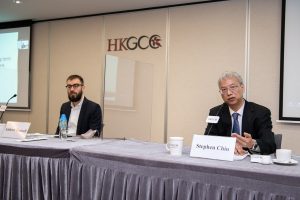
Themed “The Future of Hong Kong’s Public Finances: Spend Now, Tax Later?”, the third HKU Business School x HKGCC webinar was successfully held on September 20, 2021 to gauge views from business experts and scholars and debate over whether an overhaul is needed in response to the external environment and underlying flaws of our current tax structure. The thought-provoking session was led by Dr. Stephen Chiu, Associate Professor in Economics at HKU Business School and Mr. Andrew Fennell, Lead Analyst for China and Hong Kong at Fitch Ratings, and moderated by Mr. Tong Miller, Chairman of the HKGCC Economic Policy Committee.

The webinar started off with Mr. Fennell’s in-depth analysis on the city’s economic performance and government finances. Despite Hong Kong’s economy was heavily struck by the pandemic, he evaluated that it will rebound this year because of global trade cycle and gradual economic recovery. Furthermore, he highlighted the important role that our fiscal reserves have played as a buffer in minimising the impacts on businesses and citizens. However, he suggested that the pandemic has revealed the fragility of the city’s finances as there was more severe fiscal deterioration when compared to other cities.

Such a view was also shared by Dr. Chiu as he doubts on the fiscal sustainability of the current model, especially with its narrow tax base. He contended that instead of striving to maintain a balanced budget, we should be more forward looking by considering the long-term sustainability, or else we will be facing a structural fiscal deficit in the coming years. Drawing from Singapore’s model in reserves management, he recommended adopting a bold “Borrow-to-Invest” strategy to build a more robust financial portfolio. New institutions and mechanisms could be established to drive a higher rate of return out of the reserves. He further explained that the current investment return of our exchange fund has been declining and is way lower than other sovereign funds. Therefore, his proposition could take advantage of the sizable reserves at hand and reinforce the fiscal strength of the city.

The seminar came to an end with a stimulating Q&A session. There were insightful exchanges on the feasibility of Dr. Chiu’s idea and alternatives in raising fiscal revenue. Both speakers stressed that there will be trade-offs if we are transforming our ways in managing our public finances. Therefore, we look forward to discussions and debates on related topics among experts and business leaders in the society.

Read More

From the Execution to the Creation of Managerial Strategies – Dr. Yuna Cho

Formerly a senior consultant at Oliver Wyman, Dr. Cho later realised that her true passion lies in knowledge creation. After finishing her PhD studies in Yale, our young Korean scholar officially joined us in June 2021 as an Assistant Professor in Management and Strategy.

The conclusion of an international working journey

Equipped with strong business acumen, Dr. Cho received a return offer from the globally renowned management consultancy firm Oliver Wyman after completing an internship there during her undergraduate years. “Our job as a consultant was not just about fathoming grand strategies and delivering well-versed speeches. The truth is, you have to connect with clients and win their hearts. The small human touches make all the differences,” Dr. Cho explained.

Solving managerial problems of numerous multinational corporations based in the Asia-Pacific Region had Dr. Cho realise that pecuniary rewards are not the only factor that motivates workers. The desire to seek truth had encouraged Dr. Cho to pursue an MBA at the Wharton School of the University of Pennsylvania, and subsequently, a PhD in Management in Yale. “During my MBA, I realised that management studies is the field where scholars use scientific methods to understand workplace behaviours. It is something that I didn’t know when majoring in economics, but I am glad that I have found my true interests in life,” Dr. Cho said.

Studying the halo effect on workers

Dr. Cho has conducted a number of studies on the relationship between workers and their careers. A paper that would soon be published in the Academy of Management Journal, studies the relationship between employees’ meaning of work and their career outcomes. Collecting data via a longitudinal study and an online survey on US employees, the research discovers that there are different implications for the three types of orientations held by workers: job orientation (seeing work as a means to a financial end); career orientation (seeing work as a means to attain success and prestige); and calling orientation (seeing work as personally fulfilling and contributing to a better world).

She observes that the workers with a calling orientation oftentimes exhibit positive vibes at work and are willing to go extra miles even on routine tasks. Research shows that these workers are effective in establishing a positive image in the eyes of their supervisors and are seen as being more committed to the organization. Subsequently, they tend to have a better career and receive greater monetary rewards. “But interestingly, even when their performances are not particularly impressive, managers still consider them to be a better employee. As a result, there is a halo effect to be seen more positively at work,” Dr. Cho commented.

However, Dr. Cho admitted that there are limitations on this paper. “Asian companies tend to take it for granted that workers should see work as a calling. Therefore, I am interested to study workplace relationships contextualised in the Asian market. That is one of the reasons I decided to join HKU Business School.”

Impressed by the prowess of HKU alumni

Over the course of her undergraduate years, her consultant career, and throughout her PhD studies, Dr. Cho is no stranger to HKU students and alumni. She commented that they are very intelligent and are equipped with a global mind-set. “In addition, I have always been admiring the high impact level of research conducted by HKU Business School. The colleagues here are also very friendly. Soon after I have come to Hong Kong, the MBA director Dr. Cheng had even helped me with apartment hunting,” she added.

Read More

Try your best and no regrets

The 14th National Games of China will start today! 5 elite athletes CHAN Ming Tai, YEUNG Man Wai, CHOI Chun Yin Ryan, FAN Linna and CHANG Long Yin from HKU Business School will represent Hong Kong China to compete with our nations’ finest.

May they compete with grace, and be adorned with prizes!

Athletic

  • CHAN Ming Tai (BBA (Acc&Fin) 2019)
  • YEUNG Man Waic (BBA 2020)

Fencing

  • CHOI Chun Yin Ryan (BBA (Acc&Fin) student)
  • FAN Linna (BEcon&Fin student)

Canoe

  • CHANG Long Yin, Canoe (BEcon&Fin 2019, PGDE student)
Read More

Our Vanguard into the Middle East – Professor Roni MICHAELY

Professor Roni Michaely is a well-known academic in the world of finance. Being the former director of the Israel Securities Authority, and the broad member and one of the first investors of Tipranks, a successful Israeli startup, his remarkable achievements have won the respect from our Dean and Faculty management. Professor Micahely leads the creation of the HKU Entrepreneurial and Innovation Hub in Israel which will foster the school’ expansion into the Middle East and Europe.

Driven by sheer curiosity

Although working in academia has a staid public image, for Professor Michaely it is as exciting as working in a start-up because academic research is about breaking new ground – in this case at the frontier of knowledge – and envisioning new ideas for the future. His “frontier” is in the study of how conflicts of interest affect financial decisions. Using diverse methodologies and subjects, he has earned a strong reputation globally and has been receiving academic awards for his output since 1996, including 2020 Review of Finance best paper award, the 2017 Distinguish research award of the Eastern Finance Association, the 2005 Journal of Financial Economics Fama Prize for best paper, The Review of Financial Studies 1999 Barclays Global Investors/Michael Brennan Runner-up Award, and the 1996 Western Finance Association Award for best paper on investments, just to name a few.

A critique on SRI funds

Some of Professor Michaely’s recent research focuses on the role of firms and investment managers in combating climate changes. As problems such as climate change and social inequality are deteriorating in a global scale, some urges companies and investment management firms to take up more social responsibilities such as environmental protection and stakeholder welfare, instead of solely focusing on profit. Against this backdrop, a myriad of socially responsible investment (SRI) funds have emerged in the market. One can think of three strategies taken by these funds. First, they may simply invest in companies with good ESG scores. This is a relatively simple strategy which does not require too much on-going efforts from the funds. Second, in line with their fiduciary responsibilities, the funds may get actively involved in the firms they invest in, and actively change their environmental policies. Third, they may “Greenwash”—that is, they advertise themselves as having ESG as one of their objectives but in fact they do nothing. They do not materially tilt their portfolios towards ESG stocks, nor do they affect firms’ policies towards these goals. A paper by Professor Michaely and three other scholars titled “Does Socially Responsible Investing Change Firm Behavior?” contributes to this debate by examining these three possibilities. That is, it examines whether SRI funds choose firms with good environmental and social conduct or whether they cause their portfolio firms to improve environmental and social conduct. He discovers that these funds choose to invest in firms that already have (relatively) good records.

Across a variety of tests, it finds consistent evidence that SRI funds do select companies with better environmental and social conduct. On average, SRI funds hold firms that pollute significantly less and that invest more in pollution abatements. Furthermore, SRI funds hold firms that have higher employee satisfaction (e.g., better corporate culture, better career opportunities and compensation benefits), and fewer workplace accidents. Finally, firms in SRI funds’ portfolios have greater gender and ethnic diversity on the board of directors. In sum, SRI funds offer their investors a portfolio of firms with higher environmental and social standards.

However, the paper also finds that SRI funds do not improve the environmental or social conduct of their portfolio firms. The researchers find that changes in SRI fund ownership are followed by zero improvements in their portfolio firms’ environmental or social conduct. In additional tests, they further verify that these zero findings are not due to statistical issues, insufficiently long horizon, or fund ownership stake. SRI fund investment reliably has no effect on the conduct of their portfolio firms.

Professor Michaely believes fund managers can do so much more, such as balloting proposals at company annual meetings and lobbying top managers. A few SRIs have been showing how this can be done, such as Engine #1, whose actions encouraged Exxon to change its environmental policies.

SRI funds could also threaten to exit to coerce companies into improving their behaviour. “There are many ways, direct and indirect that fund managers show firms they are serious about changing their environmental and social policies. They can talk about it directly with managers, they can talk about it to the press, they can say they are planning to sell the stocks of a certain company in their portfolio for not acting socially responsible enough.” said Professor Michaely. As many investors care about corporate social responsibility, Professor Michaely hopes that his article can pressure SRI funds to be more active in improving firms’ environmental and social policies.

From Israel with innovation and entrepreneurship

So, with his strong academic and business experience, what attracted Professor Michaely to Hong Kong? The lure of the East, the strategic position of Hong Kong as a bridge between the east and the west, and the rising importance of China as one of the world economic powers, and the proven and impressive academic status of Hong Kong University all played an important role in the decision. HKU was also a natural choice given its academic reputation and longstanding position as an academic gateway to China and the East.

Having Professor Michaely at the HKU Business School is a great benefit to the School, for his academic record, his passion for teaching and for the ability to leverage his expertise and  expand the school presence and reputation internationally. In Asia, we have a centre in Beijing and our centres in Shenzhen and Vietnam in the pipeline. The addition of Professor Michaely, with his private sector experiences in the Israel, with his keen interest in high tech start-ups and firms, and strong network with scholars from Asia, the US, and Europe, opens up possibilities for the School to tap into the Israel, the Middle East, and other parts of the world.

The establishment of The HKU Innovation Hub in Israel to promote innovation and entrepreneurship is an exciting and challenging task that Professor Michaely is totally up for. The main goals of this endeavour are to foster collaboration between entrepreneurs from HK and China and those from Israel (and later on, also Europe), help to further foster the innovation and entrepreneurial spirit in the region, and establish collaborations between HKU scholars those in other parts of the world,

Professor Michaely envisions that the centre will foster intellectual exchanges between Israel and Hong Kong, benefiting students, scholars, entrepreneurs, and business leaders from the two regions. Israel is a start-up nation and the spirit of entrepreneurship is strong among its young people. As professor Michaely summarizes: “This is a truly exciting journey for me. I am looking forward to work with my excellent colleagues at HKU, to meet the students and interact with the business community in Hong Kong and China. I believe the innovation center HKU is establishing in Israel will bring significant benefits to all communities involved and I am very happy to be a part of this.”

Read More

Invest or Save – How does Multinational Firms face off Foreign Exchange Risks?

Since the collapse of the Bretton Woods System in the 1970s, the international foreign exchange rate (FX) system has entered an era of floating rates, making FX volatility one of the major international trading risks. With the acceleration of globalisation and expansion of the global supply chains since the 1990s, FX risk has also become increasingly significant to the investment, trading, and financing activities of multinational firms (MNCs).

Realising that there is a lack of empirical research studying the real effects of FX risks on corporate investments, Dr. Zigan Wang, Assistant Professor in Finance from HKU Business School had partnered with Professor Mark P. Tylor from the Olin School of Business, Washington University in St. Louis and Dr. Qi Xu from the School of Economics and Academy of Financial Research, Zhejiang University, to research on the capital expenditure data of 4082 MNCs from 44 countries between 1987-2017.

Contextualising their research on FX risks events including the shift from fixed to floating FX of a particular economy, and the downgrades of sovereign debts, the team discovers that FX risk does negatively and significantly affect the capital expenditure of MNCs. As one standard deviation increase in FX risk is followed by a 2.9% decline in the ratio of capital expenditure to the beginning-of-year total assets. The negative relationship is also stronger for MNCs that are operating in countries with a higher level of economic openness (economies that are more engaged in international trades), but the risk they face can be hedged with the actively use of currency derivatives.

Dr. Wang explains that there are two non-mutually exclusive rationales behind the negative relationship between FX risks and corporate investments. As MNCs are rational actors, when there is evidence that FX volatility is increasing, they will realise that the real option value of deferring or partially deferring their investments is higher than the opportunity cost of continuing their investments.

Against this backdrop, MNCs will also increase their precautionary savings to sustain their day-to-day business operations. one standard deviation increase of FX risk is associated with a 1.6% increase in their cash holdings ratio. This behaviour is more significant among MNCs that are more financial constrained. Another interesting finding is that over long-term horizons, FX risk on investments only appears in the single next year, followed by a partial reversal in the second year, and the effect disappears after the third year.

This research is one of the first papers that explore the potential impacts of FX risks on the investment behaviours of MNCs. Moreover, the increasing likelihood of RMB internationalisation, and the development and implementation of central bank digital currencies around the world, are unneglectable factors that could potentially cause huge FX volatility issues in the future. That said, the findings of this paper will remain relevant for years to come.

Read More

To Become the Better Version of Oneself – Dr. Dunhong JIN

Dr. Dunhong Jin is a theoretical financial economist, specializing in security design and asset management fields. After graduating from Oxford University, Dr. Jin decided to come to Hong Kong in August 2020 and become an Assistant Professor in Finance.

To become the better version of oneself – Dr. Dunhong Jin

Dr. Dunhong Jin is a theoretical financial economist, specializing in security design and asset management fields. After graduating from Oxford University, Dr. Jin decided to come to Hong Kong in August 2020 and become an Assistant Professor in Finance.

On the grand path to achieve self-actualisation

In retrospect, Dr. Jin believes that her doctoral studies in Oxford was a life-changing experience. The serendipity to share experience and camaraderie with insightful mentors and comrades has rendered Dr. Jin to become a humble yet erudite scholar, guiding young people through education.

Dr. Jin comments that humans spend a lifetime in search of meaning and only a few have ever succeeded. “But referring from what the late novelist W. Somerset Maugham said in The Razor’s Edge: ‘When a man becomes pure and perfect the influence of his character spreads so that they who seek truth are naturally drawn to him. It may be that if I lead the life I’ve planned for myself it may affect others; the effect may be no greater than the ripple caused by a stone thrown in a pond, but one ripple causes another, and that one a third; it’s just possible that a few people will see that my way of life offers happiness and peace, and that they in their turn will teach what they have learnt to others’,” she said. She believes that this subtle influence on the youth would be meaningful, and she enjoys the tranquillity and freedom offered by an academic life.

Dr. Jin told us that teaching postgraduate and undergraduate level students are intrinsically different. As she will be teaching postgraduate students after joining us, Dr. Jin aims to broaden their horizons and help them to establish higher goals, so as to hone their business acumen in making better judgment. With regards to this, Dr. Jin has two recommendations to give. First, try to sponge up as much knowledge as possible in your undergraduate years and explore all feasible directions. You will find how romantic and serendipitous it is. Second, as finance is an applied discipline, you will inevitably feel impetuous in job hunting. She reminds students to balance their expectations in monetary rewards and aspirations, instead of recklessly venturing into a traditional career track with mundane repetitive work. As only when you have a thorough understanding over the market, you can make informed decisions while pursuing your goals.

Financial studies: a subject with endless possibilities

As a scholar specialised in theoretical models, Dr. Jin sees the beauty of theories in its power to map out a coherent and consistent framework for multiple empirical relationships, and how these individual effects relate to each other. Although she started off as a mathematician, she is deeply attracted by the rich potential and abundant agenda that the area of finance can offer.

Besides theoretical attempt, Dr. Jin also looks into the liquidity management of open-end funds and how that averts financial fragility during stress periods, utilizing unique and confidential data from Financial Conduct Authority in the UK. The paper is published in the renowned Review of Financial Studies.

Corporate bond mutual funds are associated with significant liquidity mismatch problem, and thus suffer high run risks amidst macroeconomic shocks. Against this backdrop, the swing pricing mechanism, which adjusts fund price so as to pass on the liquidation cost to the redeeming investors, is introduced by regulators to attempt to alleviate this phenomenon. Counting on end-investor level data, the paper shows that the new pricing mechanism eliminates the first-mover advantage and helps funds retain their investor capital during stress periods.

Enticed by the culture of Hong Kong

Dr. Jin loves art, literature, classical music, and history. Hence to her, Hong Kong is not only the jackpot for financial research, the city’s unique historical background and diverse culture have strongly resonated to her soul. “As my hobbies are deeply rooted in both traditional Chinese culture and Western art, Hong Kong as the bridge between the East and the West is really fascinating,” she said.

The collision between the charisma of HKU and the young vibrant nature of its Business School has radiated an irresistible aura. “I am impressed by the innovative and integrated research conducted by the group, and more so by the noble character of its scholars,” she added.

Read More

The Pros and Cons of Free-market Capitalism versus High-level Government Intervention – The 2nd HKU Business School x HKGCC Webinar Aims to Reduce Wealth Inequality and Restore Public Trust in Hong Kong

Building on the success of the first webinar in July, the second session of the HKU Business School x HKGCC Economic Reboot Webinar Series – “Small Government: Time for a Rethink?” – was successfully concluded on August 17, 2021 (Tuesday).

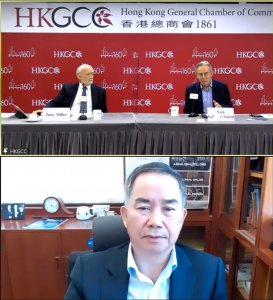
This session reviewed the “small-government, big market” ideology of the Hong Kong government and discussed whether there is a need to increase government intervention for Hong Kong to restore public trust and a sense of justice. Professor Zhiwu Chen, Chair Professor of Finance at HKU Business School and Director of Asia Global Institute has an interesting discussion with Mr. Nick Sallnow-Smith, Former Chairman of the Lion Rock Institute Hong Kong moderated by Mr. Tony Miller, Chairman of the Chamber’s Economic Policy Committee.

“If you want to see how the free market really works, this is the place to come,” said Milton Friedman when he was in Hong Kong some 30 years ago. Central to the celebrated economist’s appreciation of Hong Kong was the minimal role that the government played, or was perceived to play, in the economy. Since then, there have been calls in Hong Kong to rethink free-market capitalism because of perceived failings such as unequal wealth distribution and environmental damage.

However, Mr. Sallnow-Smith pointed out in his speech that the “laissez-faire approach” in Hong Kong is no longer the same as the one in 30 years ago, as the scale of government control, management and intervention is significantly greater now than it was in 1970s. He believes that more government intervention may not be necessary for the current situation in Hong Kong as it may be harmful to the economic freedom of business and individuals, which Hong Kong has been performing well comparing with other western countries. Instead of copying the practices of other OECD countries, Hong Kong should find out the right approach best suited to itself and consider the type of social arrangements to be used for improving the living standard and ensuring a sustainable economic growth.

Professor Chen also agreed that Hong Kong should avoid over intervention by the government as it may cause Hong Kong to lose its own attractiveness. He elaborated this idea by some of his personal experience and suggests to give the authority to elected members from Legislative Council, rather than having private clubs or associations to decide “the rules of game” as they are normally putting too much focus on the success of business, and sometimes may neglect the overall interest of the community.

In the panel discussion and Q&A session, more in-depth topics about government intervention were discussed such as the constitutional constraint of limiting the government expenditure to 20 % of GDP; the appropriate level of intervention to different sectors or industries in the society; etc. There was also another follow-up discussion on Professor Chen and Mr. Sallnow-Smith’s point of view on how government intervention will harm the attractiveness of Hong Kong and whether civil servants or entrepreneurs will be better policymakers.

The next session of the webinar series will be on September 20, with Dr. Stephen Chiu, Associate Professor in Economics at HKU Business School and Mr. Andrew Fennell, Lead Analyst for China and Hong Kong at Fitch Ratings to discuss about the Hong Kong’s tax regime and fiscal sustainability.

Read More

Top 10 Winners in the World Asian Case Competition 2021

A team of two students from HKU Business School won the top 10 in World Asian Case Competition 2021. Themed on “Creating unforgettable, lifelong experiences for students”, the competition requires participants to research on a selected Asian company that has achieved significant success and became globally powerful brands. Competing teams were expected to highlight certain milestones that contributed to the brand’s tremendous success and give breakthrough strategies that can help the company overcome difficulties and challenges in their business model.

World Asian Case Competition (WACC) is an annual international case competition organised by the Academy of Asian Business. It was divided into three parts, namely (i) short proposal in around 400 words, (ii) final proposal in around 10,000 words, and (iii) final presentation for around 15 minutes.

Advisor:

Dr. Winnie Leung, Assistant Dean (Undergraduate), The University of Hong Kong. Also one of the awardees of Best Advisor Award.

Team Member:

Miss Kakkar Sana, BEcon&Fin, Year 3
Mr. Sharma Jayant, BBA(IBGM), Year 3

 (The team comprises 1 more team member from the Faculty of Science, The University of Hong Kong.)

Students sharing:
“Participating in the World Asia Case Competition 2021 gave me an effective platform to demonstrate and further hone my communication and collaboration skills. This experience gave me the opportunity to learn from and compete with elite teams from renowned Universities around the globe, and enabled me to gain exposure to multiple perspectives. I was very grateful to my advisor and fellow team members for making this an extremely memorable experience for me. I look forward to participating in more of such competitions in the future.”


– Sharma Jayant, BBA(IBGM)

“The World Asian Case Competition 2021 gave me the opportunity to be a part of an active and engaged process and interact with like-minded people throughout the journey. This allowed me to gain a multifaceted view of the world as I draw from each participant’s perspectives and experiences. Being engaged in fruitful discussions with other competing teams also inspired me to think outside the box and come up with new ideas. Most importantly, I enjoyed exploring interesting case topics, researching global trends and honing my presentation, case cracking and analytical skills. I believed this experience was truly rewarding and would definitely prove to be a turning point for my future.”


– Kakkar Sana, BEcon&Fin

Read More

Researching the Under-Privileged at the Forefront – Dr. Gedeon LIM

As a development economist, Dr. Gedeon Lim has been dedicated to the study of reducing poverty and facilitating economic growth and development. He joined HKU Business School in August 2020 as an Assistant Professor in Economics. Our young and energetic Singaporean scholar is thrilled to have the opportunity to collaborate and generate new knowledge with local scholars.

Utilizing interdisciplinary tools at the frontier of development economics

Since the 1950s, development economists have sought to understand the obstacles facing economic growth in developing countries by shining a light on pertinent issues. This has, however, mainly taken a theoretical perspective. In contrast, Dr. Lim says that development economics today has taken an increasingly empirical turn: “Today, development economists like me often spend much of our time in the field, and, increasingly, collaborate with scholars from multiple disciplines, leaders from regional communities, and even local political figures.” To that end, Dr. Lim contends that it was really the opportunities to engage with local communities and study, first-hand, the impact of development policies in the real world that drew him towards the study of development economics. “It is a very lively and vivid discipline – especially with an increasingly diverse group of economists becoming interested in development issues,” he commented.

Dr. Lim also had an anecdote to share in relation to his connection to HKU: “During graduate school, I actually read a great deal of research papers by Professor James Kung, so I was, naturally, very excited to have the chance to join HKU, a growing hub for the study of development economics and political economy issues in Asia,” said Dr. Lim.

Does higher political pay drive better performance from political leaders?

For his doctoral thesis, Dr. Lim spent half a year in 2019 in West Java, Indonesia, conducting a historical recall survey involving 193 villages and 965 respondents. The working paper titled “Does paying local leaders lead to better economic development? aims to investigate the relationship between higher political pay and performance of political leaders.

In particular, historical institutions in West Java provided Dr. Lim with a fascinating backdrop towards studying this issue, in the context of rural village chiefs. “Unlike most civil servants who are either unpaid or rewarded by cash, elected village chiefs in parts of West Java are awarded cultivation rights over village rice fields in lieu of compensation. The chief, in turn, is obligated to sharecrop or lease out the land to villagers at fixed prices. Villagers harvest the rice for the chief and sales from the rice harvest serve as political rents,” explained Dr. Lim.

In particular, Dr. Lim explained that a rare, unique feature of this setting is the immutability of these rents: “Being tied to a fixed plot of land, political rents in this setting are as fixed as they can get. This is unlike many other contexts like, say, national parliaments where political pay is often adjusted and decided by leaders themselves.” Hence, this helps avoid a key endogeneity issue that has plagued the study of political pay – that politicians often change the levels of political pay and these changes are often correlated with the performance of sitting politicians.

Following detailed investigations, Dr. Lim found that villages where chiefs received higher land rents are richer and more developed. In particular, the study found a positive relationship between higher land rents and stronger night-time light intensity, lower child mortality, and higher years of education among the village population. “The prevailing evidence suggests that cultivation rights over village rice land gives chiefs a stake in local village development, and this direct link between chiefs’ material rewards and village development appears to be a key factor driving their performance” said Dr. Lim.

To that end, Dr. Lim’s study has been published in the World Bank Blog. By shedding new light on the importance of adequate political compensation in rural development, Dr. Lim hopes that it could, perhaps, provide some guidance to regional researchers and policy makers in designing new compensation packages for rural level civil servants.

Building towards greater engagement among local scholars in Hong Kong

Dr. Lim is also a driving force in promoting academic collaboration and knowledge exchange. With the easing of social distancing measures, Dr. Lim, together with Dr. John Klopfer and Dr. Sangyoon Park, organized the 1st Joint Hong Kong Empirical Microeconomics Workshop 2021 this summer. The workshop provided economics scholars in Hong Kong with a common platform to share their latest research findings, interact and exchange ideas.

“I think the high quality of submissions received really demonstrates how Hong Kong is fast becoming one of the top places in Asia for cutting-edge economics research. Hence, even as local universities continue to enjoy healthy competition, we should definitely facilitate more such events to encourage interactions and the exchange of knowledge,” said Dr. Lim. In his view, this workshop is a definite step towards fostering stronger ties among local scholars and, by bringing together top economics scholars in Hong Kong, he hopes that these events will generate both direct intellectual benefits and spill-overs to the development of the city, the region, and, perhaps, even the world over.

Read More