


Rise of Index Funds Leads to Deterioration of Corporate Governance

Study reveals Index Funds put less efforts in monitoring their portfolio firms, resulted in
power imbalance between investors and firm managements


Over the past three decades, the rise of passively managed index funds has transformed how Americans and other investors around the world invest. In 1990, index funds held only less than 1% of all mutual fund assets. By 2018, this had grown to more than 30%, which worth over US$6 trillion and now represent the largest shareholders of many US corporations.

The massive rise in popularity of index fund investment drives the investors’ attention about monitoring and corporate governance. A recent study by Professor Roni Michaely, Professor in Finance of HKU Business School and his co-authors shows that, comparing to active funds, index funds monitor less effectively and cede power to firm management. This results in negative consequences for corporate governance and firm value. It may also further shift the power from investors to firm managements, which would be of major concern to investors.

This research was done by Professor Michaely and co-authors Davidson Heath and Matthew Ringgenberg from University of Utah Eccles School of Business and Daniele Macciocchi from University of Miami Herbert Business School. The paper is accepted by the “Review of Financial Studies”, one of the premier journals for finance-related academic researches.

“Three main options for a shareholder to disagree with a firm’s management including voting, engaging with management and selling shares,” Professor Michaely said. “To better evaluate and compare the monitoring behaviour of index funds and active funds, we have examined each of these monitoring channels using comprehensive data on US equity mutual and exchange traded funds from 2004 to 2018.”

In the examination of the voting behaviour, index funds vote with firm management 54.3% of the time, while active funds do so only 47.3% of the time for contentious governance issues. When examining the engagement of index funds with their portfolio firms, the research finds no evidence that index funds engage publicly or privately with their portfolio firms in an effective manner. When index funds hold more of a firm’s stock, the number or type of proposals that are tabled at annual shareholder meetings do not change, and a decrease in the proportion of approved shareholder proposals is observed. And, in terms of divestment, index funds do not exit a position even after losing a shareholder vote, whereas active funds do, meaning that they do not divest from a firm to express dissatisfaction with its management.

After a wide variety of tests and specifications, the results suggest that index funds are weaker monitors than active funds. “Relative to the active funds they are replacing, index funds have limited incentives and resources to invest in costly monitoring,’ Professor Michaely elaborated his findings. “Moreover, the data consistently shows that corporate governance does not improve and in fact deteriorates along several dimensions when index funds replace active funds. We therefore can conclude that the rise of index investing shifts power from investors to corporate managers.”

The findings have important policy implications as regulators around the world struggle with how to better govern and monitor management and firms’ behaviour; especially in light of recent claims that index funds are good monitors who improve corporate governance. There has been several suggestions to reward long-term investors with greater voting power. The findings of this paper—that index funds (who are long term investors) are worse monitors, indicate that rewarding them with greater voting power will result in the opposite outcome: less monitoring and more power to management. As the rise of passive investing continues, a check on managerial power is suggested for balancing the interest between investors and firm management.

Full version of this research paper:
Do Index Funds Monitor?
https://papers.ssrn.com/sol3/papers.cfm?abstract_id=3259433
Read More

Speaking to Prominent Social Problems in the Changing World – Dr. Yanhui WU

Born and raised in Guangdong, Dr. Yanhui Wu always has a special attachment to Hong Kong. Joining us in January 2020 as an Associate Professor in Economics and Management and Strategy, Dr. Wu sees it as a great opportunity to contribute his academic intellect for our betterment and progression.

Research for the betterment of the society

Starting off as a financial journalist, Dr. Wu developed a strong interest in uncovering social issues in China. “But a journalist could only do so much, so I restarted my academic career in search of knowledge and ways to untie persisting dead nots,” said Dr. Wu. At graduate school, he explored various research topics he considered socially important, ranging from the political role of the mass media, to the provision of incentives within firms, and how information technology and globalisation affect returns to talent and income inequalities.

The engine of economic growth in the digital era

Dr. Wu believes that innovation derived from creative destruction is a key driver of economic prosperity. He explains, “To understand the process of creative destruction, a central question is how market competition affects this process and the resulting economic outcomes. Although economists have a clear answer to this question in the context of the traditional manufacturing-based economy, we only have a vague idea about how competition works in the modern digital economy.”

To push this research line forward, Dr. Wu focuses his recent work on the so-called gig economy, in which individuals work as independent contractors, freelancers, and on-call workers. Observing the rise of the gig economy due to the emergence of digital platforms, he embarks on investigating how product competition affects gig workers’ behaviour and product innovation in platform markets.

Although addressing big questions, Dr. Wu mostly uses microeconomic methodology with granular data. In one of his latest papers, he assembles detailed data on the writing activities of Chinese online novelists to study innovation in platform markets. He finds that market competition motivates writers who receive royalty incomes to write more creatively, but the effect is insignificant to writers who are paid by the word and are rewarded as a salaried worker. This finding shows that reward systems are an important mediator for market competition to affect gig workers’ creative production. A more striking finding is that platform companies develop a bias of disproportionately promoting the novels authored by paid-by-the-word writers who hand over the profit accrued to book sales to platforms. Competition exacerbates this platform bias and thus hurts innovation. “Given that the gig economy is an important marketplace for grassroots innovation, this research has implications for regulatory policies on market competition,” said Dr. Wu.

In several ongoing projects, Dr. Wu aims to study how the emergence of the gig economy affects employment, education, and social mobility in China. He plans to combine big data and experimental methods to explore this exciting and challenging topic.

Understanding the transition of Hong Kong Economy

Dr. Wu is enthusiastic about studying economic problems in a changing world, and Hong Kong naturally catches his intellectual interest. “No doubt that many economic theories and empirical research on other cities are relevant to Hong Kong. But Hong Kong is unique and demands new solutions to its problems,” explains Dr. Wu.

Dr. Wu is very keen to take the first step to paint a clear big picture of the Hong Kong economy from micro data. He said, “Careful analysis of firms, households, and individuals is essential for understanding the dynamics of the Hong Kong economy and offering useful solutions.”

Read More

HKU Business School Joins Hands with HKGCC to Launch a Webinars Series to Promote Ongoing Dialogue on Pressing Economic Issues


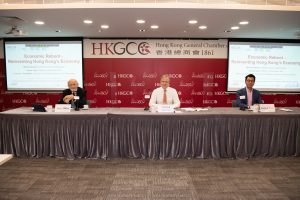
The first session of HKU Business School X HKGCC Webinar Series was held on July 13 in hybrid mode.

To celebrate its 20th anniversary milestone, HKU Business School has been implementing different initiatives to keep re-inventing itself, to advance the knowledge frontier and to create positive impact locally, regionally and internationally. From July onwards, the School joins hands with The Hong Kong General Chamber of Commerce (HKGCC) to launch a webinar series, with an aim of providing new insights and knowledge to rejuvenate the local economy and guide Hong Kong out of the current economic dilemma, promoting on-going dialogue among different stakeholders of the society.

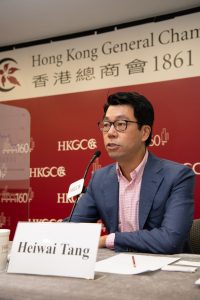
The first session of the webinar series, themed as “Reinventing Hong Kong’s Economy”, was held on July 13, 2021 with more than 250 participants joined in hybrid mode. During the webinar, Professor Heiwai Tang, Professor in Economics, HKU Business School and Dr. Michael Spencer, the Chief Economist of Deutsche Bank discussed the way forward for Hong Kong to remain relevant and competitive in a post-covid landscape. The session was moderated by Mr. Tony Miller, Chairman of the Chamber’s Economic Policy Committee.

At the beginning of the session, Dr. Michael Spencer analysed a few key challenges for Hong Kong including the aging problem, climate change and the decline of share in global trade. In terms of the future trends, he expects a disappearance of border between Hong Kong and mainland China, and a continuously high price for local property in the future. Regarding these challenges and future changes in Hong Kong, he recommends an increase in research spending for Hong Kong to embrace the new “knowledge-based economy”, putting more focus on high-end services, advanced technology and intellectual property intensive activities.

Professor Heiwai Tang, Professor in Economics, HKU Business School shared his views to the local economy during the webinar.

“Hong Kong has been enjoying the benefit as a middleman during the period of ‘hyper-globalisation’ since 1949. However, it is now facing a huge challenge of deglobalisation (also being called as ‘slowbalisation’) and a declining role for helping mainland China to open the foreign market,” said Professor Tang. He also further elaborated some other kinds of challenges such as income and wealth inequality, imbalance income and living expenses, over-reliance on finance industry, limited labour mobility and shortage in housing market, etc.

To cope with these challenges, he has proposed some policy recommendations. He mentioned, “The third economic transformation requires a change in mindset and solutions to the talent shortage problem from both demand and supply side. There is also an urgent need for reindustrialisation, which can act as an effective tool to improve social inequity, increase job mobility, create positive externalities to other sectors, to complete the ecosystem of researches and manufacturing and also facilitate the integration of Hong Kong to the Greater Bay Area.”

During the panel discussion, a few heated topics in economic were discussed. Both of the speakers shared their insights on the topic of economic decoupling, reassurance and the four pillars industries during the discussion. The session ends with a Q&A session, and Mr. Miller concludes this fruitful discussion with a cliché but true quote to the Hongkongers: “Always plan for the best, and prepare for the worse”.

Read More

Scholars Assemble! Applied Microeconomists Share Academic Insights on Their Latest Research

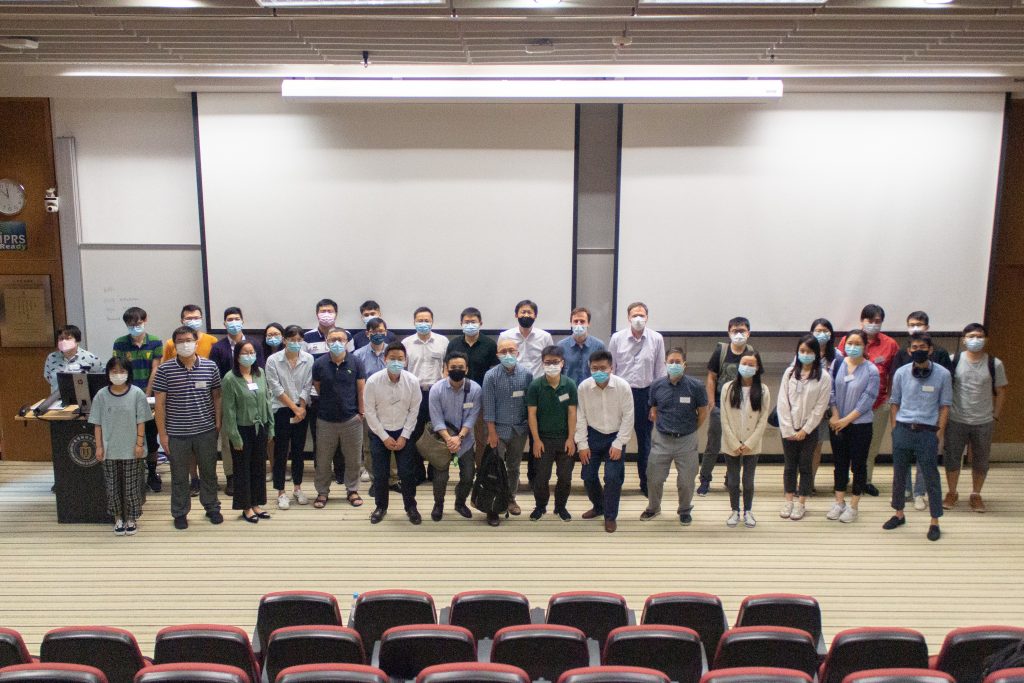
The 1st Joint Hong Kong Empirical Microeconomics Workshop (HKEMW) 2021 was successfully held on June 11 and June 25. The workshop attracted a total of 40 scholars and students from local universities and the Cheung Kong Graduate School of Business.

To facilitate cross-university interactions, HKU Business School joined hands with HKUST to kick start the HKEMW series. The event marks the first of its kind in Hong Kong since Covid-19 started, spearheaded by the Economic Area of HKU Business School, and chaired by Dr. Gedeon Lim, Dr. John Klopfer, and Dr. Sangyoon Park.

“The pandemic will not stop us from creating knowledge for the world. Through this workshop series, we aim to facilitate the interaction and exchange of ideas between economic scholars in Hong Kong, especially in times of coronavirus where there are few face-to-face events. This is a small step towards promoting cross-university knowledge exchange and fostering camaraderie among local scholars and I look forward to upcoming workshops hosted by our partner universities. In particular, we would like to thank colleagues at HKUST and Professor James Kung for his unwavering support. The event would not have been possible without their help.” said Dr. Lim.

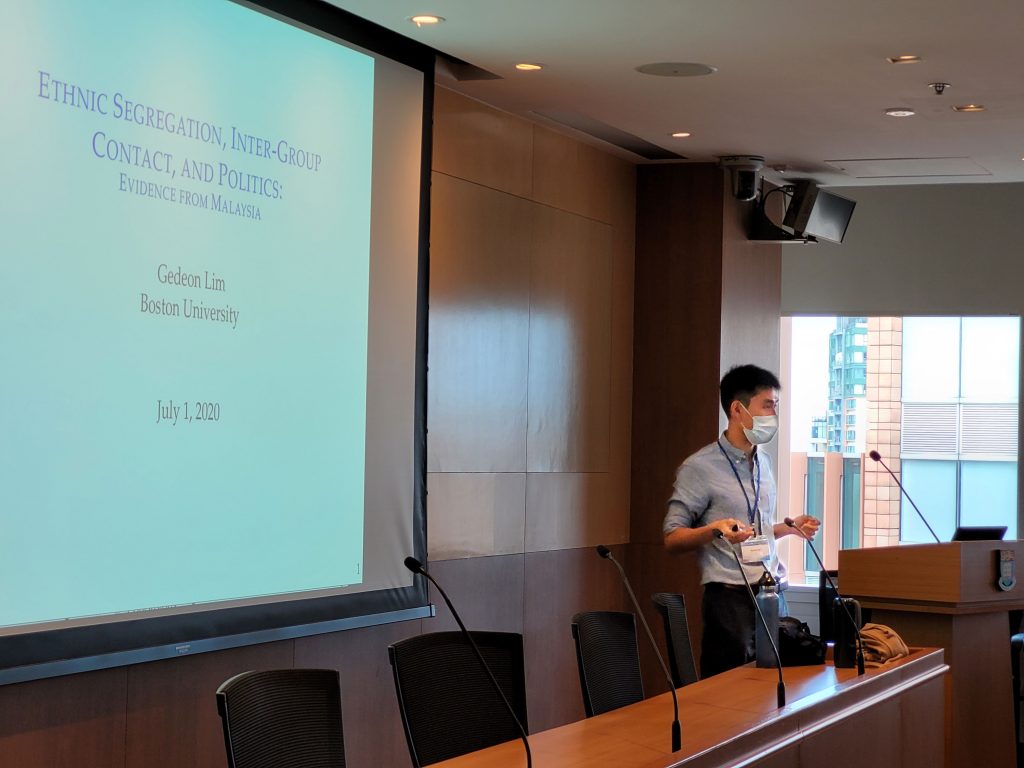
Dr. Gedeon Lim, Assistant Professor at HKU Business School, presents the paper “Ethnic Segregation & Politics: Evidence from Malaysia”

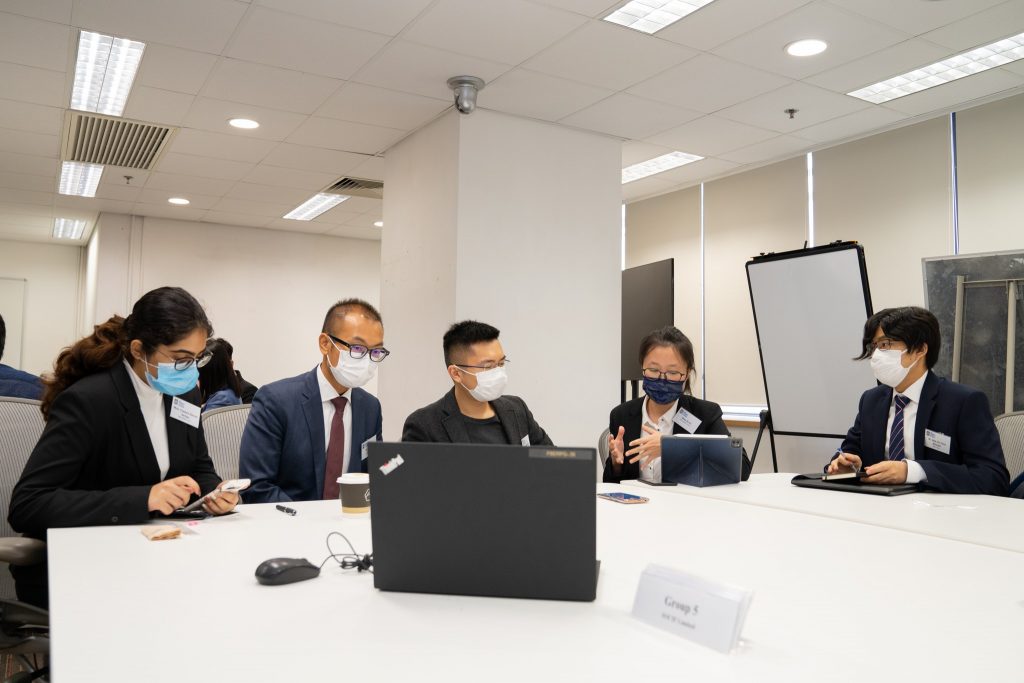
A total of 15 papers from empirical micro-economists in Hong Kong covering diverse fields of economic development, political economy, economic history, media, health, productivity, labour, and matching were presented during the workshop. Insightful sharing and discussions were made among participants.

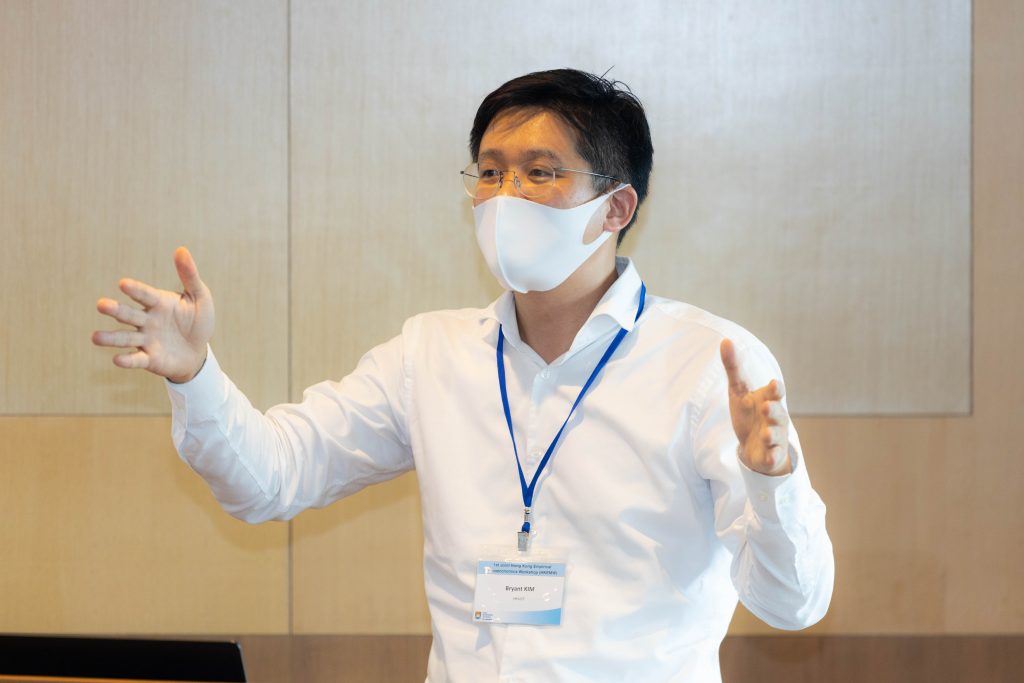
Dr. Bryant Kim, Associate Professor, HKUST presents the paper “Do Part-time Jobs Attract Less Productive Workers? Evidence from Field Experiment on Data Entry Clerks in Ethiopia”

The second session was hosted by HKUST on June 25 at LSKG012, G/F, Lee Shau Kee Business Building. The workshop will be a recurrent bi-weekly event, hosted by participating institutions, for academics in Hong Kong to exchange ideas.


Read More

Business Consulting Practicum (BCP) 2021

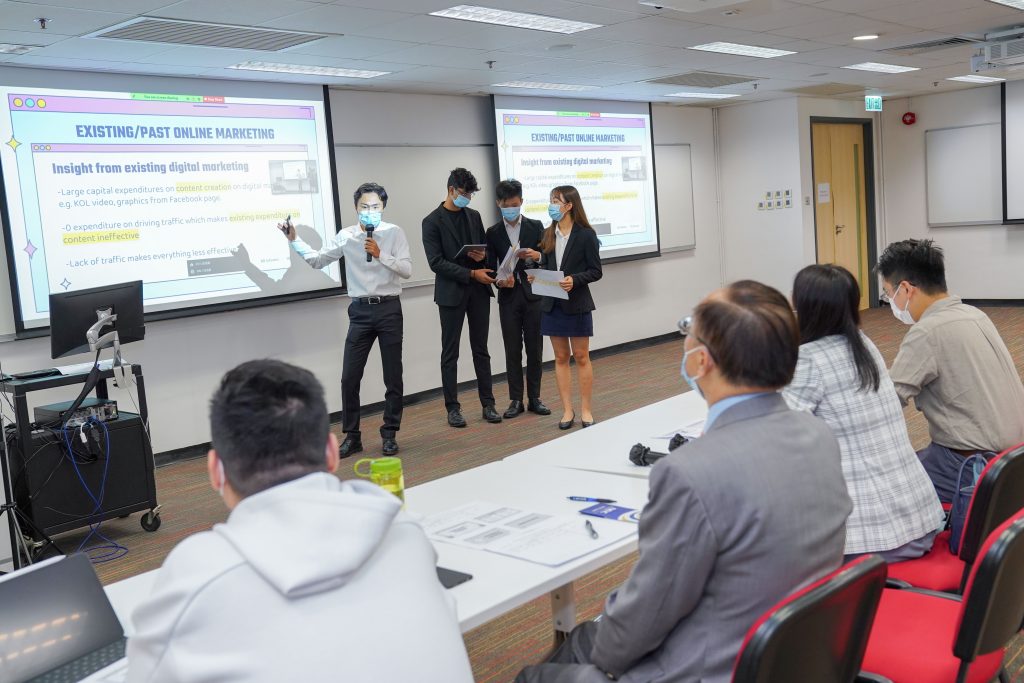
Through the experiential learning course, Business Consulting Practicum (BCP), students have an opportunity to work in teams to provide consulting services, and leverage business knowledge to solve specific real-life business problems for their assigned clients, under the professional guidance of teachers and mentors.

The six-week course provides students with 3 days of intensive training on consulting related skills. It allows the students to practice critical thinking, analytical skills and problem-solving skills and become more effective in working with clients, teammates and others. It also provides a free service to the organisations, mainly local small and medium-sized enterprises (SMEs).

This year, 33 students were teamed up to provide consulting services for 8 different companies. The course ended with a presentation held on July 17, 2021. In response to the impact brought by the pandemic, students were asked to provide solutions mainly on e-marketing and client acquisition. Clients and the mentors are impressed by the students’ creativity and the practicalness of the suggested solutions.

Sharing from the students:

So Ho Tin, Jacky

BCP 2021 provides me with an invaluable opportunity to be a business consultant and tackle business difficulties for my client. I can utilise the knowledge I have learned in lectures in a real-life business setting. Other than that, I developed soft skills like interpersonal skills and problem-solving skills during the 6 weeks program. Not to mention that my mentor was more than willing to provide my group with helpful advice.

Leung Shun Yan, Jamie

The most valuable thing that BCP offers is the client-facing opportunity. We face a real-life business scenario in which we need to consider the client’s budget and the marketing goals when making recommendations. We also need to keep adjusting the strategies to keep ourselves in line with the client’s expectations. During this process, we learn to communicate, negotiate and understand the difficulties of the client. This is a unique experience that we cannot have in the academic courses.

Read More

Three FBE students win prizes in the HKSI Institute Scholarship Programme 2021

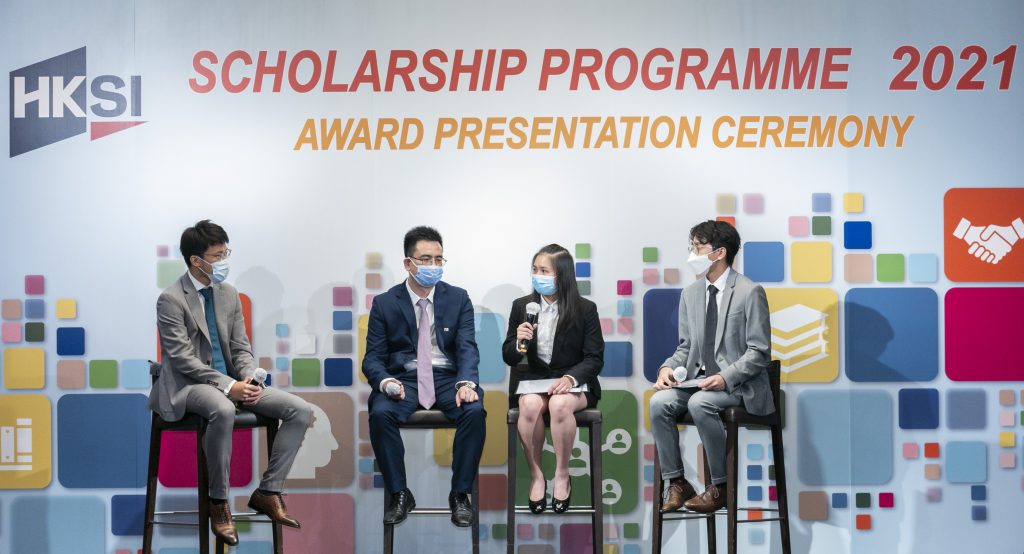
Three undergraduate FBE students took part in the HKSI Institute Scholarship Programme 2021 and were awarded 1st Runner-up, Team Award and Finalists.

Since first introduced in 2004, the HKSI Institute Scholarship Programme has provided more than 800 university students with an avenue to advance their career development for the finance industry.

For this year, participants had to submit a 1,000-word essay on the topic “How the COVID-19 has changed the world?”. Selected finalists were teamed up to work on the research project on the topic “Identify 3 major challenges impacting Research Project Sponsor’s sector due to COVID-19, and propose measures to address them” and presentation. The awardees had been offered cash prizes, 1-year HKSI membership and HKSI Institute eCredit.

Sharing from the awardees

1st Runner-up & Team Award – LAU Pak Hei Austin, BBA(Law)&LLB

“The HKSI Scholarship Program has surely been a rewarding journey for a year 1 student like me. Through rounds of oral presentations and essay writings, I have learned how Covid-19 made an impact to the banking sector and to financial regulations. My mentor, Mr. Dicky Hung from SPD Bank provided me with career insights and guidance on my group project. The program allowed me to realize the potential of my double-degree program and kick start my career in an early stage.”

Finalist – Cheung Lok Yiu Anson, BBA(Acc&Fin) 

“It is my honour to be one of the awardees of the HKSI Institute Scholarship Programme 2021 where I have the exclusive and precious opportunity to connect, network with and learn from business leaders!  I have also gained insights in the accounting industry after conducting the research project with my teammate.”

Finalist – Ma Leo, BBA(Law)&LLB

“The HKSI Institute Scholarship is an invaluable experience that allows me to explore challenges and opportunities from companies’ perspective, as well as to learn from and connect with experienced practitioners and aspiring peers. Students from all business disciplines should not hesitate to join and explore your potential.”

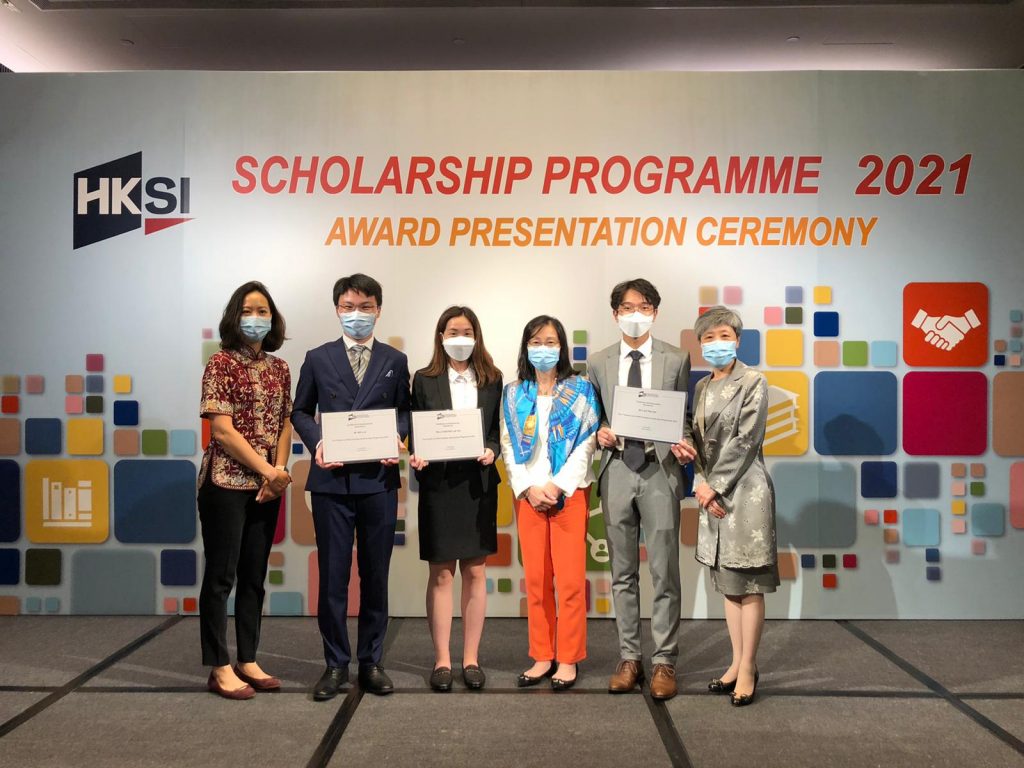
Professor Anna Wong, Programme Director of Asset Management and Private Banking, and ex-Director of the Hong Kong Securities and Investment Institute was at the Award Presentation and met Austin, Anson and Leo.    

“The best learning for students is learning outside of the classroom, the HKSI Scholarship Programme provides students with an excellent platform to learn and interact directly with industry practitioners.  My congratulations go to Austin, Anson and Leo.”


From the left: Ms Katherine Ng, Chairman, HKSI, Mr Leo Ma, Ms. Anson Cheung, Prof Anna Wong, Mr. Austin Lau, Ms Ruth Kung, Chief Executive, HKSI

Read More

HKU and People’s Government of Futian District Sign a Strategic Partnership Agreement

The University of Hong Kong (HKU) and the People’s Government of Futian District in Shenzhen have signed a partnership agreement. The two parties, through HKU Business School, will leverage on HKU’s advantages in talent development, research and innovation, and global influence to create a benchmark model of integrating teaching and learning, facilitating industry-academia collaboration and developing talent mobility between Shenzhen and Hong Kong. The partnership will accelerate the integration of Hong Kong with the rest of the Greater Bay Area, contributing to the long-term economic development of the two regions.

With its unique positioning of being deeply rooted in Hong Kong, fully engaged with China and truly international, HKU Business School aims to establish a world-leading platform for teaching and learning, as well as innovative research to create a global talent pool. Under this agreement, the School plans to open a Shenzhen Campus in Futian District by early 2022. Adopting a “One School, Two Regions” model, the 10,000sqm campus will provide ample space for HKU students, alumni and partners to carry out interactive teaching and learning activities, encouraging research discussion and ideas exchange on entrepreneurship.

Serving as a financial centre, Futian District is centrally located in Shenzhen. Its financial technology industry has begun to take shape, gaining a competitive edge in the globe.  Futian has a solid foundation in integrating industry with teaching and learning, as well as research, which is favourable to the development of a new university model that emphasises “multi-campus, immersion and advancement”. Looking forward, the University will work hand in hand with the government of Futian District to continuously explore collaboration potential in financial technology (FinTech) in hope of contributing to the development of FinTech industry in Mainland China and the rest of the world.

Read More

HKU Business School Received Record-High Funding of $16 million from RGC and Achieved Highest Success Rate in the Business Studies Panel

HKU Business School strives to become the leading powerhouse of research and knowledge creation in Asia with global impact. In the recent announcement by the Research Grants Council (RGC), The School attained encouraging results on the two competitive research funding schemes, General Research Fund (GRF) and Early Career Scheme (ECS), which are both initiatives to encourage and support academics to pursue research excellence.

The total amount of funding received by HKU Business School from the two schemes hits a new record high of $16 million, which is a 11% increase from $14.4 million in 2020/21. The overall success rate of 47% is the highest among the Business Studies Panel. This rate is also above the Panel average of 36%.

Our School also yielded the best performance among all participating institutions in the Business Studies Panel in ECS. The success rate of 75% topped the rank among others in the Business Studies Panel. There is also a record-high funding amounted to $3.6 million, which represented a significant growth of 80% as compared with that in 2020/21.

This encouraging result in GRF and ECS is the concerted efforts of all faculty members, which also signifies our commitment to fulfilling the vision of becoming a leading, globally impactful academic institution of business and economics. HKU Business School has been proactively recruiting global scholars to strengthen our research capability and enable impactful research. In the past 3 years, over 40 outstanding scholars joined HKU Business School from all over the world, enabling the School to further pursue academic excellence, advance the knowledge frontiers and achieve new heights.

Looking forward, HKU Business School will continue to work together, through research and knowledge exchange initiatives, with a wide spectrum of stakeholders of the society, aiming to contribute our expertise in the development of the community and to create positive impact locally and globally.

Read More

Meanders through the ever-changing world: Strategising new ways for the financial sector of Hong Kong

The seminar on Financial Services Development in Hong Kong amidst an Ever-changing World co-hosted by HKU Business School and the Hong Kong Academy of Finance (AoF), was successfully held on 16 July. Over 250 students, alumni, and members of the AoF had joined us via zoom or in person.

Facing the challenges of geopolitical tensions and the rise of disruptive technologies, stakeholders of Hong Kong must unite and fathom new strategies to breakthrough. Against this backdrop, we have collaborated with the AoF, a renowned academic hub dedicated in bridging the intellectual might of academia, the industry, professional training institutes and the regulatory community. We are honoured to invite Mr. KC Kwok, CEO of AoF, and three gargantuan elites from the banking, securities, and insurance sectors, to share with us their sagacious knowledge.

Professor Yuk-fai Fong, Associate Dean (Taught Postgraduate) and Professor of Management and Strategy and Economics, kick-started the seminar with an overview of the challenges our financial sector are facing. Mr. KC Kwok then further elaborated his points with detailed statistics, pointing out that our financial sector is undaunted by the pandemic and its lion share in our GDP will only keep expanding. “As Hong Kong is working with international partners in the development of digital currency projects for cross-border payments, we will carry more clout in the global financial market. But against the backdrop of a low-interest rate, regulators and investors have to remain vigilant,” said Mr. Kwok.

The banking sector has not slacked, and local banks have been working closely with regulatory authorities on the development and promotion of fintech. Ms. Miranda Kwok, President and Executive Director, China Construction Bank (Asia), had also used her career story to demonstrate the adaptability and vigour of local banking elites. “While some criticise that our regulations are too tight for innovation, the stability of our banking sector must not be sacrificed.  We innovate in accordance to the market’s demand,” said Ms. Kwok.

Ms. Ding Chen, CEO, CSOP Asset Management Limited, told us that the problems of income inequality, climate changes, and ageing population, are imminent threats to the world. As such, investments in environmental, social, and governance (ESG) related issues will become increasingly important, so as the role of data science in these aspects. “It is easier to collect international financial transaction data in Hong Kong compared to other mainland cities, which makes it the excellent place for quantitative trading and big data development,” commented Ms. Ding. She observed that local business schools have conducted excellent research over the years, but more communication between the private sector and academia is needed to better utilise this great treasure. Mr. KC Kwok agreed, and he told us that the AoF has been advocating applied research in recent years.

As the world changes rapidly and unseen threat like COVID emerges, Mr. Jingwei Jia, CEO Greater China, Swiss Re Corporate Solutions, believed that risk assessments are increasingly difficult and Hong Kong must develop its tech capability to stay relevant. He exhorted students to be humble and innovative to leverage on the mass market of the mainland. “As geopolitical tensions worsens, more of the mainland’s emphasis has inevitably shifted inwards, Hong Kong’s position as China’s gateway will be further strengthened,” said Mr. Jia.

Our distinguished guests have shown us that fintech, ESG, and quantitative trading are the feasible paths we should take. The future may be unpredictable, but as our students are equipped with patience, perseverance, and good communication skills, we believe that they can grasp every opportunity and excel.

Read More

HKU Business School Scholars Participated in Federation of Hong Kong Industries’ “Made by Hong Kong – The Way Forward for HK Industries” Research Aims to Contribute to Hong Kong’s Industry Development

Event Recap:

HKU Business School has been focusing on economic policy research over the years and is committed to becoming a powerhouse of research and expertise hub on economic and business trend, Fintech and AI and regional finance, so as to contribute to the local, regional and global economy. Our scholars have participated in the Federation of Hong Kong Industries’ (FHKI) “Made by Hong Kong – The Way Forward for Hong Kong Industries” Research, with an aim of reviewing Hong Kong-invested manufacturers’ current operations and business strategies in local and global contexts.

The research, which is also a project in celebration of FHKI’s 60th Anniversary, is funded by the Trade and Industrial Organisation Support Fund under the Trade and Industry Department of the HKSAR Government, and conducted by the research team from the Hong Kong Centre for Economic Research under HKU Business School.

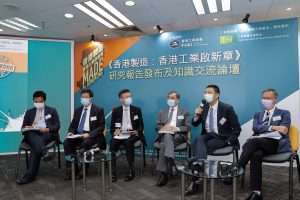
In July 2021, FHKI organised the “Made by Hong Kong – The Way Forward for Hong Kong Industries” Research Report Presentation and Knowledge Exchange Forum. At the Forum, representatives of FHKI presented major research findings and policy recommendations for the future industrial development of Hong Kong. Speakers from the industry and academia were invited to share their expert views on Hong Kong’s industrial policies and the development pathways for Hong Kong-invested manufacturers.

Mr. Paul Chan, the Financial Secretary of the HKSAR Government, stated in his opening remarks, “The Research revealed that many Hong Kong manufacturers deployed the ‘China-Plus-One’ by setting up new production lines in ASEAN economies to cope with trading challenges arising from international political dynamics. This strategy demonstrates the vision and agility of Hong Kong manufacturers and reflects that Government supportive measures align with market needs. The Research conducted by FHKI brings together invaluable insights from trade associations, scholars and enterprises, providing useful references for the Government to formulate up-and-coming industrial policies.”

Professor Richard Wong, Provost and Deputy Vice-Chancellor of The University of Hong Kong, Chair of Economics & Philip Wong Kennedy Wong Professor in Political Economy, and Director of Hong Kong Institute of Economics and Business Strategy shared his views on the transformation of Hong Kong’s industrial structure at the event. He said, ‘The technological advancement, well-established system, intellectual property, trade contracts, fair trials and appropriate market supervision are essential for the globalisation of the supply chain. Apart from investing in the hardware facilities, Hong Kong should build up more intangible assets such as knowledge, innovative researches and human capital, reform the current land and human resources policies and promote the industrial transformation for repositioning Hong Kong. I believe the brand of “Hong Kong” is still enjoying a comparative advantage and it contains sufficient conditions to perform “Re-industrialisation”. It is now the opportune time for Hong Kong manufacturers to capitalise on the opportunities brought forth by industrial transformation and develop innovation-driven industries in the Greater Bay Area and nearby regions.

Photo Caption: Professor Richard Wong sharing his views on the transformation of Hong Kong’s industrial structure.


In addition, Professor Tao Zhigang, Director, Institute for China and Global Development and HSBC Professor in Global Economy and Business Strategy, HKU Business School, together with three outstanding industry representatives, including Mr. Chang Ka-mun, Managing Director of Fung Business Intelligence Centre; Mr. Stephen Wong, Senior Vice President and Executive Director of Public Policy Institute of Our Hong Kong Foundation; and Mr. Stanley Tsui, Group Chief Operating Officer of ASM Pacific Technology Limited, had an intellectual discussion on the future development pathways of and policy facilitation for Hong Kong’s manufacturing sector, with regard to national industrial strategy, regional advancement, nurturing of local talent pool and status of advanced manufacturing sectors.

Photo Caption: Scholars and industry leaders gathered to discuss the future development of Hong Kong’s manufacturing sector.


According to the Research, ever since Hong Kong manufacturers moved northward in the 1980s, the production activities of Hong Kong-invested manufacturers in the Mainland have driven the demand of local producer services, shifting Hong Kong towards a service industry-oriented economy. It is estimated that in 2019, Hong Kong-invested manufacturers generated HK$680.1 billion worth of profit in the Mainland China, equivalent to nearly one-fourth (23.7%) of Hong Kong’s GDP. If the service industry is split into sub-categories, producer services in Hong Kong is on a continuous rise to reach 42.2% of GDP in 2019, which provides evidence for the economic contribution of offshore manufacturing activities to Hong Kong.

Based on the current conditions and business strategies of Hong Kong-invested manufacturers and global trends, FHKI summarised three major advocacies to the Government for formulating specific and long-term industrial policy with Hong Kong’s advantages and industrial foundation to create more diverse economy and employment in Hong Kong. They are: 1) Developing local “re-industrialisation” of selected industries to build core technological competence, 2) Strengthening Producer Services to Become the Hub of Regional Manufacturing Development and 3) Review Economic Data to Reflect Industrial Development.

Dr. Daniel Yip, Chairman of FHKI, said “Under the transformation in manufacturing activities and Hong Kong’s shift towards producer services, the traditionally ‘Made in Hong Kong’, which represents products manufacturers locally, should now be more broadly understood as ‘Made by Hong Kong’ covering diverse products that are researched and developed, designed and produced by Hong Kong-invested manufacturers with the intellectual and quality excellence originated from Hong Kong. We hope that the Government will look into how Hong Kong industries can reach new heights riding on the booming development in Asia and advancement of manufacturing sector, especially through the ‘re-industrialisation’ of selected industries to groom core technology and talents, as well as sustaining the growth of ‘Made by Hong Kong’.”

Research Full Report (Chinese only):
https://fhki.s3.ap-east-1.amazonaws.com/assets/news/MBHK%20final%20report.pdf

Read More