


Sponsors’ Networks Take Centre Stage in SPAC Success

Special purpose acquisition companies (SPACs) – the shell companies whose sole purpose is to identify a private firm to merge with – have become an increasingly important channel for firms to raise money. In 2020, for instance, in the U.S. alone, 248 SPAC IPOS raised $83.4 billion, much more than that raised by traditional IPOs. However, SPACs are also known for underperforming after the acquisition. Since the identity of the merged firm is not known prior to the IPO, and there is little other advance information, investors must place their trust in SPAC sponsors. A recent research by the scholars from the University of Hong Kong (HKU) shows there are discernible factors that can indicate the relative success of a SPAC.

The research was conducted by Professor Chen Lin, Chair of Finance and Stelux Professor in Finance, Professor Roni Michaely, Professor in Finance, Dr. Fangzhou Lu, Assistant Professor in Finance, and Ms. Shihua Qin, Research Postgraduate Student from HKU Business School.

SPAC sponsors are more important than in traditional IPOs because, similar to VC’s general partners, investors rely on them to select the right firm to merge with later. The sponsors are also subject to few checks and balances, and a large part of their compensation is not tied to long-term performance, hence increasing the likelihood of less successful deals. All this means that the credentials, reputation, and quality of SPAC sponsors, which the research measures using their network centrality, can be essential to a SPAC IPO’s eventual success. Network centrality measures how connected managers are, the extent to which they can exert influence in a social network, and the ability to obtain information. These features make network centrality a good proxy for the reputation, experience, and quality of SPACs sponsors. This research shows that the strength and extent of sponsors’ network connections in the private equity and venture capital industries is a major predictor of their performance. Sponsors with high network centrality are associated with better IPO fundraising, better acquisition targets, and better long-run stock returns, as well as the significantly higher operational performance of the target firm post-merger.

The research used data from 390 SPACs that had their IPOs between 2003 and June 2020, including information on sponsors’ work experience and network connections in relation to private equities (PEs) and venture capitals (VCs). The decision to focus on PE/VC network centrality to indicate sponsor quality was based on other evidence that having strong networks of social and professional relationships is important when picking and sourcing good merger targets. Better networks also usually mean access to more potential funding during IPOs, as well as better access to institutional investors (or PIPE, for private investment in public equity), which is usually needed for a business combination to be successfully completed. Finally, network centrality also signals to investors that the sponsors have some recognition of success and are regarded as trustworthy by others.

The research finds that fund-raising was significantly enhanced by sponsors with high PE/VC network centrality over those with low centrality. A one standard deviation increase in centrality translated into a $44.67 million increase in IPO proceeds and a $53.87 million increase in PIPE investors. These results are substantial given the average IPO in the research sample had proceeds totaling $198 million, and the average PIPE investment was $79 million.

Well-connected sponsors were also able to more quickly identify target firms to merge with, taking two months less to complete the business combination. The average, in comparison, was 20.5 months. And they revealed more information about their target based on the word count of their Form S-4 filings. A one standard deviation increase in network centrality was associated with a 12% increase in the quantity of information disclosed. Considering the general paucity of information on SPAC IPOs, this is something that investors should welcome as more information can potentially lead to greater business combination success and operational performance. In fact, this is what the team saw in further investigations.  A one standard deviation in network centrality led to a 3.7% greater probability that the merger and acquisition would succeed. Most importantly, it was also associated with better long-term performance: revenue was 15.2% higher before the merge, and Tobin’s Q was 17.4% higher after the merge. And a one standard deviation increase in PE network centrality leads to a 2.1% higher post-merger monthly Fama-French three-factor alpha during the 2-year period after the business combination. All of these support the notion that sponsors with higher network centrality are better at sourcing and picking target firms to work with, and they also to some extent have a positive impact on the firms after the merge.

One implication of the result is that regulators might want to consider implementing some pre-requisite qualifications of SPAC sponsors, and put some restrictions on how they are being compensated. By improving the quality of SPAC sponsors and limiting the dilution structure, SPACs can possibly become a viable channel for firms to go public. Given SPACs’ poor long-term performance, implementing these policy recommendations is also likely to reduce SPACs overall underperformance and better protect investors when they invest in these instruments.

Full version of this research paper:
SPAC IPOs and Sponsor Network Centrality
https://papers.ssrn.com/sol3/papers.cfm?abstract_id=3856181
Read More

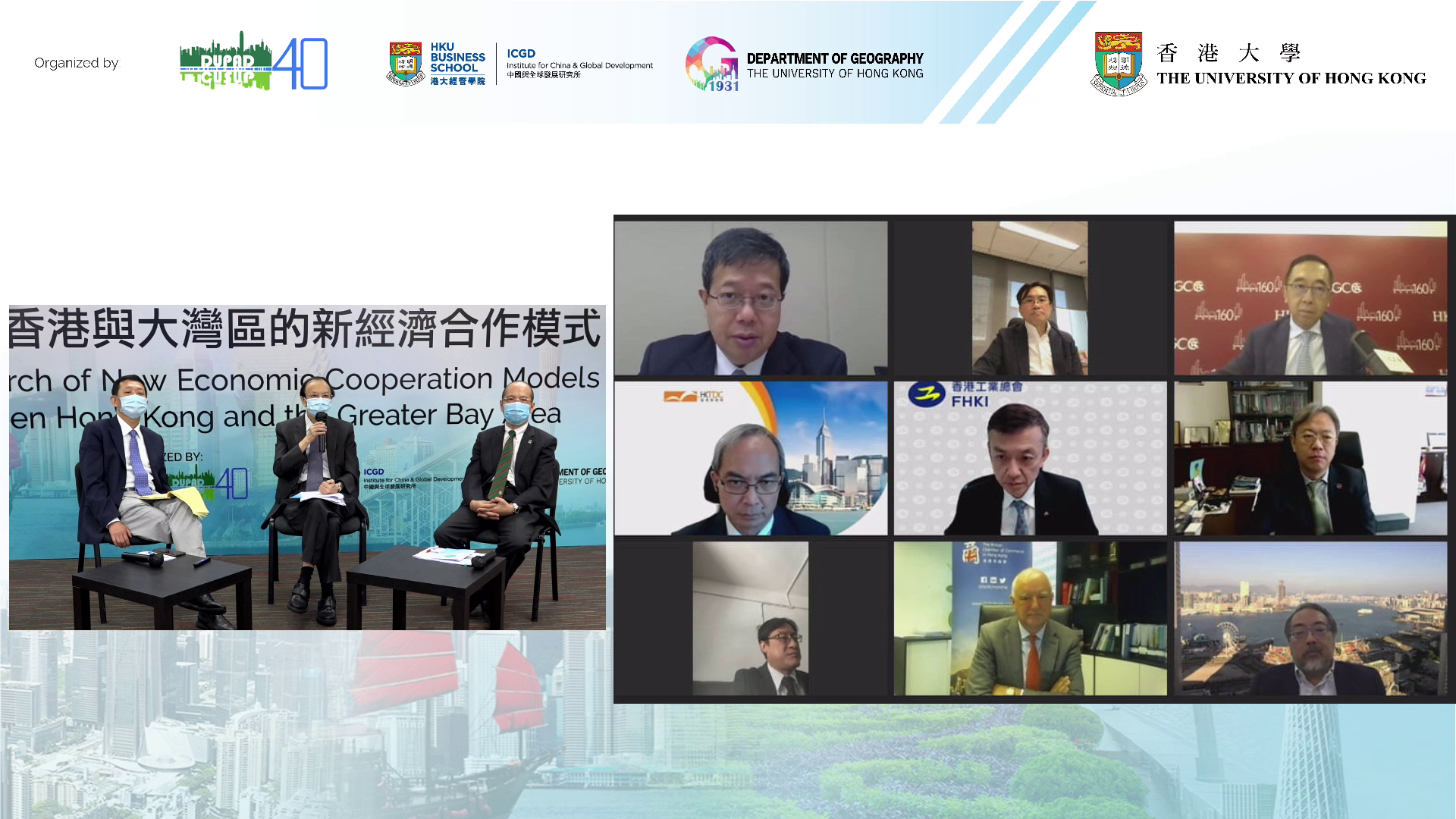
HKU Business School conducts interdisciplinary research on Greater Bay Area to search for new economic cooperation models

20210707_Greater Bay Area Webinar_live_screencap_04.png

Professor Anthony Yeh (middle in left grid), Professor Zhigang Tao (left in left grid) and Professor George Lin (right in left grid) invited nine distinguished panellists representing leaders of trade, industry and academia to share their insights into Hong Kong’s new economic roles and economic cooperation models in the Greater Bay Area. The distinguished panelists are Mr. C.M. Chan, Vice-President, The Law Society of Hong Kong; Mr. Ka-mun Chang, Managing Director, Li & Fung Development (China) Ltd and Secretary General, 2022 Foundation; Mr. David Graham, Executive Director, The British Chamber of Commerce; Mr. Nicholas Kwan, Director of Research, Hong Kong Trade Development Council; Mr. Thomas Lee, President, Hong Kong Institute of Planners; Mr. George Siu-kay Leung, CEO, The Hong Kong General Chamber of Commerce; Ir Prof. Paul Hon-yan Tsui, Vice-President, The Chartered Institute of Logistics and Transport in Hong Kong; Professor Lap-Chee Tsui, President, Hong Kong Academy of Sciences; and Dr. Daniel Yip, Chairman, Federation of Hong Kong Industries


The University of Hong Kong has a long history of active research on the Pearl River Delta after China’s economic reform and Open-Door Policy in 1978. Since the early 2000s, the University has been conducting policy-oriented and academic research relating to Hong Kong and Pearl River Delta (now known as the Greater Bay Area, GBA) development in a bid to inform business leaders and policymakers about the opportunities and challenges in the GBA.

On Friday, July 9, a webinar with over 200 registered participants was held to present and discuss the findings of a latest strategic public policy research project “In Search of New Economic Cooperation Models between Hong Kong and the Greater Bay Area” funded by the Policy Innovation and Co-ordination Office (PICO) of the HKSAR Government.

The webinar began with welcoming remarks by Professor Richard Y.C. Wong, Provost and Deputy Vice-Chancellor of the University of Hong Kong and Mr. Benjamin Mok, Deputy Commissioner for the Development of the Guangdong-Hong Kong-Macao Greater Bay Area of the Hong Kong SAR Government.

Professor Richard Wong's Welcoming Speech

Professor Richard Y.C. Wong, Provost and Deputy Vice-Chancellor of the University of Hong Kong delivered a pre-recorded opening speech.

Mr. Benjamin Mok's opening remarks

Mr. Benjamin Mok Kwan-yu, Deputy Commissioner for the Development of the Guangdong-Hong Kong-Macao Greater Bay Area of the Hong Kong SAR Government was invited to give opening remarks.

Following the presentations on major findings of the studies and possible new economic cooperation models, nine panellists representing both the private and public sectors joined a panel discussion to exchange their views on how Hong Kong can capitalise on the opportunities brought about by the development of the GBA and proactively develop innovative policies to implement new economic cooperation models between Hong Kong and the GBA.

This interdisciplinary research project was led by Professor Anthony Yeh of HKU Department of Urban Planning and Design, with Professor Zhigang Tao of HKU Business School, Professor George Lin of HKU Department of Geography, Dr. Xingjian Liu of HKU Department of Urban Planning and Design, and Dr. Fiona Yang of the School of Geography and Urban Planning of Sun Yat-Sen University as co-investigators. It aims to search for new economic cooperation models between Hong Kong and the Greater Bay Area in a knowledge-based high-tech economy.

A Guangdong-Hong Kong-Macau Greater Bay Area Information Net that provides a one-stop portal about the 9+2 cities in the Greater Bay Area has been produced by the research project. Find out more: http://www.dupad.hku.hk/hkprd/greaterbay/english/index.htm

Webinar website: http://www.dupad.hku.hk/cusup/gba/webinar

Read More

Asset Management and Private Banking – First Cohort Graduating

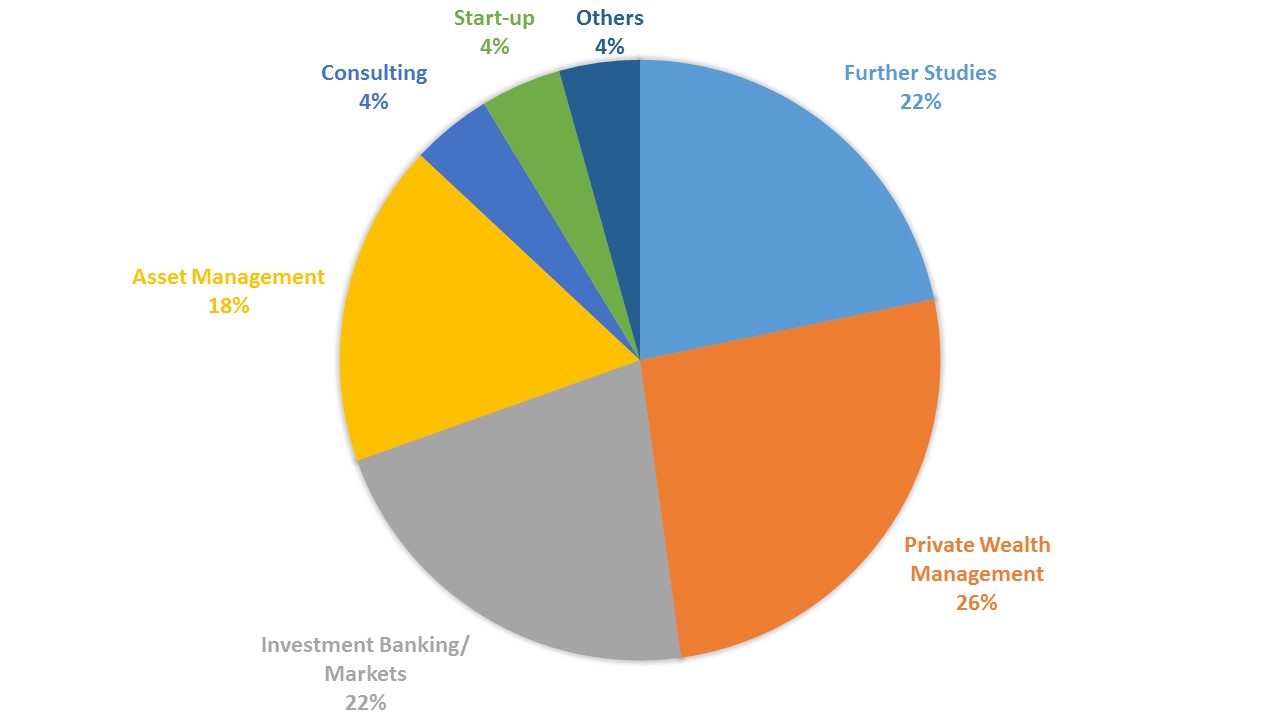
The Bachelor of Finance in Asset Management and Private Banking programme was founded in 2017, the first cohort of 23 students will be graduating, most of them this summer and a few (who have taken gap term) next semester/year.

Five of them have decided to pursue a Master degree joining King’s College London, Imperial London College, Carnegie Mellon University, Waseda University and the University of Hong Kong.   One student is returning to his home country in Europe.

Of the remaining 17 students, all of them have secured their graduate job or internship (for those who graduate next semester/year).  Six (35% out of the 17) of them are joining Private Banking/Retail Wealth Management, five (29%) of them are joining Investment Banks/Securities Firms, four (24%) of them are joining Asset Management, one (6%) of them is joining Consulting. Interestingly, one student (6%) decided to start his own “start-up”.

Asset Management and Private Banking First Cohort of 23 Students going into…

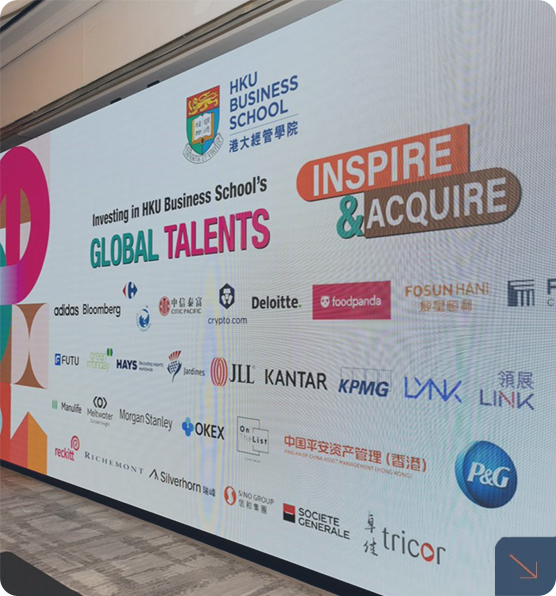
Recruiting firms include BNP Paribas, BOC International, Bretteville Consulting, China Asset Management, CCB International, Fidelity, Goldman Sachs, Guotai Junan International, HSBC, Julius Baer, Millennium Management, Pictet, Societe Generale, Standard Chartered and UBS.

Congratulations to the first graduating cohort and we look forward to your sharing with your junior AMPBers in the years to come.  Stay connected. CONGRATULATIONS!

Read More

Dr. Bonnie Hayden Cheng Receives Faculty Knowledge Exchange Award 2021

Congratulations to Dr. Bonnie Hayden Cheng, Associate Professor of Management and Strategy, on winning the Faculty Knowledge Exchange (KE) Award 2021 in recognition of her commitment to transforming corporate wellness into business strategy during COVID-19.

Due to the global pandemic arising in 2020, companies were suddenly faced with a crisis surrounding the mental health of their workforce: How do companies prioritize workplace wellness to support their key assets?

To address these challenges surrounding mental health and workplace wellness, Dr. Cheng designed a series of KE activities to enhance corporate wellness in companies during the pandemic, “Corporate Wellness 2.0: Enhancing Workplace Wellness during COVID-19“. These KE activities achieved significant impact in the following areas:

– Promoting corporate wellness by designing and assessing mental health and wellness initiatives

– Providing organisations with customised programmes to promote mental health and wellness, build resilience, and harness work anxiety to enhance productivity

– Championing workplace wellness during COVID-19 at the corporate (top-down) and employee (bottom-up) levels

– Advancing awareness and understanding of mental health at all levels of the corporate hierarchy, normalising conversations on mental health at work and reducing stigma

Introduced in 2011, the Faculty KE Award was established to recognise Faculty’s outstanding KE accomplishments that have made demonstrable economic, social, or cultural impacts to benefit the community, business/industry, or partner organisations.

Read More

How to build and scale up a fintech start up? Insightful knowledge shared in HKU Business School x IFTA Masterclass

The webinar on How to build and scale up fintech projects & startups in Hong Kong and the Greater Bay Area, co-hosted by HKU Business School and Institute of Financial Technologists of Asia (IFTA), was successfully held on June 16, with more than 100 participants joining us on such a fruitful evening.

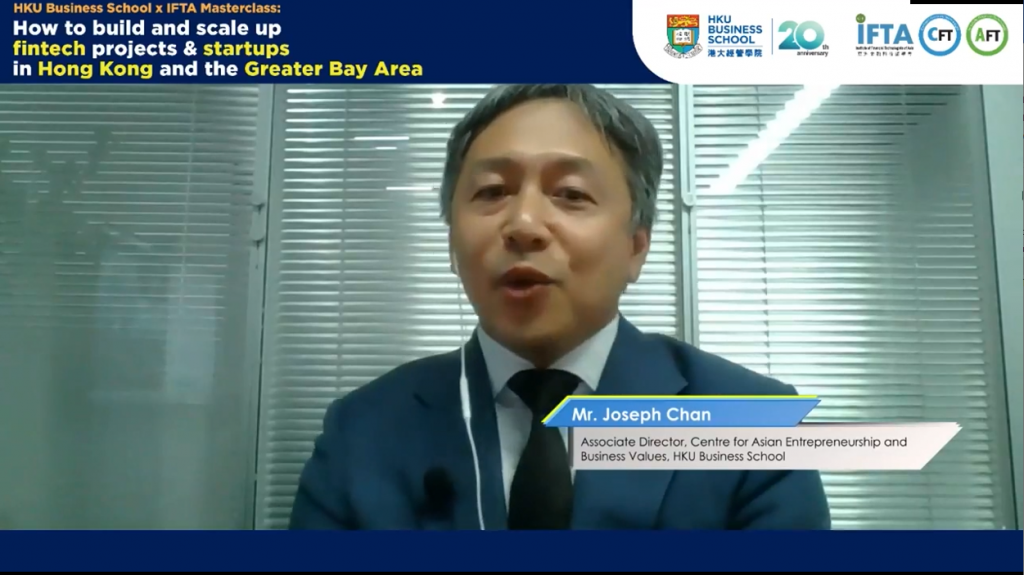
In the opening remarks, Mr. Joseph Chan, Associate Director of the Centre of Asian Entrepreneurship and Business Values of HKU Business School, laid out the School’s vision to become a catalyst in the Innovation & Entrepreneurship Community in Hong Kong, China and overseas.  He highlighted the exciting news about the opening of the School’s Beijing Centre and the Shenzhen Centre, which aims to better support the entrepreneurs to explore the market outside Hong Kong and to build the community with the change makers. This interactive webinar co-organised with IFTA is a good example to demonstrate the School’s dedication to contributing to the fintech and entrepreneurship ecosystem in Hong Kong with an aim towards aspiring fintech innovation and unleashing fintech companies’ potential.

Our honourable guests from IFTA shared with us their experience, insight and tips about fintech startups and scale-up in Hong Kong and the Greater Bay Area (GBA). While many believe that opening a startup is a privilege to young people with minimal liabilities, Mr. Benjamin Wong, Co-Founder & CEO of TranSwap, proved that those with rich work experience can excel on the path of entrepreneurship. “An entrepreneur must be resolute, resourceful, and resilient, as there is no standard operating procedure to follow when you are pushing at the frontiers of unknown territory,” said Mr. Wong. He believed that locals with the aspiration to disrupt and make the change, should take a leap of faith and run a startup. It is never too late to start a business.

Mr. Albert Yip, Chairman of Syndicate Capital, posited that funders look for scalable startups that can achieve sustainable market leadership and growth to invest in. “For a startup to scale up, strong cash flow, a workable IT system, and an all-rounded team are the prerequisites. A scalable startup must also keep on redefining its business model, seeking new funders, and conducting research and development to catch up with the global trends,” said Mr. Yip.

He recommended the startup companies expand into the GBA market and play a birding role in co-creating an ecosystem conducive to business. While most local startups have concerns over the institutional differences between Hong Kong and the Chinese mainland, Mr. Yip believed that local fintech entrepreneurs can find strategic partners, community builders and professional bodies to cover their shortcomings, and leverage the GBA talents for applications development. Mr. Benjamin Wong also agreed that no one can ignore the rise of China and the big GBA market, in the course of building a good ecosystem for startups in Singapore.

When the Chinese government is actively promoting the idea of E-RMB and e-payment technologies, Mr. Yip advocated that Hong Kong should strive to be a research hub on blockchain and digital currency, as well as start cultivating a talent pool together with talents from both the GBA and overseas countries. By doing so, Hong Kong can be the perfect testing ground to test run E-RMB or even E-HKD, further enriching our fintech ecosystem.

Yet, while digital currency could solve the liquidity issue in cross-border trade, making transactions almost instant, Mr. Wong agreed that there is a long road of cross-country compliance issues to be resolved and a complex regulatory regime to be made for digital currency to go mainstream in international trades. However, he was still very positive about the future and believed that the development of machine learning and 5G would greatly speed up innovation, logistics, and lead to more breakthroughs.

At the end of the webinar, Dr. Kin Hang Chan, Associate Director of Centre for Asian Entrepreneurship and Business Values of HKU Business School and an academic award winner in artificial intelligence (AI) research, concluded that entrepreneurship is about evaluating, finding opportunities, and turning them into marketable products and services. All speakers looked forward that local startups can continue to look out for opportunities in the GBA and thrive. The key to success is to have a functional business model and an ecosystem that can facilitate fundraising.

Read More

A Shield with a Razor’s Edge: Understand the Pros and Cons of CDS With an Empirical Lens

The global credit default swaps (CDS) market has experienced rapid growth in recent years. While CDS can be used to hedge risk or speculate, they are also widely used as a type of credit derivative for banks to get allowance on credit relief and hence, reduce the required capital to meet the regulatory requirements. A research by Professor Dragon Youngjun Tang, Professor in Finance at HKU Business School and other co-authors discovers that banks using CDS for capital relief have effectively freed up extra capital for businesses, but at the same time are more likely to extend loans and build up riskier loan portfolios.

The research is done by Professor Dragon Youngjun Tang and co-authors Dr. Chenyu Shan of Shanghai University of Finance & Economic, Professor Hong Yan of Shanghai Advanced Institute of Finance and Dr. Xing Zhou of the Federal Reserve Board of Governors. It studied 105 large US banks on their CDS trades, required capital, loan transactions, and other financial information from 2001 to 2014. The paper was also published on “Review of Finance” early this year, which is one of the Top 5 journals for Finance academic researches.

Comparing with banks that trade CDS for speculation, banks using CDS for capital relief do perform better in terms of profit, Return-on-Assets and Return-on-Equity. “The profit margin in the banking industry is not very high, and therefore it is rational for banks to expand their total asset base to earn more,” said Professor Tang. “In general, banks can free up 10 – 15% of their required capital after using CDS, allowing them to conduct more businesses.”

However, as using CDS on outstanding loans makes institutions appear safer to regulators and shareholders, its real consequence to the market is also worth studying. During financial crisis, the cost for CDS protection will inevitably be driven up and the role of CDS in risk transfer and capital relief will shrink. As banks relying on CDS for capital relief may have built up riskier loan portfolios, they are more likely to face liquidity shortages and are unable to maintain their regulatory capital ratio during financial crisis. Even if they can use CDS to achieve capital relief, the amount of capital they save via CDS can be much less than the amount of liquidity they need. As a result, they are more likely to request government bailouts than banks that trades CDS for speculation. “In order words, by buying CDS, banks have transferred their risks to the tax payers in times of financial crisis.” said Professor Tang.

Nevertheless, Professor Tang still believes that the existence of CDS is still conducive to the financial market. He remarks that the CDS market was very active prior to the Coronavirus pandemic. Hedge funds and institutional investors alike had managed to hedge most of their risks thanks to CDS. As CDS does increase the performance of banks, this financial innovation can deliver better welfare to shareholders. Moreover, the more liquidity available, the easier it is for businesses to finance themselves and propel economic growth. As the CDS market is taking off in the mainland, Professor Tang believes that the key is to have an effective regulatory regime to guide the market. “We can learn from past mistakes and try to achieve better results in the future.”

Full version of this research paper:
Credit Default Swaps and Bank Regulatory Capital
https://papers.ssrn.com/sol3/papers.cfm?abstract_id=3038730

Read More

HKU Business School students shine at the CGMA Global Business Challenge (GBC) 2021

Congratulations to Geraldi Harlan, a year 1 BBA(Acc&Fin) student and Aurell Sulaiman, a year 1 BSc(QFin) student, who have won the Championship at the Hong Kong Semi-Final of CGMA Global Business Challenge. The team, comprised of two students from our School and two other members from the Faculty of Engineering, competed in the GBC 2021 North Asia Final with the winning teams from Mainland China, Macau, Japan, Taiwan and Mongolia. They have won the Awards of Commendations and Geraldi has received the Future Business Leader Award in the North Asia Final.

The competition adopted an actual case scenario under the CIMA professional qualification and required student teams to apply and integrate their business knowledge to help solve practical problems.

The team believed that team cohesion was essential for them in winning the competition. “Teamwork is one of the essential building blocks of success in a case competition. Without it, no matter how good the content of the presentation is, the overall delivery would be adversely affected and leave a bad impression to the judges.” They also thought it’s crucial to have a strong sense of self-belief. “Although our team comprises of freshmen from the Business and Engineering Faculties, we are able to make it to the final round and stand out from the competitors who are senior students with more experiences and advanced knowledge.”

CGMA Global Business Challenge (GBC) 2021, initiated by the Chartered Institute of Management Accountants (CIMA), is an international business competition designed to bring out the best in the young business leaders of tomorrow.

More information about the Challenge: https://ug.fbe.hku.hk/competition/cgma-global-business-challenge-2021

Read More

Socially Responsible Investment Funds Fail to Inspire Firms to Improve

“Does socially responsible investing change firm behaviour?” wins the best paper award at the 2021 UMass Boston-EM Normandie research conference.

Socially Responsible Investment (SRI) Funds have become popular in recent years as investors increasingly give weight to measures such as reducing pollution, maintaining employee and customer satisfaction and diversifying board membership. However, new research shows that while such funds are good at picking firms that adopt such behaviours, they do not inspire those firms to further improve their performance.

The research, by Professor Roni Michaely, Professor in Finance at HKU Business School, and co-authors Davidson Heath and Matthew C Ringgenberg of the University of Utah and Daniele Macciochi of the University of Miami, is the first of its kind to offer evidence of the impact of SRI funds on corporate behaviour. This is important information for investors because the allocation to SRI funds has more than doubled over the last decade – last year (2020), for instance, an SRI fund launched by BlackRock attracted more than $600 million in its first week of activity.

“Our fundamental question was whether SRI funds could change real-world behaviour. What we found is that while SRI funds tend to hold firms that are already considered better along environmental and social dimensions, those firms do not become any more responsible after they are selected by SRI funds. They are not encouraged to go the extra mile,” Prof. Michaely said.

He and his co-authors studied firms’ environmental and social profiles both before and after they were held by SRI funds. Beforehand, the firms exhibited lower pollution, greater board diversity, higher employee satisfaction, higher workplace safety and fewer customer complaints* than firms in the portfolios of non-SRI funds. However, afterwards, the firms generally did not improve on this performance.

Pollution abatement investments showed little difference, meaning the entrance of SRI did not encourage firms to increase investments or aim to further reduce their pollution. Employee and customer satisfaction remained highly similar – SRI funds did not appear to motivate them to achieve greater satisfaction rates. However, SRI ownership was associated with a small increase in women on the board (1.4 percentage points) and non-Caucasians on the board (0.5 percentage points), although this was not seen as a significant change.

“There are three main possibilities for the relationship between SRI and firm-level stakeholders: SRI funds behave no differently than non-SRI funds and in effect are a form of ‘greenwashing’; SRI funds select companies that already focus on environmental and global issues; or, SRI funds engage with their portfolio firms to mitigate risks and improve their behaviour. Our evidence suggests that while SRI funds do invest differently than non-SRI funds, their decisions to invest in firms and the amount invested do not have any measurable effect on firms’ behaviour. In other words, there is a selection effect, but not a treatment effect,” Professor Michaely said.

The results offer a cautionary note to investors that socially responsible investing may not improve real-world behaviour. Investors are thus advised to scale back their expectations. Moreover, given the increased interest in SRI investing, it is also advised that there be better and more transparent reporting by SRI funds about their activities.

Full version of this research paper:
Does Socially Responsible Investing Change Firm Behavior?
https://ssrn.com/abstract=3837706

Read More

Disrupt your traditional perception to ETFs – Discover how short interest of ETFs benefits the stock market

Exchange Trade Funds (ETFs) have become a low cost alternative of mutual funds for being more liquid and transparent. In 2020, there were more than 7,000 ETF products in the global market, with assets amounted to approximately 7.74 trillion U.S. dollars. Comparing with the amount of 1.3 trillion USD in 2010, this significant increase within a decade indicated the tremendous growth of this new form of index funds. While some criticises that traditional ETFs are too passive in reflecting market signals, research from Dr. Shiyang Huang, Associate Professor in Finance, HKU Business School and his team shows that Industry ETFs are able to hedge the industry and play a great role in improving market efficiency in the US market. The Industry ETF was proven as a positive financial innovation for both investors and the market and therefore should be encouraged by regulators.

Maintaining Market Efficiency with “Long-short Strategy”
The role of ETFs in risk hedging is common in the market. In 2017, Bloomberg reported that hedge funds had USD $103 billion in short ETF positions, almost doubling their USD $43 billion in long positions. While a high Short Interests Ratio (SIR) generally reflects a bearish sentiment in the market, Dr. Huang discovers that informed investors are actually adopting a “long-the-stock/short-the-ETF” strategy to profit from firm-specific information and to hedge industry risks.

Dr. Huang explains that even when investors acquire positive information of a stock prior to its earnings announcements, stock price itself is still vulnerable to exogenous risks such as industry risks and market risks. To hedge industry risks effectively, hedge funds will hold a long position on a stock they have positive firm-specific information on, while holding a short position on an Industry ETF (IETF) to which the stock belongs to. Dr. Huang and his team discover that the long-the-stock/short-the-ETF strategy can mitigate Post-Earnings-Announcement Drifts, reflecting that the market incorporates the information of the earning announcement efficiently, and guide the stock price to its true value in a timely manner. That said, introducing an IETF can help improve the efficiency of a company’ stock that belongs to the corresponding industry of this IETF.

Do Smart Beta ETFs Create Values to Investors?
In the ETF marketplace, smart beta ETFs supported by asset pricing research can be regarded as the fastest-growing segment. They were built upon formulaic rules, such as the value, growth rate, size and market momentum of a portfolio of stocks. As of 2018, Smart-Beta ETFs account for more than 20% of the US ETF market. As forecasted by Blackrock, Smart-Beta ETFs will grow to more than USD $2 trillion by 2025.

However, Dr. Huang discovered that although the newly introduced Smart-Beta ETFs have stellar backtests results, significant drop on the performance are always found after listing. After studying the performance of 238 Smart-Beta-ETFs listed in the US from 2000-2018, Dr. Huang has shown that the unsatisfactory performances of Smart-Beta-ETFs are unrelated to improved market efficiency, strategic listing timing and diminishing returns to scale. In contrast, the existence of data mining during index construction largely drives the performance decline of smart beta indexes. Data mining is particularly significant in multi-factor indexes where ETF sponsors have the discretion in freely choosing and combining multiple factors for their ETF products. Before listing, the proclaimed returns from multi-factor Smart-Beta ETFs are on average 4.11% per year. But after listing, they suffer an average loss of -0.79% per year.

Some argues that the poor performance of Smart-Beta ETFs is a result of high management fee, but even excluding this factor, research from Dr. Huang has shown that their performances are still weaker than traditional market index ETFs.

Despite the research showing a significant performance gap before and after listing, Dr. Huang points out that Smart-Beta ETFs could still out-perform traditional ETFs under some special circumstances. For example, in the current “zero interest rate” environment, Smart-Beta ETFs that follow high-yield can outperform the market index ETFs, as high-dividend stocks may perform well. Therefore, investors are advised not to blindly chase “on paper” performance of “smart” beta indexes, but have a more in-depth study before purchasing this new type of finance products.

Read More:
Innovation and Informed Trading: Evidence from Industry ETFs
The Smart Beta Mirage

Read More

Learning the state-of-the-art social collaboration in a fast-paced global business environment

Twelve HKU Business School students joined the Virtual Business Professional (VBP) Project in March. They were placed in teams of 5-6 people with around 100 students from 16 different universities worldwide to work on a consulting project for companies including Netflix, Starbucks and Google. Throughout the project, students learned many essential remote working skills, intercultural communication skills, different business models and marketing strategies, and how modern virtual collaboration can be powered by artificial intelligence technology. The VPB Project offered by the Marshall School of Business at the University of Southern California (USC) is a six-week project that offers students an opportunity to collaborate and work in a virtual setting with students from all over the world to develop virtual and cross-cultural collaboration skills using state-of-the-art collaboration tools.


Ho Yin Yee Jocelyn, BBA(Law)&LLB, Year 2“I was fascinated to learn about various content, such as different social media strategies, crowdfunding, donor retention, content creation, bolted in reputation etc. Such knowledge would not be covered in the ordinary academic syllabus, yet crucial to internships and job seeking.”


Ho Yin Yee Jocelyn, BBA(Law)&LLB, Year 2

Chu Tsoi Yan Jenny, BBA(IBGM), Year 2“In terms of work processes, virtual collaboration is a whole lot harder than what I’ve expected – It is more than jumping freely into video conferences, utilising popular chat tools and learning how to store files on a shared cloud-based drive. Especially being the only Asian student in the team situated in an opposite time-zone, scheduling a meeting is considered as a big hassle. Even though I had to compromise for 7 am meetings, I have learnt to accommodate the majority’s needs for the team’s overall interest. More importantly, I have developed an adaptive work mode that would be beneficial to my future studies and career.”


Chu Tsoi Yan Jenny, BBA(IBGM), Year 2

Gao Ningling, BEcon&Fin, Year 2“Teammates from different backgrounds have different working styles and we can learn from the difference. For example, one of my teammates has a strong leadership capacity, and he works and aggressively leads us. Feeling inspired to work with him, I think some of his merits can be absorbed by myself.”


Gao Ningling, BEcon&Fin, Year 2


Learn more: https://www.marshall.usc.edu/departments/business-communication/vbp-project

Read More