最後一節的港大經管學院 x 香港總商會線上研討會於2021年11月11日舉辦,並以「社會不公:獅子山精神在香港仍奏效嗎?」(Social Inequality: Does the Lion Rock Spirit Still Work in Hong Kong?) 為題,邀請了王于漸教授,港大經管學院的創院院長、現任香港大學首席副校長、經濟學講座教授及黃乾亨黃英豪政治經濟學教授 和 小彬紀念基金會暨社商賢匯創辦人兼行政總裁 馬夏邐女士,就著社會不公這個議題進行深入討論。
The Faculty Teaching Award Scheme recognises and rewards teachers with outstanding achievements and significant contributions in teaching and student learning in the Faculty. The award-winners for the academic year 2020-21 are:
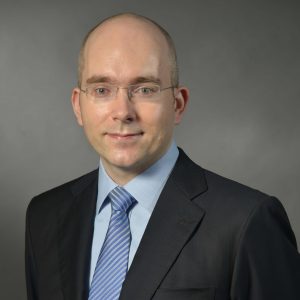
Faculty Outstanding Teacher Award (Undergraduate Teaching) Dr. Matthias BUEHLMAIER Principal Lecturer
“I feel very honored to receive the Faculty Outstanding Teacher Award (Undergraduate Teaching) in 2020-21. It is fair to say that without the tremendous support from colleagues at HKUBS and HKU over the last few years, it would not have been possible to achieve this award. I am very grateful and thankful for colleagues’ constant encouragement and advice that allowed me to grow and develop as an educator. Last but not least, I would like to thank the incredible students at HKU. Their desire to master new skills and knowledge has always been an inspiration for me to be the best “version of myself” as a teacher. I look forward to contributing to HKU Business School in the future in order to advance teaching and learning together with our wonderful colleagues and students.”
Dr. Yiwen ZHANG Associate Professor
“I believe there are two essential elements that are key to effective learning of organizational management – evidence-based content and experiential delivery approach. First, I choose to focus my teaching on management concepts and theories that are well substantiated by scientific evidence. I take every chance to explain to my students how the science of human behavior enables us to understand our own biases and make more effective decisions. I also enjoy communicating with students the latest development in management and leadership research and nurturing their curiosity and passion in examining the reliability and validity of their own ideas with scientific rigor. Second, it is crucial to create a safe, fair, and empowering environment in the classroom to promote students’ full engagement. I actively interact with my students in all courses by frequently soliciting their own views and comments, challenging existing assumptions, facilitating discussions and debates, and encouraging continued individual and group learning outside the classroom and beyond the end of the course. Our undergraduate students are active learners and original thinkers who have, yet, limited exposure to organizational life. It is my job to design and flexibly adopt a variety of experiential and immersion teaching tools such as cases and simulations which provide students the opportunities to make high-stake managerial decisions without suffering from any real consequences, to feel the intensity and mix of emotions in conflict scenarios, and to witness the effectiveness of different solutions or coping strategies introduced in the lecture. I also encourage students’ introspection during these experiential class activities which forms an understanding of their own personalities, cultural biases, and leadership styles. I am often proud of my students for overcoming their anxiety and fear in collaborative work and opening themselves up to a full learning experience in management courses.”
Dr. Jinzhao DU Assistant Professor
“Effective teaching is a two-way learning process. Students’ involvement is determinant of my teaching’s success. I always tell my students that they should treat the course as a venue for us to learn from each other. In addition to absorbing knowledge from me and their fellow classmates, students are strongly encouraged to influence others with their valuable input. The two-way learning mindset greatly inspires students to reflect on their own experiences, actively share their perspectives, relate them to the knowledge taught, and develop critical thinking. It even leads to knowledge co-creation from both my students and myself.”
Faculty Outstanding Teacher Award (Postgraduate Teaching) Mr. David LEE Principal Lecturer
“I have always felt that teaching is an absolute privilege. With the disruption to classroom teaching that we have experienced due to the pandemic, this feeling has only grown. Without a doubt, I have been blessed to teach wonderful, curious, and motivated students. I am so grateful for the opportunity to engage with such students in the endeavor of learning.
I am convinced that during times of disruption a teacher can have a profound, positive impact on students. By shaping a meaningful learning journey, we can all grow together during such times, creating transformational learning opportunities for both student and teacher that have lasting influence.”
Dr. Alex CHAN Associate Professor of Teaching
“I believe that every student in my class is a distinctive individual learner. I do my best to recognize individual students and understand their individual learning progress and needs. Through developing a mutual respect relationship between teacher and students, a teacher can provide personalized support and encouragement to individual students in their learning journey to enhance their learning interests and commitment. This mutual respect and understanding relationship is essential for me to develop an effective teaching and learning environment to handle the unexpected changes and challenges faced by students and teachers during these few years.”
Dr. Chao DING Principal Lecturer
“Students’ learning experience should extend beyond the scope of textbook concepts and terminologies. An effective way to enhance teaching and learning is to provide students with ample real world examples and practices so that they learn by doing. Planting a clear course roadmap in the students’ mind also improves the effectiveness of learning. For every milestone, small and large, students are kept in the loop about “where they are right now,” and “where they are moving forward.” With such efforts, students are able to piece together knowledge in a more systematic way.”
Dr. Xiaowei ZHANG Assistant Professor
“One of my research areas is reinforcement learning, a machine learning paradigm that studies how an intelligent agent should interact with an uncertain environment in order to learn, improve, and adapt its decision-making strategies. It is the cornerstone of many artificial intelligence systems such as AlphaGo and autonomous vehicles. There are three key factors for building a successful reinforcement learning system:
‧Rewarding signals (to align the short-term and long-term learning objectives)
‧ Timely feedback (to provide enough opportunities for the agent to adjust its strategies)
‧ Sufficient exploration (to ensure the learned strategies are robust relative to potential changes to the environment in the future)
Interestingly, these three factors are important not only for teaching a “machine” to learn to complete a task, but for teaching a student to learn a subject. This is also my philosophy when I teach machine learning and data analytics to business students:
‧Design exercises using real data from business environments
‧Facilitate online/in-person interactions during the class
‧Develop a diverse set of examples from various business areas
I appreciate the privilege of teaching at HKU. It allows me to learn, improve, and adapt as well.”
Faculty Teaching Innovation Award Dr. Rujing MENG Associate Professor of Teaching
“My teaching innovation closely reflects and reinforces my teaching philosophy. As a firm believer of a student-centred approach and learning-by-doing principle, I implement hands-on projects and let students play a central role in constructing their own knowledge. For example, I designed a group trading project in the course on investments to IMBA and MFin students. Through the project, students not only examined the financial models in a live setting, but also actively learned from peers. Also, they experienced the excitement and heart-beating market movements, and consequently learned the importance of personality and emotions in making the investment decisions.”
自2013年起,内地當局要求企業實時公佈他們的排污數據,以便執法部門更有效地打擊超標排放。有見及此,何博士進行了一項隨機對照試驗(randomised control trial),研究群眾參與能否提升執法部門的效率。此研究僱用了大量志願者監察一些「超排」記錄欠佳的企業,利用實施監測結果通過不同渠道像政府部門投訴。何博士發現民眾參與,能大大提高執法部門的效率。他指出:「研究發現執法部門會迅速回應市民的投訴,而且當企業意識到自己正受到群眾監督時,他們冒險進行非法排放的機率會下降50%。」
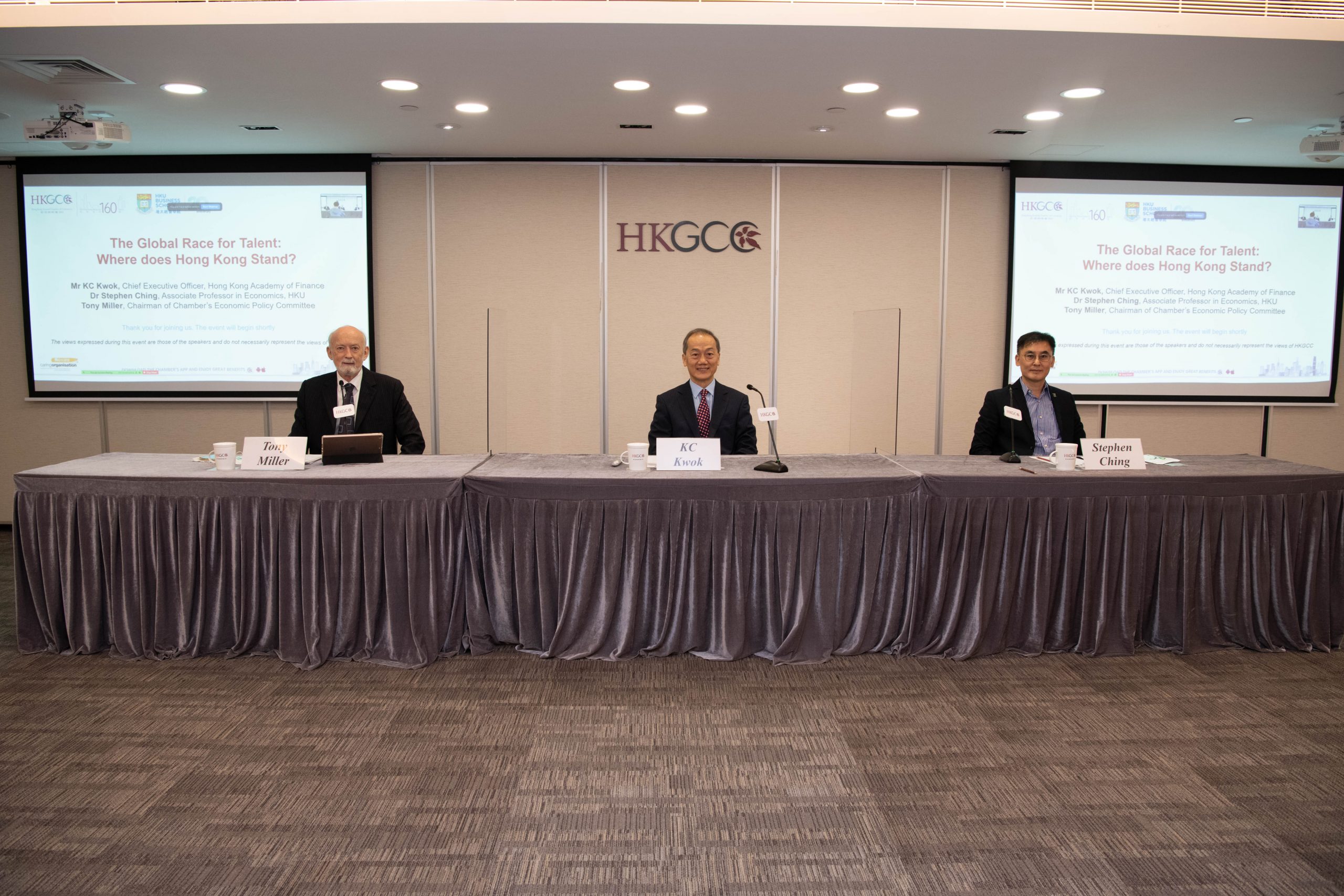
第四節港大經管學院 x 香港總商會線上研討會於2021年10月20日舉辦,並以「國際人才競爭白熱,香港何去何從?」(The Global race for talent: Where does Hong Kong stand?)為題,邀請了港大經管學院副教授程騰歡博士和香港金融學院行政總裁郭國全先生,探討在人口老化的趨勢下為香港設計全新的人才戰略。是次活動由香港總商會的經濟政策委員會主席苗學禮先生主持。
作爲一名策略管理學學者,盧米諾教授致力研究企業如何建立可持續的相對優勢,對抗競爭對手、擬定有關風險管理和商業策略。策略管理學學者亦會與從業員合作,構建理論模型,為市場提供理論指引。在策略管理學這個大課題中,盧米諾教授對企業管理尤感興趣,特別是企業之間的合作機制,例如企業之間如何發展及調整這些機制等等。憑著敏銳的商業觸覺,盧米諾教授多年來為學界貢獻了無數高質量的論文。自2003年起,盧米諾教授在研究方面屢獲殊榮,包括在2019年,獲國際知名的美國管理學會 (Academy of Management) 頒發Conflict Management Division’s Most Influential Article Award,以表揚他撰寫的策略管理學論文,對商業社會產生深遠的影響;在2017年,他獲商業教育網站Poets & Quants 評選為40位40歲以下最傑出的商學院教授之一 (40 Under 40 Most Outstanding Business School Professors);在2016年,他的論文亦奪得了國際學術期刊《The Journal of Strategic Contracting and Negotiation》 的最佳論文殊榮。
除了能為買賣雙方提供高透明度的交易體驗,便利商務往來,盧米諾教授指出區塊鏈亦有其他可取之處。他説:「例如沃爾瑪的食品供應區塊鏈,能夠迅速偵測到員工在定價時,不小心犯下的錯誤。由馬士基(Maersk)和國際商業機器公司(IBM)管理的TradeLens 區塊鏈,甚至能夠提供實時的數據分享,並在去中心化的情況下實現全網絡數據對帳。」盧米諾教授說。他進一步指出,區塊鏈的技術已經發展得非常成熟,它甚至能為企業執行日常工作。盧米諾教授解釋:「分散式風險投資基金 The DAO 就是一個實例。這基金並不需要人類管理和指揮,亦沒有一個實體辦公室。它的一切運作全憑投資者在區塊鏈上就項目投票,區塊鏈會按照其内置的智能合約,根據投資者們的投票結果,和執行項目時的表現,決定投資者所獲分配的利息。」
低稅率及簡單稅制為確立香港成為國際金融中心的主要因素之一。然而,面對未來經濟的不確定性和全球稅務改革的熱潮,有部份人對香港的財政前景表示擔憂。第三節港大經管學院 x 香港總商會線上研討會於2021年9月20日舉辦,並以「香港未來的公共財政」(The Future of Hong Kong’s Public Finances: Spend Now, Tax Later?)為題,邀請了港大經管學院副教授趙耀華博士和惠譽評級首席中國分析師(主權評級)費安德先生 (Andrew Fennell) 討論香港現時是否需改革稅制,以應對外來環境的轉變及修補目前稅收結構的缺陷。是次活動由香港總商會的經濟政策委員會主席苗學禮先生主持。
趙博士進行了一系列的研究,探討僱員與他們的職業之間的關係。其中一份即將會在國際知名的 Academy of Management Journal發表的論文,集中研究工作意義和事業發展之間的關聯性。趙博士在美國透過進行縱向研究和網上問卷,她發現員工的工作動機可以分為三種,而且這些動機之間的差異所產生的效果亦截然不同。三種動機分別是:薪津驅動(視工作為賺取收入的行為);事業驅動(以工作滿足個人在職業生涯的成就感和榮耀);和使命驅動(視工作為實現自我完善和創建未來的使命)。