


Faculty Teaching Award Scheme 2020-21
The Faculty Teaching Award Scheme recognises and rewards teachers with outstanding achievements and significant contributions in teaching and student learning in the Faculty. The award-winners for the academic year 2020-21 are:
Faculty Outstanding Teacher Award (Undergraduate Teaching)
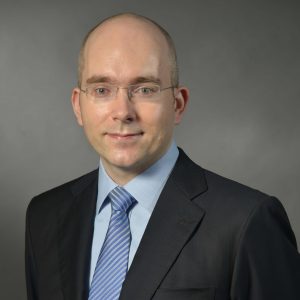
Dr. Matthias BUEHLMAIER
Principal Lecturer
“I feel very honored to receive the Faculty Outstanding Teacher Award (Undergraduate Teaching) in 2020-21. It is fair to say that without the tremendous support from colleagues at HKUBS and HKU over the last few years, it would not have been possible to achieve this award. I am very grateful and thankful for colleagues’ constant encouragement and advice that allowed me to grow and develop as an educator. Last but not least, I would like to thank the incredible students at HKU. Their desire to master new skills and knowledge has always been an inspiration for me to be the best “version of myself” as a teacher. I look forward to contributing to HKU Business School in the future in order to advance teaching and learning together with our wonderful colleagues and students.”
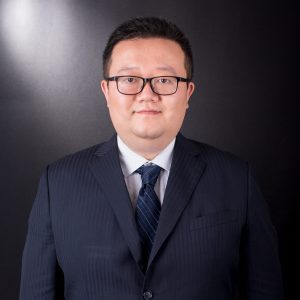
Dr. Yiwen ZHANG
Associate Professor
“I believe there are two essential elements that are key to effective learning of organizational management – evidence-based content and experiential delivery approach. First, I choose to focus my teaching on management concepts and theories that are well substantiated by scientific evidence. I take every chance to explain to my students how the science of human behavior enables us to understand our own biases and make more effective decisions. I also enjoy communicating with students the latest development in management and leadership research and nurturing their curiosity and passion in examining the reliability and validity of their own ideas with scientific rigor. Second, it is crucial to create a safe, fair, and empowering environment in the classroom to promote students’ full engagement. I actively interact with my students in all courses by frequently soliciting their own views and comments, challenging existing assumptions, facilitating discussions and debates, and encouraging continued individual and group learning outside the classroom and beyond the end of the course. Our undergraduate students are active learners and original thinkers who have, yet, limited exposure to organizational life. It is my job to design and flexibly adopt a variety of experiential and immersion teaching tools such as cases and simulations which provide students the opportunities to make high-stake managerial decisions without suffering from any real consequences, to feel the intensity and mix of emotions in conflict scenarios, and to witness the effectiveness of different solutions or coping strategies introduced in the lecture. I also encourage students’ introspection during these experiential class activities which forms an understanding of their own personalities, cultural biases, and leadership styles. I am often proud of my students for overcoming their anxiety and fear in collaborative work and opening themselves up to a full learning experience in management courses.”
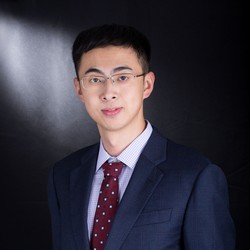
Dr. Jinzhao DU
Assistant Professor
“Effective teaching is a two-way learning process. Students’ involvement is determinant of my teaching’s success. I always tell my students that they should treat the course as a venue for us to learn from each other. In addition to absorbing knowledge from me and their fellow classmates, students are strongly encouraged to influence others with their valuable input. The two-way learning mindset greatly inspires students to reflect on their own experiences, actively share their perspectives, relate them to the knowledge taught, and develop critical thinking. It even leads to knowledge co-creation from both my students and myself.”
Faculty Outstanding Teacher Award (Postgraduate Teaching)
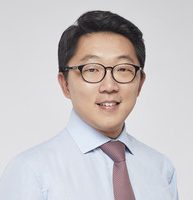
Mr. David LEE
Principal Lecturer
“I have always felt that teaching is an absolute privilege. With the disruption to classroom teaching that we have experienced due to the pandemic, this feeling has only grown. Without a doubt, I have been blessed to teach wonderful, curious, and motivated students. I am so grateful for the opportunity to engage with such students in the endeavor of learning.
I am convinced that during times of disruption a teacher can have a profound, positive impact on students. By shaping a meaningful learning journey, we can all grow together during such times, creating transformational learning opportunities for both student and teacher that have lasting influence.”
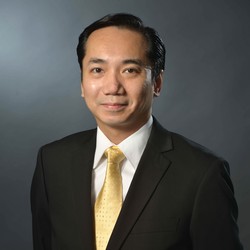
Dr. Alex CHAN
Associate Professor of Teaching
“I believe that every student in my class is a distinctive individual learner. I do my best to recognize individual students and understand their individual learning progress and needs. Through developing a mutual respect relationship between teacher and students, a teacher can provide personalized support and encouragement to individual students in their learning journey to enhance their learning interests and commitment. This mutual respect and understanding relationship is essential for me to develop an effective teaching and learning environment to handle the unexpected changes and challenges faced by students and teachers during these few years.”
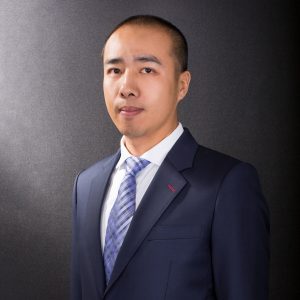
Dr. Chao DING
Principal Lecturer
“Students’ learning experience should extend beyond the scope of textbook concepts and terminologies. An effective way to enhance teaching and learning is to provide students with ample real world examples and practices so that they learn by doing. Planting a clear course roadmap in the students’ mind also improves the effectiveness of learning. For every milestone, small and large, students are kept in the loop about “where they are right now,” and “where they are moving forward.” With such efforts, students are able to piece together knowledge in a more systematic way.”
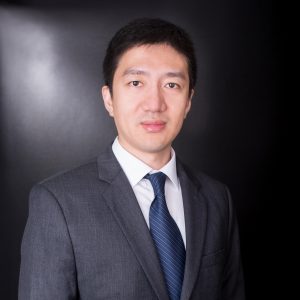
Dr. Xiaowei ZHANG
Assistant Professor
“One of my research areas is reinforcement learning, a machine learning paradigm that studies how an intelligent agent should interact with an uncertain environment in order to learn, improve, and adapt its decision-making strategies. It is the cornerstone of many artificial intelligence systems such as AlphaGo and autonomous vehicles. There are three key factors for building a successful reinforcement learning system:
‧ Rewarding signals (to align the short-term and long-term learning objectives)
‧ Timely feedback (to provide enough opportunities for the agent to adjust its strategies)
‧ Sufficient exploration (to ensure the learned strategies are robust relative to potential changes to the environment in the future)
Interestingly, these three factors are important not only for teaching a “machine” to learn to complete a task, but for teaching a student to learn a subject. This is also my philosophy when I teach machine learning and data analytics to business students:
‧ Design exercises using real data from business environments
‧ Facilitate online/in-person interactions during the class
‧ Develop a diverse set of examples from various business areas
I appreciate the privilege of teaching at HKU. It allows me to learn, improve, and adapt as well.”
Faculty Teaching Innovation Award
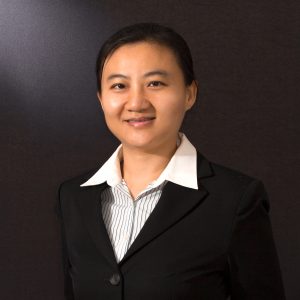
Dr. Rujing MENG
Associate Professor of Teaching
“My teaching innovation closely reflects and reinforces my teaching philosophy. As a firm believer of a student-centred approach and learning-by-doing principle, I implement hands-on projects and let students play a central role in constructing their own knowledge. For example, I designed a group trading project in the course on investments to IMBA and MFin students. Through the project, students not only examined the financial models in a live setting, but also actively learned from peers. Also, they experienced the excitement and heart-beating market movements, and consequently learned the importance of personality and emotions in making the investment decisions.”