



Global Imbalances Are Made at Home
Prof. Steven Barnett
2 September 2026
Global imbalances are rising again. One consequence is trade tensions, with accusations of unfair trading practices, threats of retaliation, and escalating trade barriers such as tariffs and export restrictions. Tensions, of course, are fueled by many factors, including political ones.
This article looks at the rise in global imbalances from an economic perspective, with a special focus on China. Reducing China’s current account surplus (that is, its contribution to global imbalances) requires correcting the underlying domestic imbalance. This is true for China and, importantly, for every economy with an external imbalance. China is only one of several economies behind today’s global imbalances. The takeaway, therefore, is that domestic policies, not trade barriers, are the key to addressing global imbalances.
China: Current Account Roller Coaster
China’s current account surplus has undergone three distinct phases in the past 25 years. First, following WTO accession, the surplus rose rapidly peaking at nearly 10 percent of GDP in 2007. This fueled concerns by trading partners that China’s surplus was hurting other economies, including by in effect stealing jobs. Perhaps less well appreciated is that in the subsequent 10 years, China’s surplus fell dramatically. It bottomed out in 2018 at 0.2 percent of GDP, so effectively zero. But, since then, it has resumed its gradual rise and reached 3.7 percent of GDP in 2025.
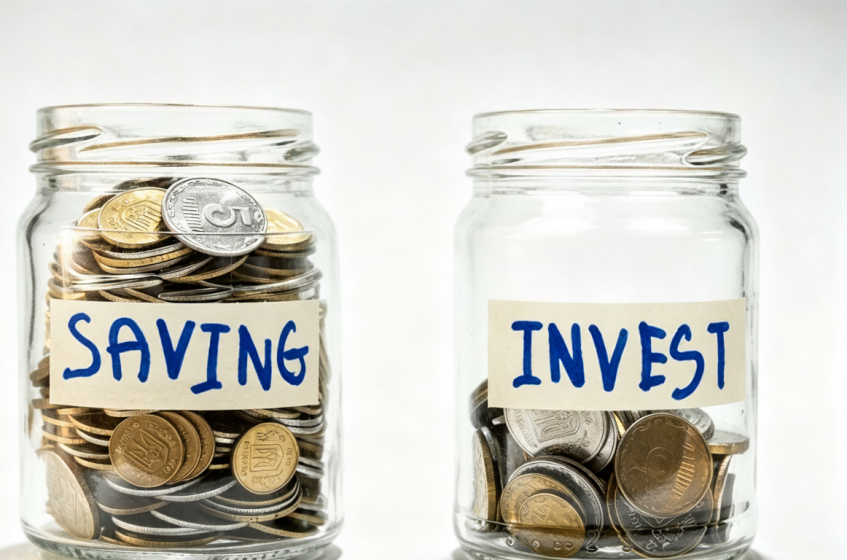
The best way to understand the swings in China’s surplus is to look at the corresponding changes in the domestic economy. By accounting identity, the current account surplus has to equal domestic saving minus investment (where saving is income less consumption). Intuitively, if an economy produces more than it uses at home (uses via consumption and investment), the excess is exported abroad. This is China. Conversely, if an economy consumes and invests more than it produces, it has to import the shortfall. This is the US. Thus changes in saving (or equivalently consumption) and investment must match the change in the current account surplus.
In China, saving and investment developments tell a clear story of the current account swings. First, the initial rise in the surplus coincided with a period of rapid growth in output. Consumption lagged behind, and fell as a share of GDP. Thus, equivalently, saving as a share of GDP rose, and so did the current account. Then, the key factor behind the decline in the current account surplus to nearly zero was a mix of rising consumption and investment: between 2007 and 2018, consumption rose by 4.6 percentage points of GDP and investment by 3.3 percentage points.
Consumption is not to blame for the recent rebound in the surplus. Investment is. This makes sense. China is undergoing a real estate correction of historical proportions, and as a result investment in real estate is way down. It turns out that the rise in the current account surplus from 2018 to 2025 of 3.5 percentage points of GDP is more than fully explained by falling investment. Consumption proved incredibly resilient, rising 1 percentage point as a share of GDP. All of it came from households, despite the big hit to their balance sheets.
This highlights a point often overlooked: China’s consumption has grown remarkably fast. From 1999 to 2023, real household consumption per person grew 7.4 percent a year, the fastest of the world’s 75 largest economies and by a wide margin. The catch, one many economies would envy, is that GDP grew faster still, leaving consumption a smaller share of GDP than in 1999. That means more saving and, holding investment constant, a larger surplus.
Here is where size matters. Against China’s own GDP the surplus is far below its 2007 peak: 3.7 percent in 2025 against 9.8 percent then. But China’s economy has grown from 6 percent of world GDP to nearly 17 percent. Measured against world GDP, the 2025 surplus is 0.6 percent, the same as at the 2007 peak. By China’s domestic metric the imbalance has more than halved; to China’s trading partners it has not shrunk at all. That gap is where this stops being a China story.
Global Imbalances Are Back
The IMF’s latest assessment highlights rising imbalances in China and the United States. Its External Sector Report, published in July, finds that global current account balances continued to widen in 2025, with the excess portion growing too, and those two the main drivers. Both moved in steps: broadly in line on 2023 data, moderately out of line on 2024, further out of line on 2025. The test is not the size of a balance but its distance from a country-specific norm, which is why several of Europe’s larger economies are flagged while the euro area as a whole is not. And the list runs well beyond China. Of the thirty economies assessed, eleven are judged stronger than fundamentals warrant — Germany, the Netherlands, and Sweden in Europe; Japan, Korea, and Singapore in Asia — and eleven weaker.
Set the assessments aside and the balances themselves show one large deficit and three large surpluses. The deficit is the United States, at 0.9 percent of world GDP in 2025, nearly double its 0.5 percent in 2018. China is the largest single surplus economy at 0.6 percent. But a group of Asian economies — Japan, Taiwan, Korea, Singapore, and Hong Kong among them — together run much the same, also 0.6 percent. Europe, the EU plus Switzerland, is third at 0.5 percent; in the pre-pandemic years of 2015 to 2019 Europe’s surplus was three times China’s on this measure.
This configuration looks durable. On IMF forecasts running to 2031, the last published year, one deficit and three surpluses remains intact. The US deficit is projected at 0.9 percent of world GDP, just below its 2025 level. More striking, the three surpluses converge on close to half a percent of world GDP each. One thing is buried in the arithmetic: reported surpluses exceed reported deficits, a global discrepancy of about half a percent of world GDP in 2025. That is why the surpluses add to far more than the US deficit.
The arithmetic of this matters more than it first appears. Even if China eliminated its surplus entirely tomorrow, over 70 percent of the world’s surplus would remain. Pressure on any single economy is unlikely to produce a solution, because a deficit in one economy is a surplus in others by construction. Adjustment in one place alone is both harder and riskier than adjustment in several at once.
Fixing the Domestic Imbalance
There is wide consensus, at least among macroeconomists, that reducing global imbalances requires fixing the corresponding domestic imbalances. The United States should raise saving, principally public saving. China should raise consumption. Europe should raise investment. This is the standing advice of the IMF, and of Bai Chong-En, Gita Gopinath, Hélène Rey, and Axel Weber in a memo written for the G7 in March.
It is also, as China’s experience shows, extremely hard. China has broadly pursued the recommended policies since 2010. The pension and health systems have been expanded enormously and consumer credit has widened. Yet the consumption share has moved up only slowly, and its effect on the surplus was cancelled out by falling investment.
The difficulty is not unique to China. Raising public saving in the United States means higher taxes or lower spending, and both are contractionary in the near term as well as politically costly. Europe’s prescribed remedy of more investment adds productive capacity, which over time gives Europe more to sell abroad, partly undoing the intended effect. None of these are quick fixes, and all of them are domestic.
Nonetheless, they are the right fixes. The current tit-for-tat escalation in trade barriers, such as tariffs, is unlikely to move the needle on saving and investment in a meaningful way; the IMF’s own analysis finds trade restrictions do little to correct imbalances. But they do considerable damage. The Fund has estimated that trade fragmentation in an extreme scenario could cost around 7 percent of world GDP, with technology decoupling raising the hit to 8 to 12 percent for some economies.
Conclusion
As the G7 economists’ memo argues, reducing global imbalances is in the individual and collective interest of the key players. Higher Chinese household consumption is good for Chinese households whatever it does to the trade balance. More European investment is good for Europe on its own terms. Higher saving in the US, including fiscal adjustment, is important in its own right. For all of them, the worst case is a disorderly adjustment, forced rather than chosen. By getting their own policies right, each can also fix global balances in an orderly way that promotes individual and collective well-being.