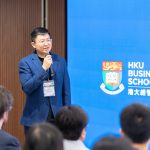
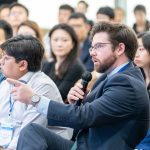
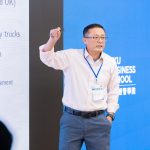
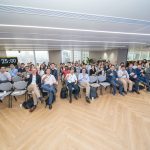
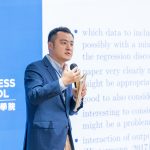
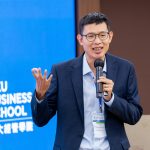
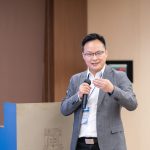
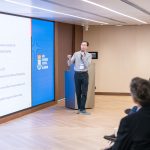
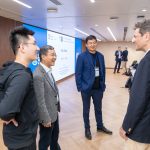
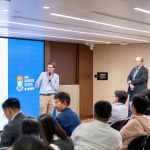
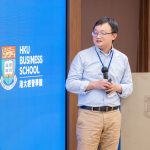
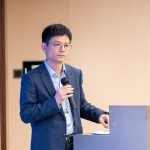
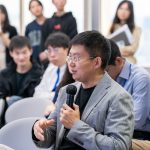
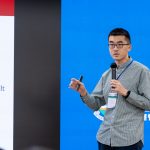
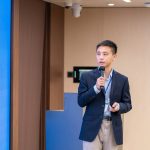
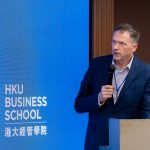
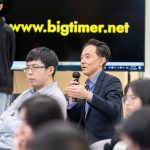
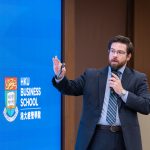
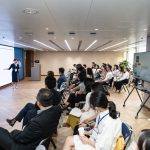
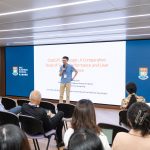
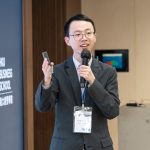
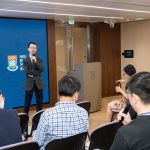
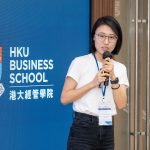
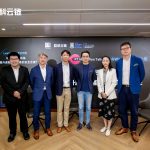
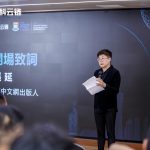
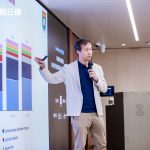
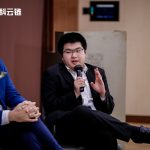
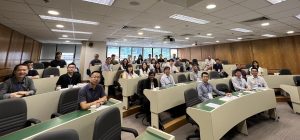
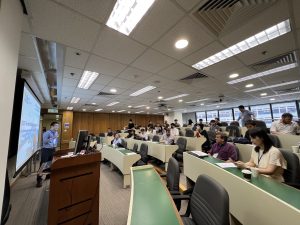
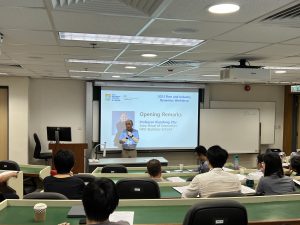
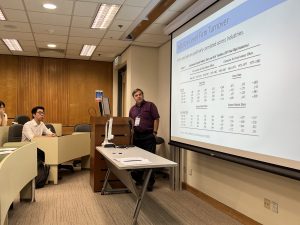
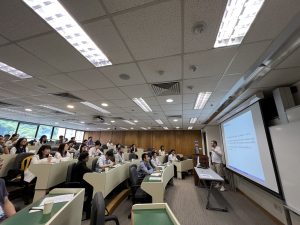
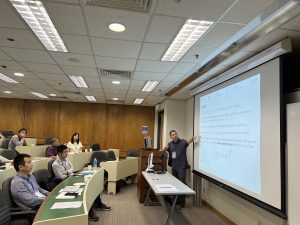
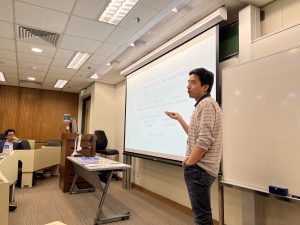
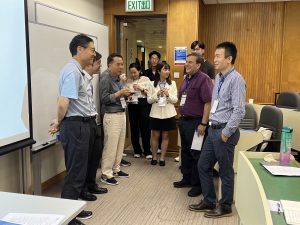
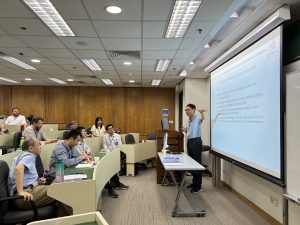
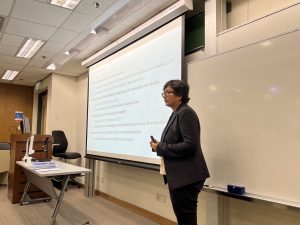
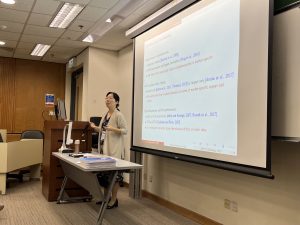
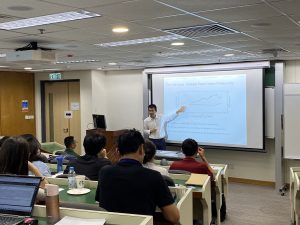
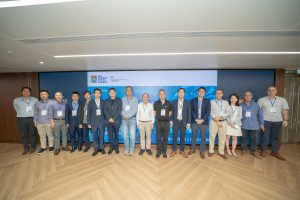
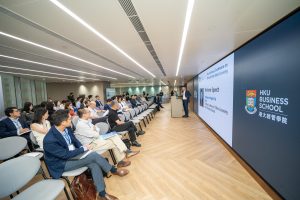
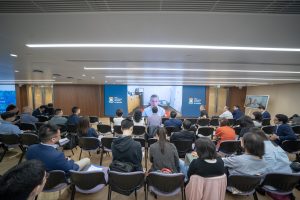
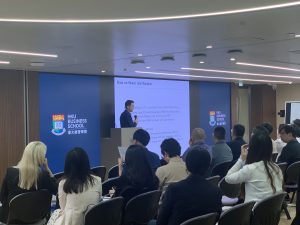
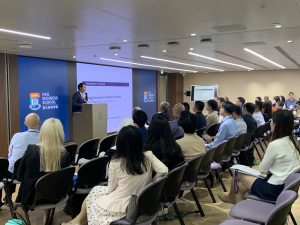
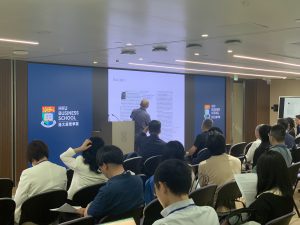
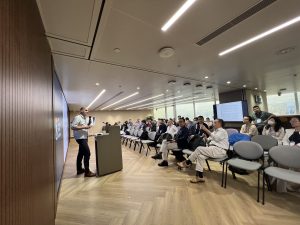
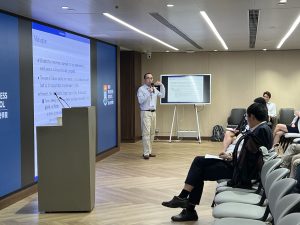
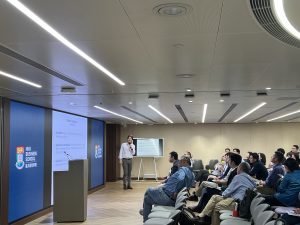
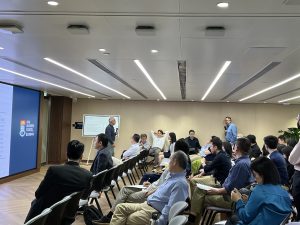
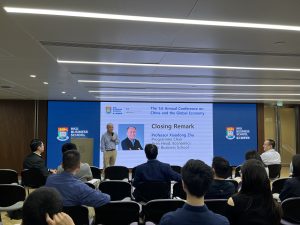
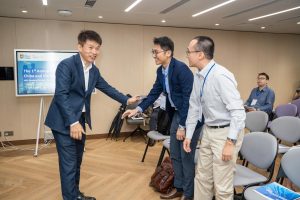
The first HKU Macroeconomics Workshop is organized by the HKU Business School, which will be a two-day workshop with eleven papers.
The 2024 conference is scheduled to take place fromFriday, March 8 to Saturday, March 9, 2024, at Room 1121 in theK. K. Leung Building, located on the HKU main campus.
Day 1: Friday – March 8, 2024
9:05
Opening remark
Macro Development
9:10-10:00
The Micro and Macro Productivity of Nations
Diego Restuccia (Toronto)
10:00-10:50
Structural Transformation over 150 Years of Women’s and Men’s Work
Rachel Ngai (LSE)
10:50-11:10
Coffee break
Keynote Speech
11:10-12:10
Population and Welfare: The Greatest Good for the Greatest Number
Chad Jones (Stanford)
12:10-14:00
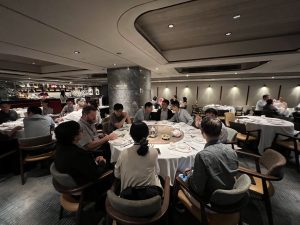
Lunch (15/F SCR) [by-invitation]
Workers and Entrepreneurs
14:00-14:50
Composite Sorting
Job Boerma (Wisconsin-Madison)
14:50-15:40
Career Choice of Entrepreneurship and the Rise of Smart Firms
Harun Alp (Federal Reserve Board)
15:40-16:00
Coffee break
Business Cycle
16:00-16:50
Turbulent Business Cycles
Pengfei Wang (Peking University HSBC Business School)
The Hong Kong Labor Symposiumorganized by the HKU Business School will take place on June 7 – 8, 2024 in Hong Kong. We welcome contributions on topics related to labor and development economics.
Organising Committee:
Prof. Uta SCHONBERG
Chair of Economics
The University of Hong Kong
Prof. Naijia GUO
Assistant Professor of Economics
The University of Hong Kong
Submission guidelines:
Completed manuscripts should be emailed to fbelabor@hku.hk.
Submission deadline: February 29, 2024
Accepted author(s) will be notified by March 15, 2024.
*Remarks: Extended abstracts are also acceptable for submission.
The China India Insights Program (CIIP) at the Yale School of Management and HKU Business School are co-organizing the 14th annual China India Insights Conference on June 20–22, 2024 (a reception on Thursday evening, June 20 and end late afternoon on Saturday, June 22). The conference will be hosted at the University of Hong Kong by Junhong Chu, in collaboration with the China India Insights Program at the Yale School of Management.
This annual conference serves as a forum for academic scholars and research practitioners from diverse disciplines to share the best available research on both consumer and firm behavior related to China and India – two of the world’s largest and fastest growing emerging markets. Research on other emerging markets is also welcome.
Researchers interested in presenting a paper should submit abstracts — one to two pages in length and double-spaced in pdf format with the pdf labeled with the last name of the presenting author. Please include the title of the paper, name, affiliation, mailing and email addresses of the authors. Please specify who will be the presenting author. Abstracts should be sent to ciip@yale.edu by February 7, 2024. Chosen presenters will be notified by February 20, 2024.
Abstracts will be reviewed by a program committee comprised of Sha Yang (University of Southern California), Hui Li (University of Hong Kong), S. Sriram (University of Michigan), Pranav Jindal (Indian School of Business), Ralf Van Der Lans (HKUST), and Shreya Kankanhalli (Cornell University).
TheSecond Journal of Environmental Economics and Management (JEEM) Conference in Environmental and Resource Economics,co-organized by theJEEM and HKU Business School’s Institute of China Economy, was successfully held onDecember 9 & 10, 2023at the HKU iCube in Central.
The Conference featured keynote speeches fromProf. Shanjun LI andProf. Mark JACOBSEN, following with 14 papers presented and discussed by the distinguished scholars and leading researchers from overseas and the Asia Pacific region.
Through the engaging discussion sparked, audience had learnt from the experts’ insight and intellectually stimulated dialogues on a wide range of topics in environmental and resource economics, including resource preservation, political economy of environmental regulations, environmental health, and firms and industrial dynamics.
Date and Time:
December 9 & 10, 2023 (Saturday & Sunday) 09:00 to 18:00 (HKT)
Venue:
HKU iCube, Room 4005-07, 40/F, Two Exchange Square, 8 Connaught Place, Central
Language:
English
Format:
Face-to-face
Registration:
Please register hereby 23:59 (HKT), November 26, 2023. There is no registration fee*. Seats are limited.
* Lunch and dinner will be by invitation. Participants will be responsible to cover the passage and accommodation costs.
Programme
Day 1 – December 8, 2023 (Friday)
18:30-21:00
JEEM Editorial Board Meeting and Pre-Conference Dinner
Kenneth L. Robinson Professor of Applied Economics and Policy, Cornell University; Director and Co-Founder, Cornell Institute for China Economic Research (CICER)
10:00-10:20
Tea Break and Group Photo
Session 2: Firms and Industrial Dynamics I
10:20-11:10
“The Enduring Effects of China’s Payments for Ecosystem Services: Short- and Long-Term Industrial Transformations”
Vice President of Nanjing University of Finance and Economics; Professor, Nanjing University; Director, Center for Environmental Management and Policy Analysis, Nanjing University
14:20-15:10
“Pipeline Expansion and Mortality Rate: Evidence from China”
Associate Professor, National University of Singapore; Dean’s Chair; Associate Director, Global Asia Institute; Research Affiliate, Sustainable and Green Finance Institute
15:10-15:30
Tea Break
Session 4: Firms and Industrial Dynamics II
15:30-16:20
“Markup Dispersion, Industry Coverage and the Cost of Environmental Regulations”
Kenneth L. Robinson Professor of Applied Economics and Policy, Cornell University; Director and Co-Founder, Cornell Institute for China Economic Research (CICER)
17:10-18:00
“Environmental Regulation and Firms’ Extensive Margin Decisions”
Professor, North Carolina State University; Interim Director, Center for Environmental and Resource Economic Policy; Lead Organizer, Camp Resources; Co-Editor-in-Chief, Journal of Environmental Economics and Management
Associate Professor, Cheung Kong Graduate School of Business (CKGSB)
14:20-15:10
“The Effects of Air Pollution on Labor Supply in Japan: A Panel Data Analysis based on PM2.5 Pollution Monitoring, Labor, and Chemical Transport Model Data”
The vision of the Institute of China Economy (ICE) is to foster research on the Chinese economy, by bringing together great minds and insights around the world to address critical challenges facing China and the world. The ICE scholars provide world-leading research on the Chinese Economy. They are also experienced in serving the community by offering evidence-based policy and business insights to improve the scientific decisions of policymakers and business leaders.
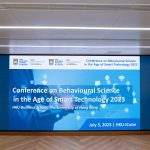
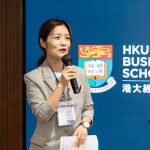
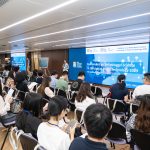
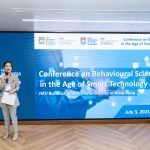
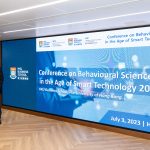
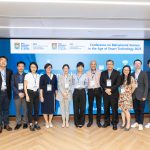
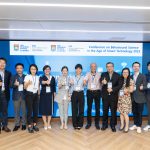
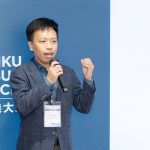
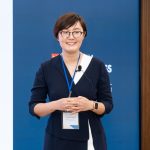
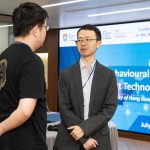
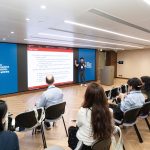
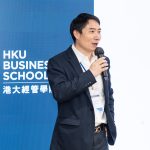
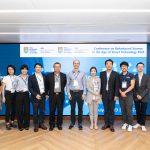
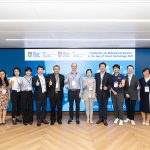
The Conference on Behavioural Science in the Age of Smart Technology 2023 was successfully held on July 3, 2023, at the brand new HKU event venue at the heart of the city, HKU-iCube. The conference was sponsored by the HKU Business School’s Institute of Behavioural and Decision Science (IBDS) and Institute of Digital Economy and Innovation (IDEI). The objective of the conference is to create a forum for researchers from multiple disciplinaries to discuss the behavioural impact of the smart technology.
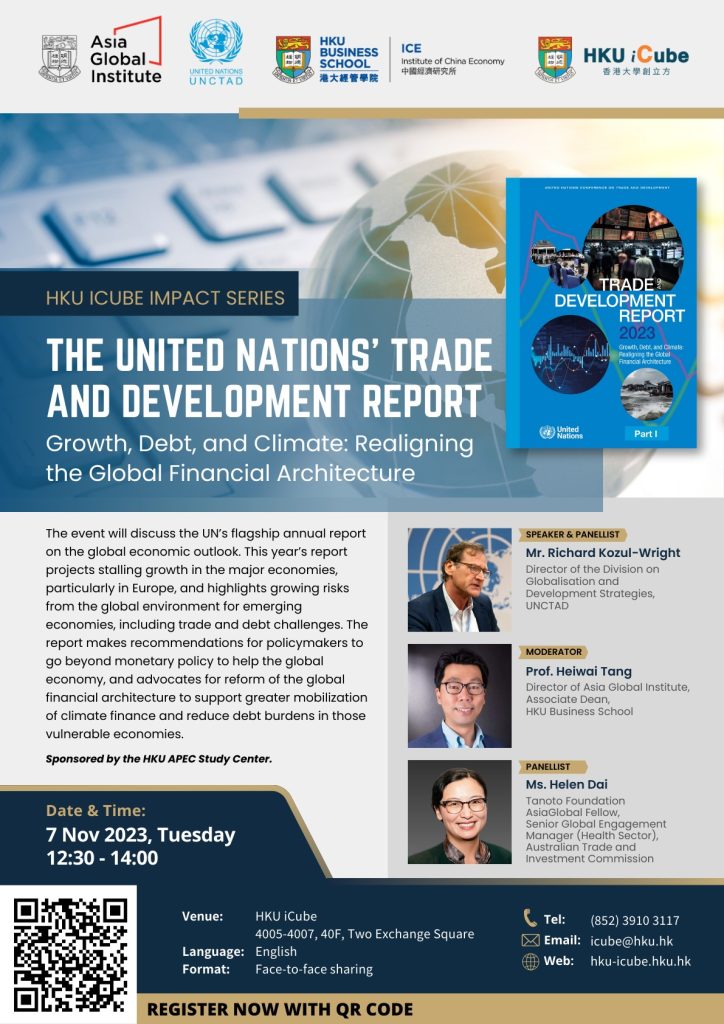
The Institute of China Economy is delighted to co-organize the HKU iCube Impact Series – The United Nations’ Trade and Development Report” seminar with the United Nations Conference on Trade and Development (UNCTAD), Asia Global Institute and HKU iCube on November 7, 2023 at The University of Hong Kong. In the Asian launch of the annual Trade and Development Report – Growth, Debt, and Climate: Realigning the Global Financial Architecture, our distinguished speaker, Mr. Richard Kozul-Wright from UNCTAD will highlight the latest findings and policy recommendations with the audience.
The Trade and Development Report is the United Nations’ flagship annual report on the global economic outlook. This year’s report projects stalling growth in the major economies, particularly in Europe, and highlights growing risks from the global environment for emerging economies, including trade and debt challenges. The report makes recommendations for policymakers to go beyond monetary policy to help the global economy, and advocates for reform of the global financial architecture to support greater mobilization of climate finance and reduce debt burdens in those vulnerable economies.
The event is sponsored by the HKU APEC Study Center.
Date and Time:
November 7, 2023 (Tuesday) 12:30 p.m. – 2:00 p.m.
Venue:
HKU iCube, Room 4005-07, 40/F, Two Exchange Square, 8 Connaught Place, Central
Language:
English
Format:
Face-to-face
Registration:
Please register here. There is no registration fee. Seats are limited at a first come first served basis.
Speaker & Panellist Mr. Richard Kozul-Wright Director of the Division on Globalisation and Development Strategies, United Nations Conference on Trade and Development (UNCTAD)
Moderator Prof. Heiwai Tang Director of the Asia Global Institute and APEC Study Center; Associate Dean, HKU Business School
Panellist Ms. Helen Dai Tanoto Foundation AsiaGlobal Fellow; Senior Global Engagement Manager (Health Sector), Australian Trade and Investment Commission
Enquiry Please contact HKU iCube at icube@hku.hk for any enquiries.
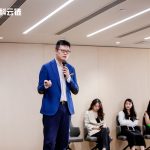
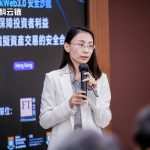
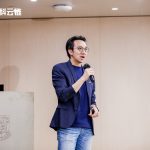
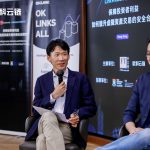
Recently, a series of risk events in the Web3 industry has raised important concerns and provided a significant warning for developing the Web3 industry in Hong Kong. It has also increased the industry’s focus on compliance and security.
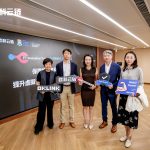
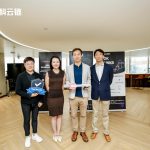
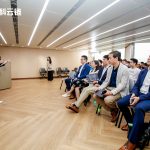
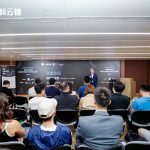
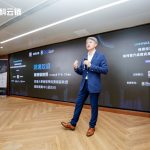
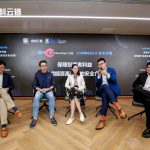
On October 28th, FTChinese.com will collaborate with OKLink to host the LinkWeb3.0 Security Seminar, which aims to discuss “Safeguarding Investor Interests and Enhancing the Security and Compliance of Virtual Asset Trading.” Participants in the seminar will include trading participants, expert professors, and market researchers. The event is supported by institutions such as HKU Business School’s Centre for Innovation and Entrepreneurshipand HashKey Group.
The seminar will explore existing risk issues in the development of the virtual economy, industry compliance issues and future regulatory trends. It will also discuss how VATPs can mitigate risks and achieve “security and compliance advancement.” The discussions aim to provide direction for enhancing the compliance of virtual asset trading.
Keynote Speakers
(Sequence is in alphabetical order of surname)
Hedy BI
Chief Researcher, OKG Research
Lance JIANG
Partner at Ashurst Law Firm
Chen LIN
Professor of Finance, Associate Dean, HKU Business School
Sponsored by HKU Business School, the Centre for Innovation and Entrepreneurship (CIE) is committed to connect research and practice, and create a vibrant and diverse community of entrepreneurs and innovators to drive positive changes in Hong Kong and Greater Bay Area.
With our teams and resources inside and outside Hong Kong, we aim at bridging the ecosystems in China and overseas.
The Journal of Environmental Economics and Management (JEEM) is delighted to announce a call for papers for the 2nd JEEM Conference in Environmental and Resource Economics. The Conference will be held on 9-10 December 2023 at The University of Hong Kong. In addition to selected presentations, we anticipate inviting two internationally recognised scholars to provide keynote addresses.
Submissions
Authors are invited to submit empirical and theoretical papers on topics consistent with the journal’s aims and scope. Abstracts or incomplete papers will not be considered. Submissions from researchers at Chinese and other Asian universities are encouraged, and papers on Chinese and Asian topics written by authors from around the world will receive special consideration. After the conference, participants will be strongly encouraged to submit their revised papers to JEEM for publication. Those papers will be subjected to the regular review process that, to the degree possible, will be expedited. The Programme Committee, consisting of Dr Guojun He of The University of Hong Kong, Professor Bing Zhang of Nanjing University, Professor Andreas Lange of the University of Hamburg, and Professor Roger von Haefen of North Carolina State University, will select roughly twelve papers for presentation based on their overall quality and potential impact on the field. Depending on the mix of submissions, the committee anticipates selecting two or three conference themes around which to organise selected papers.
Please submit electronic versions (preferably *.pdf) of papers to jeemconference@gmail.com. Authors’ names and affiliations should be on the cover page only. In the corresponding email, authors must acknowledge that their paper is not currently under review for publication elsewhere. There is no submission fee.
Important Dates
Submission Deadline: September 30, 2023
Notice of Acceptance: October 20, 2023
Expenses
Travel and lodging costs for three nights will be reimbursed for one presenter for each accepted paper.
The 2023 Firm and Industry Dynamic Workshop had hosted around 80 world-leading economic scholars and research students in highly intellectual stimulating discussion on June 26 and 27, 2023, on HKU’s Main Campus.
The two-day workshop was co-organised with the Economics Area of HKU Business School, Economic Strategy and Development Research Centre of HKU Shenzhen Research Institute, and UNSW Business School, and sponsored by the HKU Business School’s Institute of China Economy. The Workshop brought together leading scholars and researchers from around the world to discuss the latest trends and insights in the areas of firm and industry dynamics, to foster the research on firms heterogeneity and industry upgrading and economic growth.
The participants of the Workshop had the opportunity to engage in dynamic dialogues and knowledge exchange with the authors from around the world of 10 carefully selected research papers under the umbrella theme over one and a half day. The organiser has made a creative and valuable arrangement for the junior researchers and research students to have focused discussion with the world-class scholars in the afternoon of Day 2, which were highly commended by both the scholars and the junior researchers.
Professor Mark Roberts of PennState delivered a special lecture of the key issues of the Workshop’s theme. He summarized past research achievements and future development directions in the field of firm and industry dynamics for the audience. He began by introducing the towering figure in the field of industrial organization, Zvi Griliches, and his outstanding contributions in the estimation of production functions, R&D and innovation, and price estimation. Next, he summarized important research findings in other data-driven research areas, such as how technology, demand, and market power lead to heterogeneity in firm performance. Finally, Professor Roberts offered a perspective on the future development of the field of firm and industry dynamics, focusing on aspects such as industry heterogeneity and endogenous firm selection.
Frederic WARZYNSKI, Aarhus University “Novel methodologies for markup estimation with multiproduct firms”
Professor Frederic Warzynski of Aarhus University introduced his latest research findings on the estimation of markups in multi-product firms in the presentation. The size of the markup is determined by the ratio of a firm’s product price to its production cost and is an important indicator of a firm’s market power. However, since it is often not directly observable in the data, estimating markups has always been a challenging direction for economists. Professor Warzynski provided two novel methods for estimating markup indices for firms. He applied his research to the Belgian bread and cake industry and obtained reasonable estimation results in both applications. Based on these results, Professor Warzynski found that the deregulation of prices was associated with a significant improvement in quality and efficiency. At the same time, welfare increased through an increase in both consumer and producer surpluses.
Shengyu LI, UNSW Sydney “Productivity and Quality of Multi-product Firms”
Dr Shengyu Li, Senior Lecturer of UNSW introduced the research on the relationship between productivity and product quality in multi-product firms in his presentation. In their study, Dr Li and his co-authors used firms’ optimal decision-making in maximizing profits by balancing the sales of different products to overcome the challenges in estimating demand functions, breaking through the bottleneck of previous research. They then applied this method to the study of Mexico’s three large manufacturing industries. They found that core products in multi-product firms have higher productivity and quality, but improving product quality comes with corresponding costs. At the same time, firms can leverage their multi-product advantage for internal resource reallocation to reduce the costs of improving quality and enhance quality-adjusted productivity.
Daniel Yi XU, Duke University “Regulating conglomerates in China: Evidence from an Energy Conservation Program”
Professor Daniel Yi Xu from Duke University introduced the research on how China regulates conglomerates. Professor Xu and his co-authors thoroughly examined the behavior of firms in the context of China’s energy conservation program and found that under regulation, firms generally choose to reduce production rather than adopt the policy’s intended solution of improving production efficiency. During the regulatory process, conglomerates also conduct the strategy of transferring production to related parties to mitigate the impact of regulation. They also discovered that unregulated firms can benefit from regulation. Based on these observations, they built a model and structurally examined the policy effects. The final results show that the shifting production lowers the shadow cost of the policy. Additionally, they found that the government can improve regulation by targeting conglomerates, and the conglomerate regulation can increase energy savings, accompanied by the imposition of energy taxes.
Hong MA, Tsinghua University “Super Factory Comes to Town: Identifying the Agglomeration Spillovers from Foxconn Factory in Henan”
Professor Hong Ma from Tsinghua University presented his research on the agglomeration spillover effects of the Foxconn factory in Henan. Professor Ma first discussed the importance of Foxconn in China and reviewed the background of Foxconn establishing the factory in Henan. Subsequently, Professor Ma explained how they used a geographic difference-in-differences approach in their paper to identify the agglomeration spillover effects caused by Foxconn’s establishment of the factory in Henan. They found that the closer a location is to the Foxconn factory, the higher the growth rate of output per worker. Based on their observations, they constructed a quantitative spatial model that included agglomeration forces and calibrated and estimated the parameters in the model using the causal evidence they observed. Through the model, they discovered that Foxconn has a significant and positive impact on local manufacturing employment and productivity.
Professor Hong Ma welcomes interested parties to contact him by email to request for the details of this research.
Arpita CHATTERJEE, IIM Bangalore and UNSW Sydney “Food, Fuel, and Facts: Distributional Effects of External Shocks”
UNSW’s Associate Professor Arpita Chatterjee presented her and her coauthors’ study on the effect of external shock on households’ consumption in the context of emerging market economies. Using monthly panel consumption and income data on Indian households from 2014 to 2019, they found that the dynamic consumption effect of global food and oil price shocks varies across the income distribution of households in India. The rise in food prices has negative effects throughout the income distribution but hurts the lower income decile the most. Meanwhile, an increase in global fuel prices hurts both the lower and the middle-income classes, with minor effects on the top income decile. To better understand the mechanisms behind these effects, the authors assess the relative price channel and the income channel. Overall, this study sheds light on the differential effects of external shocks on household consumption in emerging market economies.
Dr Arpita Chatterjee welcomes interested parties to contact her by email to request for the details of this research.
DAY 2
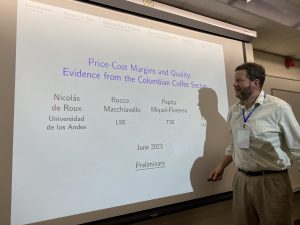
Keynote Speech byEric VERHOOGEN, Columbia University “Price-Cost Margins and Quality: Evidence from the Colombian Coffee Sector”
Can agricultural producers benefit by producing higher-quality products? In their paper, Professor Eric Verhoogen of Columbia University and his coauthors answer this question by studying the relationship between quality and price-cost margins in the Colombian coffee sector. The authors find that higher-quality beans carry larger price-cost margins, indicating that producers may benefit from improving quality. However, the cost of production does not increase with higher quality, as long as the beans meet the minimum export quality. The authors construct a model of intermediaries with two-sided market power to investigate the factors contributing to these price-cost margins. They find that the margin for the lower quality category is largely explained by markup, while for the high-quality category, both markups and markdowns are higher. The study suggests that increasing competition in the input market may have positive consequences for producers, as the quality premiums are only partially passed through to them.
Professor Eric Verhoogen appreciates the keen response from the audience. Considering the research project is at preliminary stage, it is not an opportune time to circulate the research at present.
Session 3: Output Quality, Trade, and Industry Dynamics Chair: Haishi Harry LI, HKU Business School
Yao Amber LI, The Hong Kong University of Science and Technology “Bilateral Economies of Scope”
Output exporting and input importing are associated with fixed cost. HKUST’s Associate Professor Yao Amber Li and her coauthors argues that firm’s decision on where to sell goods and where to source inputs are interdependent. Using a data-set of Chinese manufacturing firms, Dr Li and her coauthors document that firms export (import) from a country are more likely to import (export) from the same country, which is referred as bilateral economic of scope channel. They construct a theoretical framework that jointly considers firm’s export and import decision and estimate the magnitude of this channel. Results of the quantitative analysis suggest that considering the market-specific bilateral economic of scope is crucial in understanding observed trade pattern and analyzing trade liberalization effect.
Dr Yao Amber Li welcomes interested parties to contact her by email to request for the details of this research.
Hongsong ZHANG, HKU Business School “Tax Policy, Selling Expenses, and the Growth of Young Manufacturing Firms: Evidence from a Tax Incentive Policy”
Associate Professor Hongsong Zhang of HKU Business School and his coauthor seek to understand the role of demand factors in driving the growth of young firms. They analysis the impact of a pre-tax deduction policy reform in China that reduces the costs of selling expenses of qualified young firms. They find that the pre-tax deduction policy increases the selling expenses ratio of qualified firms, which in turn improves firms’ output demand. This increase in demand further translates to an increase of gross profit rates. The authors build a model to characterize firms’ production decisions and dynamic decisions on selling expenses and R&D investment. Their estimation results show that while the productivity of an average firm is generally stable over its age, young firms have much lower demand factors. The age-based performance gap between young and mature firms is primarily driven by demand-side differences, rather than productivity as is often assumed in the literature.
Dr Hongsong Zhang welcomes interested parties to contact him by email to request for the details of this research.
Concluding remarks for in-room sessions:Hongsong ZHANG, Associate Director, Institute of China Economy, HKU Business School
*The copyrights of the presentations and related document belong to the respective author(s). The versions updated in this page would be subject to further edits and updates, please consult the author(s) for the latest versions and all other research-related enquiries.
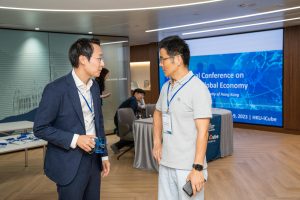
The Inaugural Annual Conference on China and the Global Economy was successfully held on May 8 and 9, 2023, at the brand new HKU event venue at the heart of the city, HKU-iCube. The Conference was sponsored by the HKU Business School’s Institute of China Economy. The objective of the conference is to create a forum to discuss new economic research on China and its relationship with the global economy.
Event Highlights
DAY 1 – Applied Microeconomics
After Professor Hongbin Cai, Dean of the HKU Business School, made a warm welcome to the guests joining from overseas and the region, and highlighting the significance of the main themes being discussed in the two-day conference, the distinguished scholar in environmental and energy economics from the University of Chicago, Director of the Energy Policy Institute at Chicago, Professor Michael Greenstone, set the scene of Day 1’s discussion under the umbrella of applied micro-economics by sharing his latest research in Environmental Economics. The audience have shown great interest in Professor Greenstone’s research and had an excited discussion throughout the one-hour keynote speech.
Following Professor Greenstone’s keynote presentation, the invited paper presenters, Dr Yu-Hsiang Lei (Yale-NUS College), Dr Aaron Yoon (Northwestern University), Dr Ying Bai (The Chinese University of Hong Kong), Professor Wolfgang Keller (University of Colorado Boulder), Dr Ran Song (National University of Singapore) , and Mr Wenwei Peng (Hong Kong University of Science and Technology) took the stage on Day 1 to share the research insights on Environment, History and Political Economy, and Development.
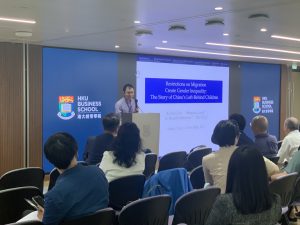
“Migration Restrictions Can Create Gender Inequality: The Story of China’s Left-Behind Children” joint with Xuwen Gao, Wenquan Liang, Ahmed Mushfig Mobarak
Wenwei Peng, Hong Kong University of Science and Technology
“Judicial Independence, Local Protectionism, and Economic Integration: Evidence from China” joint with Ernest Liu, Yi Lu, and Shaoda Wang
DAY 2 – Macroeconomics / Trade
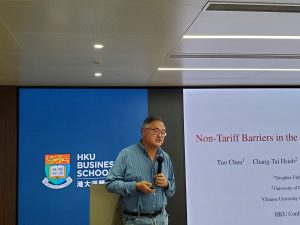
Professor Chang-tai Hsieh, the renowned scholar in growth and development from the University of Chicago, embarked Day 2 on macroeconomics and trade with his recent research related to the U.S.-China trade war. After an hour of dynamic knowledge exchange and addressing the pressing questions raised by the audience on the latest trend with Professor Chang, Day 2’s paper presentations continued.
The audience had learned from the latest research insights from the following invited paper presenters, as well as engaged in interactive dialogue with the presenters on the research details in the areas of Investment and Growth, Infrastructure and Policy, and Trade: Professor Hao Zhou (Tsinghua University), Dr Yong Wang (Peking University), Dr Lin Ma (Singapore Management University), Dr Bingjing Li (HKU Business School), Professor Peter Schott (Yale School of Management), Professor Russell Cooper (European University Institute).