


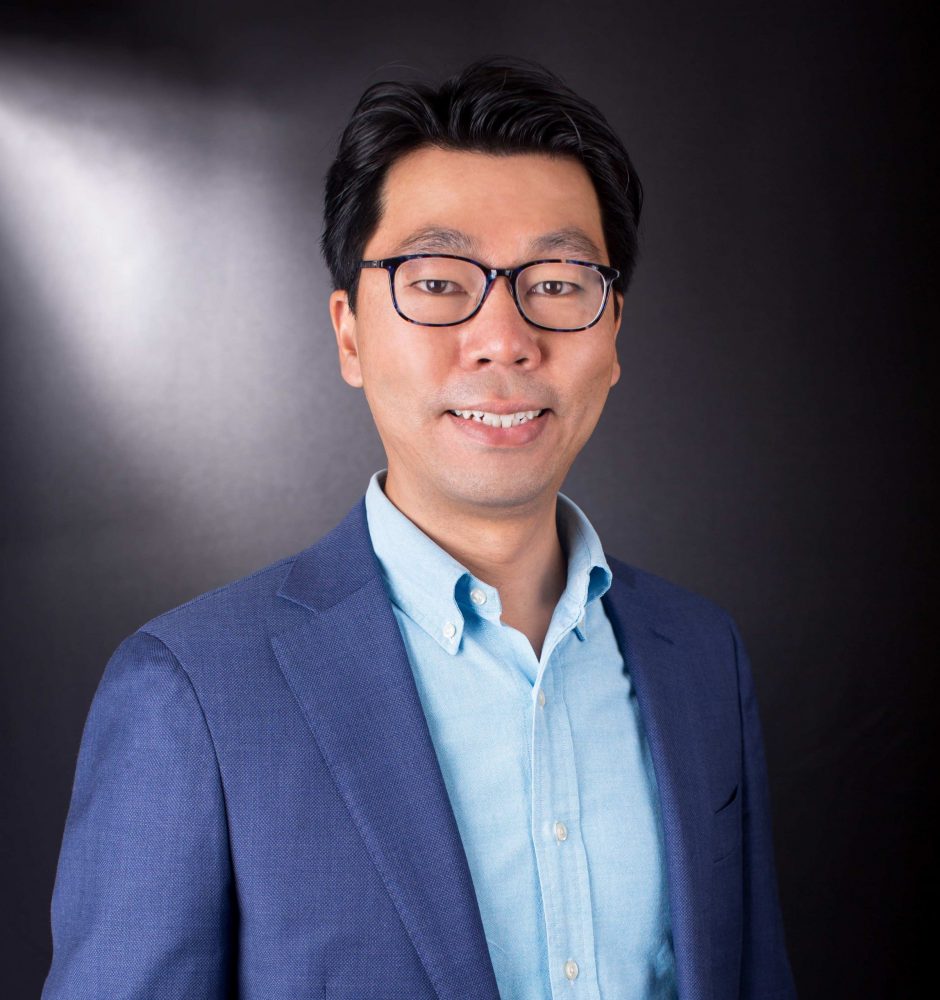
Prof. Heiwai Tang, Associate Vice-President (Global) of The University of Hong Kong and Associate Dean (External Relations) of HKU Business School, believes Hong Kong should first focus on promoting IP development in the cultural industries and life sciences technology.

3917 0029
3917 4388
MB 335/ KK 920
To seize this era-defining wave, Hong Kong must complete its own strategic evolution: transforming from a "Super Connector" into a "Super Value-adder." As an empowering platform, Hong Kong can provide three core pillars of value addition: Risk Management, Capital Orchestration, and Ecosystem Integration.
At the New Vision Economic Summit 2025, hosted by Sing Tao News Corporation, Prof. Heiwai Tang, Associate Vice President (Global) of The University of Hong Kong and Associate Dean of HKU Business School, and Prof. Zhenhua Mao, Professor of Practice in Economics at HKU Business School and Member of the Chief Executive’s Policy Unit Expert Group, shared insights on how fierce domestic competition is driving Chinese enterprises toward global markets.
In an article published by Bloomberg’s Newsletter, Prof. Heiwai Tang, Associate Vice-President of The University of Hong Kong and Associate Dean of HKU Business School, was interviewed about his thoughts on Hong Kong’s potential to become a global hub for higher education. “We have always been a university city,” he said, adding that what’s perhaps different now is that the ingredients are in place to catapult the city into the top tiers of higher education worldwide.
Two years ago, we wrote the article “Commercialization of Intellectual Property Benefits High-quality Economic Development” in this newspaper column and, together with the Hong Kong Young Industrialists Council, published the “IP Commercialization: A Boost for Hong Kong Re-Industrialization Strategy” research report.
In an interview with the Hong Kong Economic Journal, Prof. Heiwai Tang, Associate Vice-President of HKU and Director of the Asia Global Institute, explained that China's focus on technological development is driven by strategic geopolitical goals for long-term independence, rather than immediate economic growth. While innovations like AI enhance future prospects, they have not yet resulted in significant near-term economic recovery. Tang noted that prioritizing technology may temporarily widen wealth disparities, as AI could replace traditional workers.
In an interview with Al Jazeera, Prof. Heiwai Tang, Associate Vice-President of The University of Hong Kong and Director of the Asia Global Institute, pointed out that neither Washington nor Beijing has much incentive to fully back down from the trade war.
Prof. Heiwai Tang, Associate Vice-President of The University of Hong Kong and Director of the Asia Global Institute, was featured in an South China Morning Post article series exploring the mega development project near the border with Shenzhen, and in particular, how the innovation and technology (I&T) sector may evolve to become a new engine that transforms Hong Kong’s economy.
Commissioned by the Federation of Hong Kong Industries, the “Made by Hong Kong: Strategies for New Industrialisation” study report compiled by us was released last month. In this article, we will highlight relevant sections of the study on the business operations of Hong Kong-invested industrial enterprises (HKIEs) and examine the future of Hong Kong’s industrial sector, providing references for the formulation of the city’s industrial policies.


