


HKUBS_logo_25_web
  • Global Presence
  • About Us
        • About us about us
        • A Premier Business School in Asia with Global Influence
        • Overview
          • Message from the Dean
          • Vision & Mission
          • Milestones
          • Partnerships & Global Network
          • Beta Gamma Sigma HKU Chapter
          • Rankings & Accreditations
          • Corporate Collaboration
        • Leadership
          • Faculty Management
          • International Advisory Council
        • Our Stories
        • Contact Us
        • Staff Portal
        • Campuses
  • Programmes
        • Programmes programmes
        • Diversified Learning Experience Empowers our Students
        • Undergraduate
        • Masters
          • MAcct
          • MAA
          • MAIB
          • MEcon
          • MFWM
          • MFin
          • MFFinTech
          • MGM
          • MSc(BA)
          • MScMktg
          • MSAF
          • MWM
        • MBAs & EMBAs
          • MBA
          • IMBA
          • HKU EMBA
        • PhD
        • Executive Education
        • DBA
  • People
        • People people
        • International Faculty Body that Offers Quality Education
        • Faculty
        • Research Assistant Professors / Post-Doctoral Fellows
        • Demonstrators/ Teaching Assistants
        • Research Postgraduate Students
        • Administration
  • Research
        • Research research
        • Lead the Frontier of Knowledge Creation
        • Thought Leadership
          • Latest Research Publications
          • HKEJ Column
          • FT Chinese Column
          • In the Media
        • Academic Areas
        • Faculty Members
        • Research Grants
        • Seminars & Conferences
          • Edward K Y Chen Distinguished Lecture Series
        • Impact Factors
        • Research Centres & Institutes
        • Hong Kong Macroeconomics Forecast
        • HKU Knowledge Exchange
        • HKU Scholars Hub
        • Shenzhen Research Institutes
  • Events
  • Media
        • Media media
        • Inspire the Society and Community with Rigorous Insights
        • School News
        • In the Media
        • Press Release
  • Career
        • Career career
        • Fostering Strategic Partnerships and Talent Development
        • Recruit our Talents
        • Student Career Development
        • Career Opportunities
          • Faculty Recruitments
          • HKU Career Site
  • 繁
  • 简
Type To Search
HKUBS_logo_25_web
Type To Search
  • Global Presence
  • About Us
        • About us about us
        • A Premier Business School in Asia with Global Influence
        • Overview
          • Message from the Dean
          • Vision & Mission
          • Milestones
          • Partnerships & Global Network
          • Beta Gamma Sigma HKU Chapter
          • Rankings & Accreditations
          • Corporate Collaboration
        • Leadership
          • Faculty Management
          • International Advisory Council
        • Our Stories
        • Contact Us
        • Staff Portal
        • Campuses
  • Programmes
        • Programmes programmes
        • Diversified Learning Experience Empowers our Students
        • Undergraduate
        • Masters
          • MAcct
          • MAA
          • MAIB
          • MEcon
          • MFWM
          • MFin
          • MFFinTech
          • MGM
          • MSc(BA)
          • MScMktg
          • MSAF
          • MWM
        • MBAs & EMBAs
          • MBA
          • IMBA
          • HKU EMBA
        • PhD
        • Executive Education
        • DBA
  • People
        • People people
        • International Faculty Body that Offers Quality Education
        • Faculty
        • Research Assistant Professors / Post-Doctoral Fellows
        • Demonstrators/ Teaching Assistants
        • Research Postgraduate Students
        • Administration
  • Research
        • Research research
        • Lead the Frontier of Knowledge Creation
        • Thought Leadership
          • Latest Research Publications
          • HKEJ Column
          • FT Chinese Column
          • In the Media
        • Academic Areas
        • Faculty Members
        • Research Grants
        • Seminars & Conferences
          • Edward K Y Chen Distinguished Lecture Series
        • Impact Factors
        • Research Centres & Institutes
        • Hong Kong Macroeconomics Forecast
        • HKU Knowledge Exchange
        • HKU Scholars Hub
        • Shenzhen Research Institutes
  • Events
  • Media
        • Media media
        • Inspire the Society and Community with Rigorous Insights
        • School News
        • In the Media
        • Press Release
  • Career
        • Career career
        • Fostering Strategic Partnerships and Talent Development
        • Recruit our Talents
        • Student Career Development
        • Career Opportunities
          • Faculty Recruitments
          • HKU Career Site
HKUBS_logo_25_web
  • Global Presence
  • About Us
    • Overview
      • Message from the Dean
      • Vision & Mission
      • Milestones
      • Partnerships & Global Network
      • Beta Gamma Sigma HKU Chapter
      • Rankings & Accreditations
      • Corporate Collaboration
    • Leadership
      • Faculty Management
      • International Advisory Council
    • Our Stories
    • Contact Us
    • Staff Portal
    • Campuses
  • Programmes
    • Undergraduate
    • Masters
      • MAcct
      • MAA
      • MAIB
      • MEcon
      • MFWM
      • MFin
      • MFFinTech
      • MGM
      • MSc(BA)
      • MScMktg
      • MSAF
      • MWM
    • MBAs & EMBAs
      • MBA
      • IMBA
      • HKU EMBA
    • DBA
    • PhD
    • Executive Education
  • People
    • Faculty
    • Research Assistant Professors / Post-Doctoral Fellows
    • Demonstrators/ Teaching Assistants
    • Research Postgraduate Students
    • Administration
  • Research
    • Thought Leadership
      • Latest Research Publications
      • HKEJ Column
      • FT Chinese Column
      • In the Media
    • Academic Areas
    • Faculty Members
    • Research Grants
    • Seminars & Conferences
      • Edward K Y Chen Distinguished Lecture Series
    • Impact Factors
    • Research Centres & Institutes
    • Hong Kong Macroeconomics Forecast
    • HKU Knowledge Exchange
    • HKU Scholars Hub
    • Shenzhen Research Institutes
  • Events
  • Media
    • School News
    • In the Media
    • Press Release
  • Career
    • Recruit our Talents
    • Student Career Development
    • Career Opportunities
      • Faculty Recruitments
      • HKU Career Site

HKEJ Column

Home Research Thought Leadership HKEJ Column
Establishing Hong Kong as a Regional IP Trading Centre: Taking China’s IP to the World

Establishing Hong Kong as a Regional IP Trading Centre: Taking China’s IP to the World

22 Oct 2025
Share on TwitterShare on FacebookShare on WhatsappShare on LinkedInShare on Email

Professor Heiwai Tang and Mr Cyrus Cheung

22 October 2025

Two years ago, we wrote the article “Commercialization of Intellectual Property Benefits High-quality Economic Development” in this newspaper column and, together with the Hong Kong Young Industrialists Council, published the “IP Commercialization: A Boost for Hong Kong Re-Industrialization Strategy” research report. Among the recommendations therein is a set of suggestions, one of which is to “encourage the use of intangible assets as collateral”, with the aim of facilitating the commercial development of Hong Kong’s intellectual property (IP).

We are pleased to note that, further to the “patent box” tax incentive launched by the SAR Government last year, additional measures were announced in the Chief Executive’s Policy Address released last month to promote IP trading. The measures include: 1) The Commerce and Economic Development Bureau and the Intellectual Property Department will collaborate with the Hong Kong Monetary Authority to introduce an IP financing sandbox to assist pilot sectors—especially the technology sector—in leveraging IPs for financing supported by banking, insurance, valuation, legal, and other professions. 2) Upon the commencement of official operations by the end of the year, the Hong Kong Technology and Innovation Support Centre will provide local small and medium innovation and technology (I&T) enterprises with patent evaluations based on national standards, and implement a two-year pilot programme to subsidise patent valuation as a reference for credit facilities. These policy measures are conducive to Hong Kong’s development into a regional IP trading centre and to the diversified growth of local industries.

The ever-increasing value of global IP assets

The advent of an era in which cultural and creative industries integrate with I&T has given rise to a tremendous demand for IP. With increasing research and development (R&D) and design activities, data from the World Intellectual Property Organization (WIPO) shows that global patent applications reached a new record of 3.55 million in 2023, approximately 65% of which originated from Asia. In the same year, there were 3.13 million utility model applications, 1.52 million industrial design applications, and 15.23 million patent filings worldwide, the majority of which were generated in Asia. This clearly demonstrates the region’s buoyant demand for IP commercialization and highlights opportunities for Hong Kong to develop into a regional IP trading centre.

Recent years have seen the maintenance of the number of IP approvals at a relatively robust level. Between 2021 and 2024, the average annual number of standard patent (reregistration) applications granted by the Intellectual Property Department exceeded 10,000, while the annual number of trademarks approved ranged from 25,000 to 35,000. As of 30 September 2025, the numbers of registered/granted standard patents (reregistration) and trademarks were approximately 70,000 and 490,000 respectively.

IPs are increasing in both volume and income around the world. World Bank data indicate that global charges for the use of IP (receipts) have surged from US$82.2 billion in 2000 to US$539.3 billion in 2024. In Hong Kong, the charges for the use of IP (receipts) significantly soared from US$110 million in 2000 to US$710 million in 2023, while charges for the use of IP (payments) skyrocketed from US$460 million in 2000 to US$1.98 billion in 2010 before stabilizing at around US$1.84 billion in 2023.

According to the 2025 Global Licensing Industry Study released by Licensing International, the worldwide sales growth of licensed products and services reached a historical high of US$369.6 billion in 2024, representing a year-on-year increase of 3.7%. The study reveals continued stable growth of such products and services across categories such as corporate, sports, entertainment, celebrities, fashion, and more.

The economic value of IP can perhaps be more directly apprehended from a corporate perspective. As of the end of June 2025, Disney’s total assets were valued at US$196.6 billion, of which goodwill accounted for US$73.3 billion, production and licensed content costs constituted US$31.3 billion, and intangible assets amounted to US$9.6 billion. Together, these three items—all closely related to IP—represented more than half of the company’s total assets.

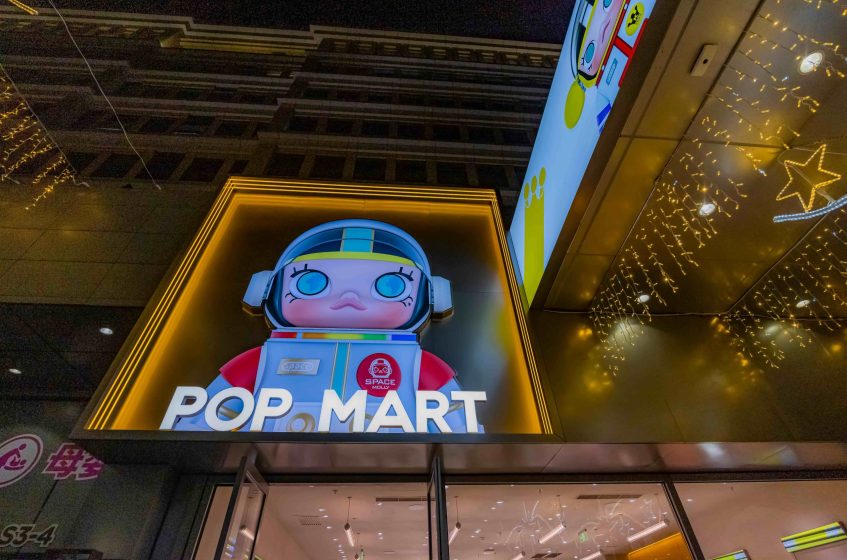
During the same period, the popular Mainland toy brand Pop Mart’s total non-current assets stood at RMB3.5 billion, of which right-of-use assets made up RMB1.37 billion and intangible assets accounted for RMB210 million, clearly highlighting the asset value of IP. In the first half of 2025, Pop Mart showcased awe-inspiring prowess for IP operations and commercialization, racking up a revenue of RMB13.88 billion, with a 204.4% year-on-year growth. The company had 13 artist IP products each generating over RMB100 million. Among them, the Monsters (including Labubu), Molly, Skullpanda, Crybaby, and Dimoo recorded sales of RMB4.81 billion, RMB1.36 billion, RMB1.22 billion, RMB1.22 billion, and RMB1.11 billion respectively.

The role of government is paramount

With the coming of age of R&D and design ecosystems in the Mainland, spanning fields from artificial intelligence and biotechnology to cultural innovation and digital content, a wealth of IPs with vast development potential has emerged. However, unlocking the inherent value of IP requires effective commercialization. As an international financial and trading hub, Hong Kong boasts a legal system, professional expertise, and markets that are on a par with global standards. These strengths have paved the way for the city to become a regional IP trading centre, serving to convey the region’s IP to the world.

The government undoubtedly has an essential role to play in this progress. As a matter of fact, the SAR Government is advancing related work on multiple fronts simultaneously. These efforts include: implementing the Protocol Relating to the Madrid Agreement Concerning the International Registration of Marks (Madrid Protocol); striving to conduct substantive patent examinations independently by 2030; optimizing the Registered Designs Rules and the Copyright Ordinance; introducing a patent box incentive that reduces the tax rate on assessable profits from eligible IP income from 16.5% to 5%; preparing for the establishment of a World Intellectual Property Organization Technology and Innovation Support Centre in Hong Kong; organizing the Business of IP Asia Forum; launching an IP financing sandbox pilot project; providing small and medium enterprises with patent valuation services and subsidies; and cooperating with Qianhai to create IP innovation clusters.

Building Hong Kong’s IP commercialization ecosystem

On the basis of the above, there are also other initiatives worth considering and promoting. First, the SAR Government could explore the formulation of standards within the framework of green finance to issue IP bonds for global investors. It could also encourage banks to provide loans for IP-related projects, recognize IP as intangible assets, and accept them as collateral from borrowers. Hence, innovative firms would be more willing to invest in R&D and the creation of IP, as these investments are expected to generate assets with real value rather than being regarded merely as cost inputs for generating business revenue. In addition, insurance companies should be encouraged to participate in this process to help manage the downside risks associated with IP investment.

Clearly, in light of the lessons from the termination of Singapore’s IP Finance System in 2018, providing financing companies with funds through policy premiums and valuations alone will not be sufficient to create a flourishing IP commercialization ecosystem. The SAR Government should further build a comprehensive ecosystem for IP financing, for example, capitalizing on Hong Kong’s well-established exchange market mechanisms and formulating transparent rules to encourage listed companies to disclose IP as intangible assets.

Second, efficient IP market transactions often rely on reliable pricing established through transparent and standardized practices. To mitigate the exorbitant costs of IP valuation and the risks of related activities, it is necessary for regulators or platform developers to promote valuation processes that are efficient and equitable. For instance, big data technology can be utilized to generate reference prices for IP, while detailed information of each IP can be disclosed on IP transaction and information platforms. This would strengthen the matching of buyers and sellers with professional service providers, such as insurance companies and legal practitioners, thereby fostering an open and transparent free market.

Third, given the relatively high costs of IP creation, valuation, and transactions, cost-sharing through economies of scale is vital during IP commercialization. Accordingly, plans should be devised to set up an IP federation, supported by a secretariat, to connect stakeholders from industry, academia, research, and investment sectors within the ecosystem. Their joint efforts would benefit the commercialization of scientific research outcomes and cultural creations. On the one hand, the technology transfer offices of participating universities can share their research results within the federation to enhance information circulation. On the other hand, the federation can employ in-house lawyers, patent specialists, scientists, researchers, and marketing professionals to help its members assess the market value of their research and design outcomes, and to formulate corresponding commercialization and marketing strategies.

To this end, Hong Kong needs to ensure readiness to join the patent examination highway to connect with international IP platforms. The Government should collaborate with the Mainland to further combat IP infringement, encourage arbitration to lower IP-related legal costs, and promote the development of Asian IP transaction platforms to boost the IP commercialization ecosystem. Additionally, it should deepen cooperation with universities and international organizations to expand the IP talent pool, and consider procuring IP in advanced industries through the “Hong Kong growth portfolio”.

Establishing Hong Kong as a regional IP centre is an arduous undertaking. It is our earnest hope that the city’s IP industry will achieve sustainable growth so that, while serving the commercialization and globalization of IP from China and other countries in the region, it will also optimize Hong Kong’s economic structure and generate abundant high-quality employment opportunities for local residents.

The Resurgence of Economic Woes in Argentina15 Oct 2025
The Subtle Strategies Behind Hong Kong Stock Privatizations29 Oct 2025
Trending
When Axes Meet the Balance Sheets: How the World is Revaluing the Forests
Prof. Guojun He
Tropical forests are disappearing at an alarming rate. In 2024, global losses of primary tropical forests reached about 6.7 million hectares, an increase of nearly 80% compared with 2023 [Note 1]. The 30th United Nations Climate Change Conference (COP30), held last month in Brazil, has been regarded as the most critical climate summit since the Paris Agreement.
3 Dec 2025
Faculty
Can global governance withstand unilateralism?
Dr. Y. F. LUK
When the global political and economic environment is volatile and the outlook extremely uncertain, global governance naturally becomes disorderly. One of the main platforms for global governance today is the G20.
26 Nov 2025
Faculty
TANG_Hei_Wai_web1
About Author
Prof. Heiwai TANG

Associate Vice-President (Global)

Sign up for upcoming news and events
LinkedIn WeChat Instagram Facebook Weibo Twitter YouTube

©2025, HKU Business School. All Rights Reserved. | Privacy Policy | Web Accessibility Statement