




Domestic outsourcing is known to reduce worker wages, but its effect on employment security — a key dimension of job quality — has not been studied. Using Brazil’s comprehensive employee–employer linked data, we find that outsourcing reduces exit from formal employment among cleaners and security guards during their first few years of tenure. The observed reduction in employment hazard is larger in cities with greater volatility in labor demand. The reduction is not attributable to differences in worker characteristics or differential exposure to local labor market shocks. The estimates suggest that outsourcing had larger positive effects on the net present value of worker earnings than implied by wage differentials alone. The patterns are consistent with a search-theoretic model in which outsourcing eases reassignment across firms.
3910 3086
KK 921
- PhD in Economics, MIT
- A.B. in Physics, Harvard
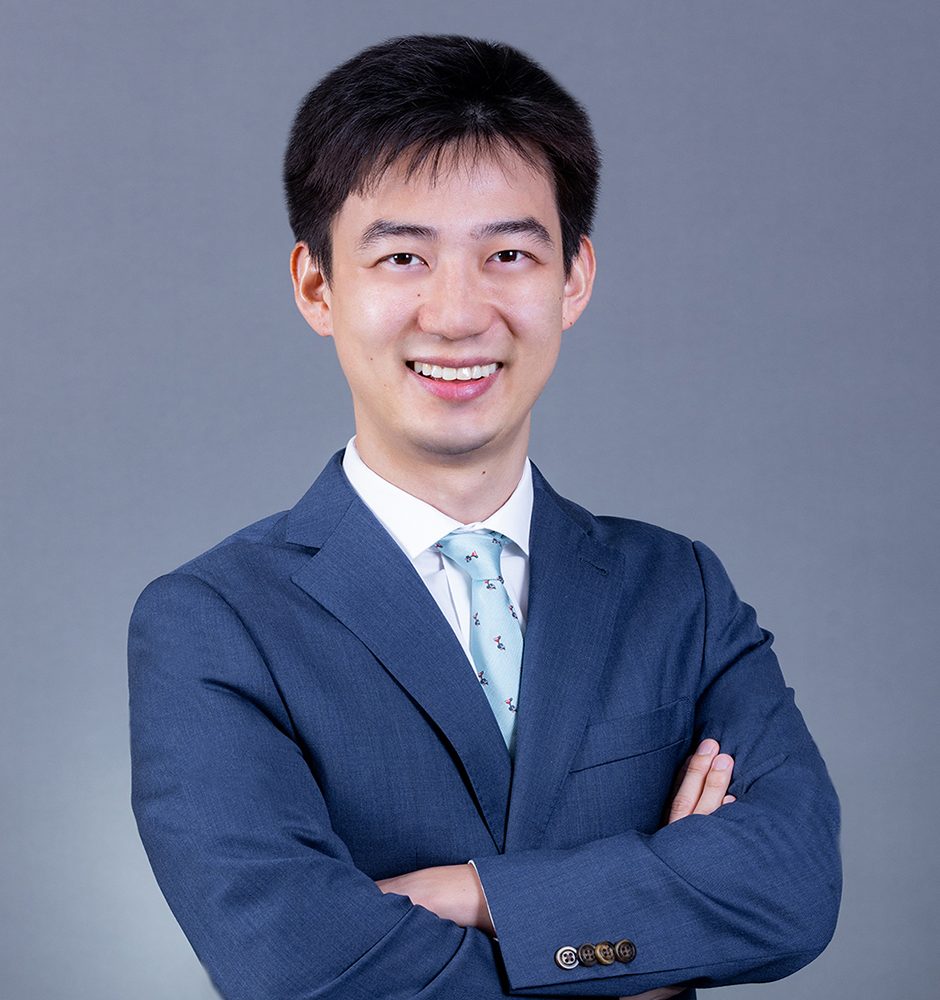
Prof. Michael B. Wong is an Assistant Professor in management and strategy at HKU Business School, with a joint appointment in economics, and a courtesy appointment at HKU School of Governance and Policy.
He is an applied microeconomist and theorist. His research focuses on labor markets, firm organization, relational contracts, artificial intelligence, housing policy, inequality, and digital currency.
He is affiliated with IZA, Rockwool Foundation, HKU Org Econ, HKU CAMO, HKU Stone Centre, HKU CCCW, HKU Jockey Club ESG Research Institute, and HKU Real Estate Lab.
He is the founding director of Hong Kong Future Economy Institute (HKFEI), an independent public-policy think tank dedicated to evidence-based policy innovation in Hong Kong. He serves on the Housing Authority Subsidised Housing Committee.
- Global Management in Economics Perspective
- Economics of Organization and Strategy
- Labor economics
- Personnel economics
- Organizational economics
- Monetary economics
- Housing economics
- “Managerial Coordination in Decentralized Markets”, with Duoxi Li, The Economic Journal, forthcoming.
- “Subsidize Rent or Subsidize Homeownership? Evidence from a Hong Kong Experiment”, Regional Science and Urban Economics, 2026, 121, 104254.
- “Domestic Outsourcing and Employment Security”, with Naijia Guo and Duoxi Li, Journal of Development Economics, 2026, 182, 103816.
- “Ideological Bias and Trust in Information Sources”, with Matthew Gentzkow and Allen T. Zhang, American Economic Journal: Microeconomics, 2025, 17(2), pp. 162-213.
Prof. Michael Wong from HKU Business School says Hong Kong's falling homeownership rate reflects not a lack of confidence, but persistently high private housing prices and a broken supply structure. Private homes have been out of reach for years, and the gap in Home Ownership Scheme (HOS) flat supply has exacerbated the problem.
In a recent interview with Wen Wei Po, Prof. Michael B. Wong, Assistant Professor in Economics, Management and Strategy at HKU Business School, suggested that improving the quality of Home Ownership Scheme (HOS) flats could provide a key incentive for property ownership. He argued that the convergence in quality between public rental housing (PRH) and HOS flats is a major policy design flaw. As PRH is intended to provide basic shelter for low-income groups, HOS flats should be of superior quality to attract tenants to move up the housing ladder.
We study the role of endogenous trust in amplifying ideological bias. Agents in our model learn a sequence of states from sources whose accuracy is ex ante uncertain. Agents learn these accuracies by comparing their own reasoning about the states based on introspection or direct experience to the sources' reports. Small biases in this reasoning can cause large ideological differences in the agents' trust in information sources and their beliefs about the states, and may lead agents to become overconfident in their own reasoning. Disagreements can be similar in magnitude whether agents see only ideologically aligned sources or diverse sources.
Besides retirement, another ongoing concern of Hong Kong people is the city’s housing affordability. For fourteen years in a row since 2010, Hong Kong has been ranked the least affordable housing market in the world. In chapter 4, Michael Wong, Jimmy Ho and Yulin Hong measure the distributional effects of Hong Kong's housing affordability crisis by decomposing population, price, and construction data. The study shows that large-scale public housing insulated a large fraction of households from rapidly rising private-sector housing costs between 2006 and 2016. However, as private-sector costs rose, public housing became increasingly misallocated, and the population of private renters dramatically increased. The prices and rents of smaller private-sector units disproportionately increased. The result was a significant increase in the price of small units, as well as a disproportionate burden borne by young renters, who increasingly lacked the ability to move up Hong Kong's housing ladder. The continuing lack of affordable housing is highly detrimental to Hong Kong's economy, which hampers the city’s ability to attract talent and investment.
為促進香港經濟增長,政府實行了大規模的研發補貼,旨在創造新產業和刺激新的經濟增長。政府還積極放寬移民限制,希望吸引年輕人才。 可惜,這些政策的作用很有限。過去10年,儘管特區政府在創新補貼上花費了巨額資金,但本港的機械、設備和知識產權實際投資,從2012年的2780億元(佔GDP的13.7%),下降到2023年的1730億元(佔GDP的5.8%)。儘管移民限制得到放寬,本港勞動人口在2023年5月至2024年5月期間,僅增長了0.4%。
香港地狹人稠,公共房屋資源緊絀。不少基層人士因未能輪候到公屋,而被迫選擇住於狹小且生活環境惡劣的劏房。可諷的是現時居住公屋的住戶中,有為數不少擁有名車甚或在外地有物業,過着不俗的物質生活。他們被統稱為「富戶」。