




Problem definition: We study how the government should design the subsidy policy to promote electric vehicle (EV) adoptions effectively and efficiently when there might be a spatial mismatch between the supply and demand of charging piles. Academic/practical relevance: EV charging infrastructures are often built by third-party service providers (SPs). However, profit-maximizing SPs might prefer to locate the charging piles in the suburbs versus downtown because of lower costs although most EV drivers prefer to charge their EVs downtown given their commuting patterns and the convenience of charging in downtown areas. This conflict of spatial preferences between SPs and EV drivers results in high overall costs for EV charging and weak EV adoptions. Methodology: We use a stylized game-theoretic model and compare three types of subsidy policies: (i) subsidizing EV purchases, (ii) subsidizing SPs based on pile usage, and (iii) subsidizing SPs based on pile numbers. Results: Subsidizing EV purchases is effective in promoting EV adoptions but not in alleviating the spatial mismatch. In contrast, subsidizing SPs can be more effective in addressing the spatial mismatch and promoting EV adoptions, but uniformly subsidizing pile installation can exacerbate the spatial mismatch and backfire. In different situations, each policy can emerge as the best, and the rule to determine which side (SPs versus EV buyers) to subsidize largely depends on cost factors in the charging market rather than the EV price or the environmental benefits. Managerial implications: A “jigsaw-piece rule” is recommended to guide policy design: subsidizing SPs is preferred if charging is too costly or time consuming, and subsidizing EV purchases is preferred if charging is sufficiently fast and easy. Given charging costs that are neither too low nor too high, subsidizing SPs is preferred only if pile building downtown is moderately more expensive than pile building in the suburbs.
May-June 2022
Manufacturing & Service Operations Management
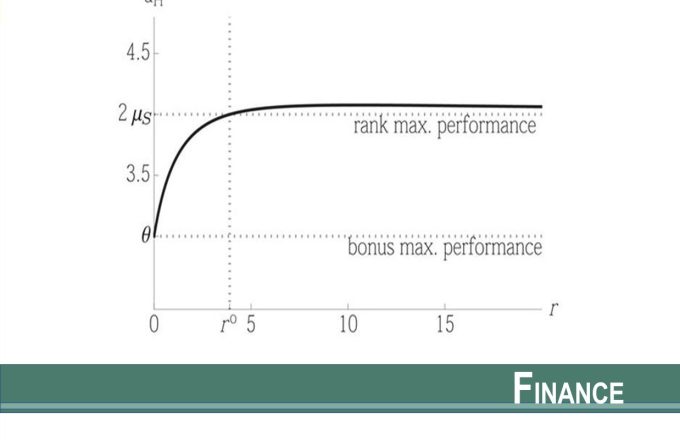
This paper provides a general analysis of signaling under double-crossing preferences with a continuum of types. There are natural economic environments where the indifference curves of two types cross twice, such that the celebrated single-crossing property fails to hold. Equilibrium exhibits a threshold type below which types choose actions that are fully revealing and above which they pool in a pairwise fashion, with a gap separating the actions chosen by these two sets of types. The resulting signaling action is quasi-concave in type. We also provide an algorithm to establish equilibrium existence by construction.
May 2022
Econometrica
Using a representative sample of credit card holders from a leading Chinese commercial bank, we investigate how consumers respond to an unexpected interest rate decrease that automatically reduces interest expenses for all mortgage borrowers in the country and thereby generates significant positive disposable-income shocks. Our difference-in-differences analysis shows that compared with homeowners without mortgage obligations, mortgage borrowers increased their monthly credit card spending by 8.7% after the 230-bps mortgage rate reduction announced in September 2008. We find a significant spending response both immediately after the announcement and during the post-reset period. The credit card delinquency rate also decreased after the mortgage rate reset. Subsequent to an interest-rate increase episode, mortgage borrowers symmetrically reduced their credit card spending. Hand-to-mouth mortgage borrowers experienced a more pronounced spending increase. The debt-service channel plays an important role in transmitting monetary policy—our estimate implies a marginal propensity to consume 0.40–0.54 through credit card spending.
May 2022
Review of Finance
Over the past millennium, China has relied on the Confucian clan to achieve interpersonal cooperation, focusing on kinship and neglecting the development of impersonal institutions needed for external finance. In this paper, we test the hypothesis that the Confucian clan and financial markets are competing substitutes. Using the large cross-regional variation in the adoption of modern banks, we find that regions with historically stronger Confucian clans established significantly fewer modern banks in the four decades following the founding of China's first modern bank in 1897. Our evidence also shows that the clan continues to limit China's financial development today.
May 2022
The Economic Journal
We develop a novel measure of volatility pass-through to assess international propagation of output volatility shocks to macroeconomic aggregates, equity prices, and currencies. An increase in country's output volatility is associated with a decrease in its output, consumption, and net exports. The average consumption pass-through is 50% (a 1% increase in output volatility increases consumption volatility by 0.5%) and it increases to 70% for shocks originating in smaller countries. The equity volatility pass-through is larger and in the order of 90%. A novel channel of risk sharing of volatility risks can explain our empirical findings.
May 2022
The Review of Financial Studies
Does a bank’s dependence on different external funding sources shape its voluntary disclosure of information? We evaluate whether economic shocks that increase the supply of bank deposits alter the cost–benefit calculations of bank managers concerning voluntary information disclosure. We measure information disclosure using 10-K filings, 8-K filings, and earnings guidance. As for the funding shock, we use unanticipated technological innovations that triggered shale development and booms in bank deposits. Further analyses suggest that greater exposure to shale development reduced information disclosure by relaxing the incentives for managers to disclose information to attract funds from external capital markets.
May 2022
Management Science
We study a risk-averse newsvendor problem where demand distribution is unknown. The focal product is new, and only the historical demand information of related products is available. The newsvendor aims to maximize its expected profit subject to a profit risk constraint. We develop a model with a value-at-risk constraint and propose a data-driven approximation to the theoretical risk-averse newsvendor model. Specifically, we use machine learning methods to weight the similarity between the new product and the previous ones based on covariates. The sample-dependent weights are then embedded to approximate the expected profit and the profit risk constraint. We show that the data-driven risk-averse newsvendor solution entails a closed-form quantile structure and can be efficiently computed. Finally, we prove that this data-driven solution is asymptotically optimal. Experiments based on real data and synthetic data demonstrate the effectiveness of our approach. We observe that under data-driven decision-making, the average realized profit may benefit from a stronger risk aversion, contrary to that in the theoretical risk-averse newsvendor model. In fact, even a risk-neutral newsvendor can benefit from incorporating a risk constraint under data-driven decision making. This situation is due to the value-at-risk constraint that effectively plays a regularizing role (via reducing the variance of order quantities) in mitigating issues of data-driven decision making, such as sampling error and model misspecification. However, the above-mentioned effects diminish with the increase in the size of the training data set, as the asymptotic optimality result implies.
April 2022
Production and Operations Management
This study investigates dynamic inventory relocation to respond proactively to the changing relief demand forecasts over time. In particular, we examine how to relocate mobile inventory optimally to serve nonstationary stochastic demand at several potential disaster sites. We propose a dynamic relocation model using dynamic programming (DP) and develop both analytical and numerical results regarding optimal relocation policies, the minimum cost-to-go function, and the value of inventory mobility over traditional warehouse pre-positioning. Given the computational complexity of the backwards DP algorithm, we develop a base state heuristic (BSH) for general problems by exploiting the real-world disaster pattern of occurrence. For problems with temporally independent demand, we propose a polynomial time exact algorithm based on a spatial–temporal graph. For problems with spatially independent demand, we design a speedup technique to implement BSH in polynomial time. The proposed model and algorithms are further extended to consider the impact of transportation uncertainties. Numerical experiments show that the proposed algorithms return high-quality decisions only in a small fraction of the time required by an exact algorithm and a myopic algorithm. The proposed model and algorithms are applicable to any type of mobile inventory, facility, or server in similar settings.
Mar 2022
Production and Operations Management
Information technology (IT) outsourcing relationships today are facing increasingly turbulent environments. With rapid changes in technological, commercial, societal, and regulatory landscapes, client firms have to closely and continually assess the desirability and appropriateness, or legitimacy, of their vendors in such dynamic settings. In this research, the focus is on client firms’ perceived legitimacy of vendors, termed “vendor legitimacy.” Specifically, building on institutional theory, vendor legitimacy is conceptualized as consisting of three dimensions—pragmatic, moral, and cognitive—and is examined through their respective impacts on IT outsourcing performance. The role of key governance strategies for managing vendor legitimacy, namely, contractual governance and relational governance, are likewise explored. Results from a multiple-sourced, matched-pair, cross-industry sample of executives and managers of 185 client firms reveal that these various governance strategies exert differential impacts on the aforementioned dimensions of vendor legitimacy, which, in turn, drive performance.
Mar 2022
Information Systems Research