





Latent variable models are popularly used to measure latent embedding factors from large-scale assessment data. Beyond understanding these latent factors, the covariate effect on responses controlling for latent factors is also of great scientific interest and has wide applications, such as evaluating the fairness of educational testing, where the covariate effect reflects whether a test question is biased toward certain individual characteristics (e.g., gender and race), taking into account their latent abilities. However, the large sample sizes and high-dimensional responses pose challenges to developing efficient methods and drawing valid inferences. Moreover, to accommodate the commonly encountered discrete responses, generalized latent factor models are often assumed, adding further complexity. To address these challenges, we consider a covariate-adjusted generalized factor model and develop novel and interpretable conditions to address the identifiability issue. Based on the identifiability conditions, we propose a joint maximum likelihood estimation method and establish estimation consistency and asymptotic normality results for the covariate effects. Furthermore, we derive estimation and inference results for latent factors and the factor loadings. We illustrate the finite sample performance of the proposed method through extensive numerical studies and an educational assessment dataset from the Programme for International Student Assessment (PISA).
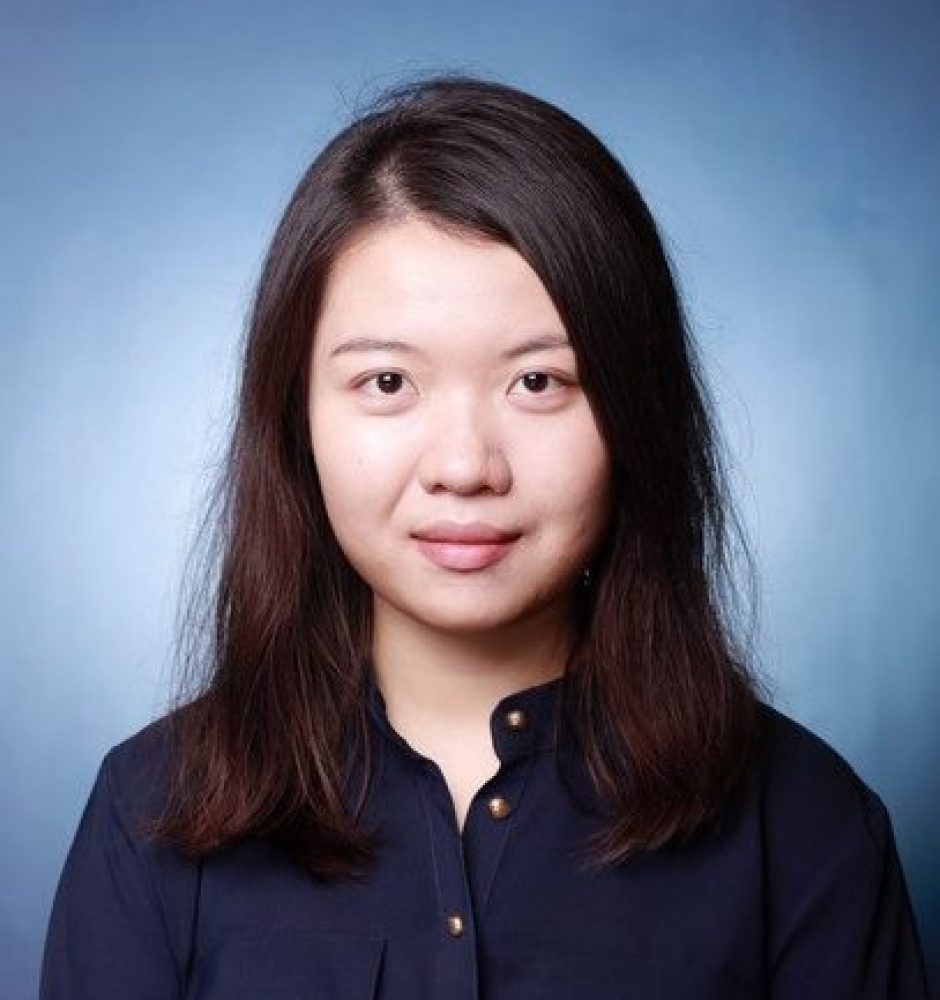
Prof. Jing OUYANG
Innovation and Information Management
Assistant Professor
3910 3107
KK 1020
Academic & Professional Qualification
- Ph.D. in Statistics, University of Michigan, 2024
- BSc. in Mathematics and Economics, HKUST, 2019
Biography
Prof. Jing Ouyang is an Assistant Professor in Innovation and Information Management at HKU Business School. Prior to joining HKU, Jing received a Ph.D. in Statistics from University of Michigan in 2024 and a BSc. in Mathematics and Economics from Hong Kong University of Science and Technology in 2019.
Research Interest
- Latent variable models
- Psychometrics
- High-dimensional statistical inference
- Statistical machine learning
Selected Publications
- J. Ouyang, K. M. Tan, and G. Xu (2023) “High-dimensional Inference for Generalized Linear Models with Hidden Confounding.” Journal of Machine Learning Research, 24(296):1−61.
- Y. Chen, C. Li, J. Ouyang, and G. Xu (2023) “Statistical inference for noisy incomplete binary matrix.” Journal of Machine Learning Research, 24(95):1−66.
- Y. Chen, C. Li, J. Ouyang, and G. Xu (2023) “DIF Statistical Inference without Knowing Anchoring Items.” Psychometrika, 88, 1097–1122.
- C. Ma, J. Ouyang, C. Wang, and G. Xu (2024) “A note on improving variational estimation for multidimensional item response theory.” Psychometrika, 89, 172–204.
- C. Ma, J. Ouyang, and G. Xu (2023) “Learning latent and hierarchical structures in cognitive diagnosis models.” Psychometrika, 88, 175–207.
- J. Ouyang and G. Xu (2022) “Identifiability of latent class models with covariates.” Psychometrika, 87, 1343–1360.
Recent Publications
1Mar
1 Mar 2026
Annals of Applied Statistics