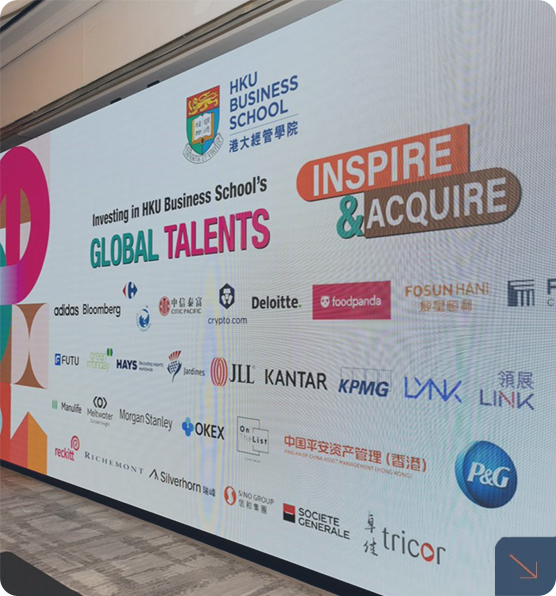
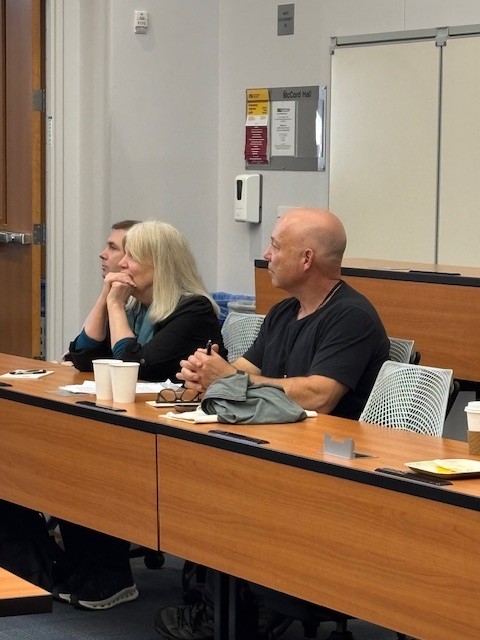
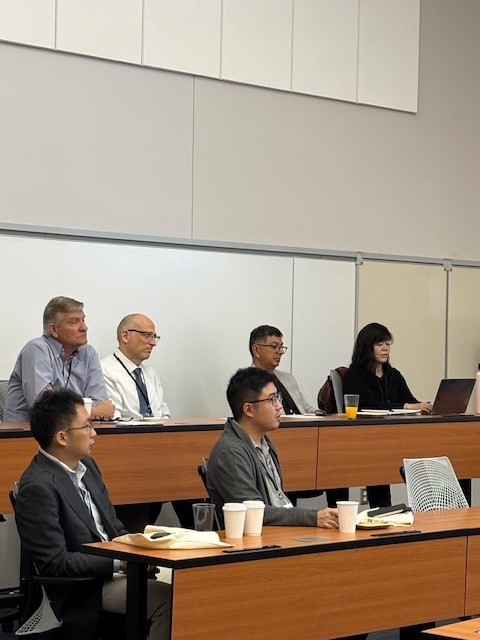
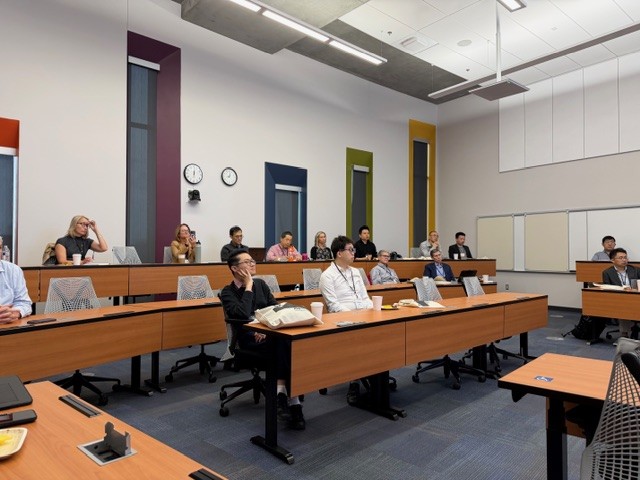
The Web3 Global Elite Programme (4th Cohort) Hong Kong Module was held on January 9-11, 2026.
Professor Chen Lin, Vice-President and Pro-Vice-Chancellor (Business) at The University of Hong Kong and Programme Director of the Web3 Global Elite Programme, highlighted that the Web3 sector is filled with opportunities and challenges. The industry has progressed beyond a phase of rapid growth into a period focused on innovation. In this realm, everyone is both an observer and an explorer of cutting-edge trends. He encouraged participants to engage in substantive discussions and intellectual exchanges throughout the programme, hoping it would serve as a catalyst for the incubation of innovative outcomes within the Web3 field.
The “New Horizons, New Directions – Web3 Global Elite Programme (4th Cohort) Opening Forum” hosted by HKU Business School Executive Education successfully concluded on January 8, 2026.
Focusing on the core themes of compliance, security, real-world asset (RWA) tokenization, and stablecoins, the forum provided clear insights into the development trajectory of the Web3 sector in 2026, underpinned by empirical data and cutting-edge technology. This gathering brought together leading academics, prominent venture capitalists, and seasoned industry pioneers.
Our keynote speakers included Professor Chen Lin, Vice-President and Pro-Vice-Chancellor (Business) from The University of Hong Kong, Professor David Wen from the International Business School of Zhejiang University, Mr. Jocy Lin from IOSG Ventures, and Mr. Long Wang from the Greater Bay Area Financiers Association. Our panel discussion featured Ms. Jessica Yang from ME Group, Ms. Bridget Li from Asseto, Mr. Chen Zhao from Fosun Asset Management, Mr. Horace Peng from CoinFound, and Ms. Shukyee Ma from Plume, who shared valuable insights on the opportunities and challenges inherent in integrating traditional finance and cryptocurrency.
Student associationsare a vital channel for developing and empowering undergraduate leaders within our community. With strong links to the business and government sectors, the innovative campaigns driven by each association enrich our students’ university experience both personally and professionally. Each January, a new generation of student leaders steps into Executive Committee roles for the coming session. To equip them for a smooth and rewarding year ahead, the UG Student Enrichment Teamhosted a full‑day Leadership Bootcamp on 31 January 2026 at HKU iCubefor over 40 student leaders across three faculty‑affiliated associations—BEA, BA and EFS. This vibrant gathering set the stage for an impactful 2025–26 academic year.
Professor Winnie Leung, Assistant Dean (Undergraduate), opened the Bootcamp by inspiring all student leaders with the “3Cs”: Compassion (be empathetic and supportive), Compliance (govern your actions by adhering to regulations), and Caution(manage risks when executing campaigns). Professor Leung also encouraged each Executive Committee to embrace their term through the principle “L.E.A.D.”—Leadership development; be Ethical; adopt a high level of Assurance; and be Diligent—working hard in their society responsibilities while maintaining strong academic performance.
The day continued in an interactive format. Rather than a traditional lecture, a mix of 2024–25 and 2025–26 Executive Committee members from various societies took centre stage, transforming essential guidelines into engaging presentations. Through peer interaction, students gained a clear understanding of Faculty expectations and the key areas addressed in the Faculty Guidelines and Regulations for all Student Associations. Momentum built as each society presented its ambitious Annual Plan for 2025–26, followed by dynamic Q&A sessions. This provided an excellent opportunity for new committee members to showcase their vision, gather feedback, and build excitement for the year ahead. The collaborative spirit was truly inspiring, reflecting the strong support system and shared goals among all student associations and the HKU Business School.
In the afternoon, a cross‑society workshop—“Building Team Excellence: Strengthening Bonds through Play and Connection”—was facilitated by trainer Ms Samantha Pei. The workshop utilised hands‑on activities with LEGO bricks, cards, and collaborative exercises to develop essential soft skills including gratitude, effective communication, empathy, creative problem‑solving, and team role‑play. Key objectives included fostering meaningful connections; cultivating communication and collaboration; equipping students with strategies for self-management and conflict resolution; and nurturing an inclusive atmosphere that enhances individual and team development. The programme emphasised discovering each participant’s role within the HKU community and creating collective impact through leadership, ultimately strengthening team excellence and organisational wellbeing.
Overall, the Bootcamp was more than a training session: it was a powerful testament to the vibrant community, robust leadership development, and unwavering support that define HKU Business School. We look forward to an action‑packed 2025–26, as these bright minds are fully charged and ready to make their mark.
Why do significant philanthropic investments often fail to create lasting social impact? This is the critical question at the heart of Hong Kong’s social challenges.
The NGO Empowerment Initiative, under our Research Institute, is designed to tackle this issue. It provides a strategic framework to strengthen governance transparency, organizational capacity, and impact measurement across the sector.
As a core output of this initiative, we are proud to firstly launch a pivotal three-report series. These reports diagnose the systemic barriers in the current funding landscape and offer actionable strategies for funders, NGOs, and all stakeholders.
The Series Includes:
Report 1: “Why Philanthropic Funding in Hong Kong Cannot Buy Social Change” Diagnoses the limitations of current grant-making and proposes six strategic shifts for funders.
Report 2: “The HK$14 Billion Philanthropy Dilemma” Analyses the paradox of rising donations amid persistent need, urging a shift from funding projects to driving systemic change.
Report 3: “Measuring: Are the Sponsorships Well Spent?” Examines the state of impact measurement, moving beyond vanity metrics to define meaningful evaluation.
Together, we believe these first three reports offer a clear diagnosis and a strategic roadmap for anyone committed to deeper, more sustainable social impact in Hong Kong, and beyond. We invite you to explore the full series and join the crucial conversation on reimagining philanthropy for the greater good.
“Experiences like this reinforce my conviction in the value of international exposure and deepen my interest in Asia-Pacific financial markets and innovation ecosystems.” — João Rawes de Freitas, Esade Master’s Student
“What stood out most was the opportunity to learn directly from practitioners – hearing how investors, founders, and policymakers navigate regulation, capital flows, and uncertainty in a fast-moving, geopolitically complex environment. These insights went far beyond textbooks and added valuable perspective to how financial decisions are made in practice.” — Inês Rodrigues, Esade Master’s Student
HKU Business School were delighted to welcome masters students from Esade in Hong Kong for a deep dive into Asia’s key financial hub, blending world-class academic learning, industry engagement, and cultural experiences.
Students gained a comprehensive understanding of Hong Kong’s strategic role in Asia through lectures led by The University of Hong Kong faculty, covering geopolitics, economic development, business environment, fundraising, and wealth management — offering students a well-rounded perspective on the forces shaping Asia today.
Through direct engagement with business leaders and entrepreneurs from Hong Kong Monetary Authority (HKMA), Cyberport Hong Kong, and more, students gained real‑world perspectives that grounded their classroom learning in the realities of Hong Kong’s dynamic business landscape.
Cultural immersion rounded out the week: from the incense-filled halls of Man Mo Temple and eclectic antique stalls of Upper Lascar Row to a hike up Victoria Peak and an evening of connections with HKU students in Central.
The Study Tour offered students firsthand exposure to Asia, equipping them with the knowledge, networks, and cultural intelligence needed to lead in a globally connected world. Hong Kong continues to be a place where finance, innovation, and heritage intersect. We are confident the students will carry this Asia perspective forward as future global leaders.
On 30 January 2026, an intimate gathering at HKU iCube brought together students, alumni, and faculty to celebrate the 2nd Annual Joey Wat Scholarship Ceremony, co-hosted with the HKU Business School Alumni Association.
Scholarship recipients had the rare opportunity to connect personally with Ms. Joey Wat (BSocSc 1994), CEO of Yum China, who generously shared her journey — from HKU to leading a Fortune 500 company — and her passion for empowering future leaders.
The evening was filled with heartfelt sharing, warm conversations, and genuine inspiration, as students expressed their gratitude and motivation as Ms. Wat encouraged them to lead with authenticity, empathy, and purpose.
Congratulations to our outstanding recipients — your potential is limitless! And our deepest thanks to Ms. Wat for her unwavering support and belief in the transformative power of education.
PHOENIX, AZ – The Second Annual ASU–HKU Conference exemplified the power of interdisciplinary collaboration, uniting two global business schools for two days of rigorous debate. Gathering over 20 leading scholars across Finance, Supply Chain, Management, Accounting, Economics, and Marketing. the event bridged academic silos to advance a shared mission: the future of finance depends on balancing innovation with implementation reality.
The W. P. Carey School of Business at Arizona State University (ASU), in collaboration with HKU Business School, successfully convened the Second Annual ASU–HKU Conference. Opened by Prof. Ohad Kadan (ASU) and Prof. Roni Michaely (HKU), the event tackled the evolving landscapes of corporate governance, ESG investing, and the future of work.
Here is the recap of the key insights and their impact on the future of finance.
Pass-Through Voting: The Tension Between Investor Democracy and Informed IntermediationKeynote Speaker: Prof. Alon Brav, Bratton Family Distinguished Professor of Finance, The Fuqua School of Business, Duke University
Prof. Brav’s keynote addressed the rising trend of pass-through voting. While shifting voting power from large intermediaries to individual investors suggests greater investor democracy, the impacts on corporate governance remain theoretically ambiguous.
The presentation highlighted that implementation challenges persist because investor preferences are often “noisy” and incomplete. This creates a risk that power may inadvertently shift to a small set of menu designers and proxy advisers rather than the investors themselves.
The future success of this mechanism depends on how regulators and markets reconcile the tension between empowering individual investors and preserving the benefits of informed intermediation.
Is ESG a Fading Fad? Evidence for Resilience and EvolutionKeynote Speaker: Prof. Laura Starks, George Kozmetsky Centennial Chair and Professor of Finance, McCombs School of Business at The University of Texas at Austin
Addressing whether ESG is a “fading fad,” Prof. Starks presented comprehensive evidence that global sustainable funds nearly doubled between 2020 and 2025. While U.S. outflows reflect portfolio reallocations toward quality-focused ETFs, environmental-focused funds maintained positive inflows through 2025.
The keynote emphasized that market outcomes depend on a mix of financial motives (“value”) and non-pecuniary preferences (“values”). Additionally, proxy voting structures were identified as a material factor in altering voting outcomes on shareholder proposals.
The research argues that ESG engagements create value by reducing firms’ downside risks, particularly when focused on climate issues.
Entrepreneurial Spawning from Remote WorkPresenter: Prof. Alan P. Kwan, Associate Professor of Finance, University of Hong Kong
Leveraging novel firm-level measures of remote work derived from internet activity data and LinkedIn career histories, this research investigated how remote work arrangements influence entrepreneurship.
The study demonstrates that remote work significantly increases workers’ transitions into entrepreneurship. This effect is driven by the flexibility remote work provides, offering potential founders “experimentation time” and “downside protection” before fully committing to a new venture.
Media Shaming and Supply Chain Transparency in the Fashion IndustryPresenter: Prof. Veronica Villena, Loui Olivas Chair in Management, W. P. Carey School of Business, Arizona State University
Despite growing pressure from regulators and NGOs, fashion brands often obscure labour practices. Analysing 145 global brands, this research shows that “media shaming” acts as a catalyst for greater supply chain labour transparency, specifically leading to substantive disclosures.
These effects are found to be stronger when media controversies target multiple brands simultaneously and, notably, when corporate boards have higher female representation.
Fostering Collaboration Following the academic sessions, attendees participated in networking activities, including a group hike and a visit to the Desert Botanical Garden, fostering further collaboration between the institutions.
Congratulations to Prof. Yulin Fang, Assist. Prof. Jingcun Cao, and Ms. Christy Hirai for winning the bestselling case award from the UK-based The Case Centre! Dedicated to advancing case analysis worldwide, The Case Centre’s annual award recognises excellence in case writing and development.
The case was “YOHO: Shopping with Generative Artificial Intelligence”, and it helps students learn more in the areas of Information Systems, Marketing, and Strategy, and offers insights into the consumer goods and retail & wholesale sectors.
In February 2024, YOHO launched the YOHO AI Assistant, a generative AI-powered virtual personal shopper. The company designed the Assistant to enhance personalised customer service and support its omnichannel business. Key topic areas are:
What is generative AI, and how can it be applied in sales and marketing activities of e-commerce platforms?
In what context does generative AI best demonstrate its value, which commercial activities best leverage generative AI, and which customer demographics does it appeal to the most?
What are the costs and benefits of businesses investing in generative AI?
In recognition of his research excellence, Prof. Yanhui Wu, Professor of Economics and of Management and Strategy has been selected for the 2025 Research Output Prize (ROP) by the University Research Committee! His team’s journal article titled “Social Media and Collective Action in China” garnered widespread praise, and was published in Econometrica, one of the leading journals in the cross-disciplinary fields of Economics, Statistics and Mathematics.
This award signifies the high standards of education and pedagogical innovation on offer at HKU Business School. Our heartfelt congratulations to all other recipients across the University.
“The field trip was an inspiring and rewarding experience. During the Sprint Day, I collaborated with people from diverse cultural and academic backgrounds, sharpening my communication skills. I also formed meaningful friendships and cherished moments, making this trip truly eye-opening for both my personal and professional growth.” — Student Reflection – Jonathan Ho, Master’s student
This month, our Master’s students completed the London Entrepreneurial Experience, led by the HKU TLV Innovation Hub. The week brought together innovation, entrepreneurship, and global business insights in one of the world’s most dynamic financial and creative capitals.
Students took part in expert-led sessions focused on key topics including UK monetary and economic policy and the geopolitical landscape of the UK and Europe, providing valuable context for understanding today’s global business environment.
A major highlight was an interactive Design Thinking workshop, followed by an intensive Sprint Day. Working in teams, students partnered with the global digital freelance marketplace ‘Fiverr’ to tackle real business challenges, developing creative, impact-driven solutions and pitching their ideas in a fast-paced, real-world setting.
Alongside the academic program, students experienced London’s rich cultural landscape through guided visits to iconic sites such as the London Eye, Tate Modern, and the British Museum. The group also explored local restaurants and took part in a British cooking workshop, adding an authentic and immersive cultural dimension to the experience.
The week concluded with shared reflections and group experiences, marking a meaningful journey of learning, collaboration, and new global perspectives.