


慶祝中國量化歷史研究十周年
The Summer School for Quantitative History cum International Symposium, a cross-institutional effort initiated by Prof. Zhiwu Chen in 2013, trains aspiring young researchers from various disciplines to become successful scholars in the rapidly growing field of quantitative history, with a focus on China. This summer, the project team members and advisory board members of the Centre for Quantitative History (CQH) at the HKU Business School brought the team’s momentum again to Shanghai Jiao Tong University (SJTU), where they jointly organized the 10th Summer School for Quantitative History cum International Symposium on Quantitative History together with SJTU Department of History, and the Institute of Qing History at Renmin University of China. These annual activities, held from July 6 to 15, 2024, were a success, attracting over 250 scholars from universities and research institutions around the world.
The 9-day Summer School cum Symposium featured a series of lectures and keynote speeches by Prof. Zhiwu Chen, Prof. Chicheng Ma, Prof. Denggao Long (Tsinghua), Prof. Debin Ma (Oxford), Prof. Cameron Campbell (HKUST), Prof. Hilde De Weerdt (KU Leuven), and Prof. Stephen Broadberry (Oxford), among others who have been fully committed to this open and reciprocal academic discourse. Lectures and discussion groups were filled with lively discussions, leaving participants with more questions to be answered – an important outcome for young minds.
This year’s programme admitted 123 promising young scholars globally, including eleven from HKU. “This was not an average summer school but rather an intensive series of discussions about historical research among a community of historians and social scientists,” CQH advisory board member Prof. Hilde De Weerdt (KU Leuven) later tweeted on her account. The collaborative spirit that defines this vibrant interdisciplinary community were on full display during the summer school.
The Summer School culminated in the International Symposium on Quantitative History, held on July 13 and 14. The symposium programme included keynote speeches by leading scholars in the field, as well as 48 diverse presentations by young scholars across four parallel sessions. During the two-day event, the prestigious 7th Narada (Nandu) Quantitative History Research Best Paper Awards were announced, recognizing outstanding contributions in the field.
Also a highlight was the 10th Anniversary Gala Dinner, held on the evening of July 13, that commemorated the 10th anniversary of the team’s ongoing effort in promoting quantitative history research in China. Participants and symposium presenters were connected with alumni who chronicled the team’s transformative journey over the past decade.
The founders, including Professors Zhiwu Chen, Denggao Long, and Debin Ma, shared the original intentions behind establishing the initiative and reflected on its remarkable growth. “Emerging from our inaugural Summer School in 2013 and flourishing to mark our tenth anniversary, our core belief centers on the transformative potential of data-driven historical analysis,” said Prof. Zhiwu Chen who is the director of CQH, “we have proved ourselves as a diverse and outward-looking platform where we advocate for a paradigm shift in historical narratives.” They, together with organizing hosts Prof. Jiang Qin (SJTU) and Prof. Zhan Lin (Renmin) expressed heartfelt gratitude to the programme’s supporting parties and donors, namely the Research Grants Council’s Area of Excellence (AoE) scheme, HongShan, Longfor Group, Narada (Nandu) Foundation and Yonyou Foundation, whose generous support has been instrumental in the success of the quantitative history community in China. They also thanked alumni in the quantitative history community for their perseverance. In hindsight, it makes perfect sense why we were able to secure that charming group photograph amid the incessant downpour that had almost enveloped the day.
Looking ahead, the Centre for Quantitative History is filled with optimism as it sets its sights on the next decade. The remarkable progress made over the past 10 years has the team feeling energized and excited, envisioning a future where young scholars have more opportunities with more data becoming more easily available.
About the Centre for Quantitative History
The Centre for Quantitative History (CQH) is a focal institution for coordinating and conducting big data-based historical inquiries with quantitative methods to construct a holistic picture of China’s past development, sponsored by the HKU Business School. The focus of the Centre is on the study of the quantitative history of China. It is an area of excellence designated and funded by the Research Grants Council, a non-statutory advisory council functioning under the aegis of the University Grants Committee.
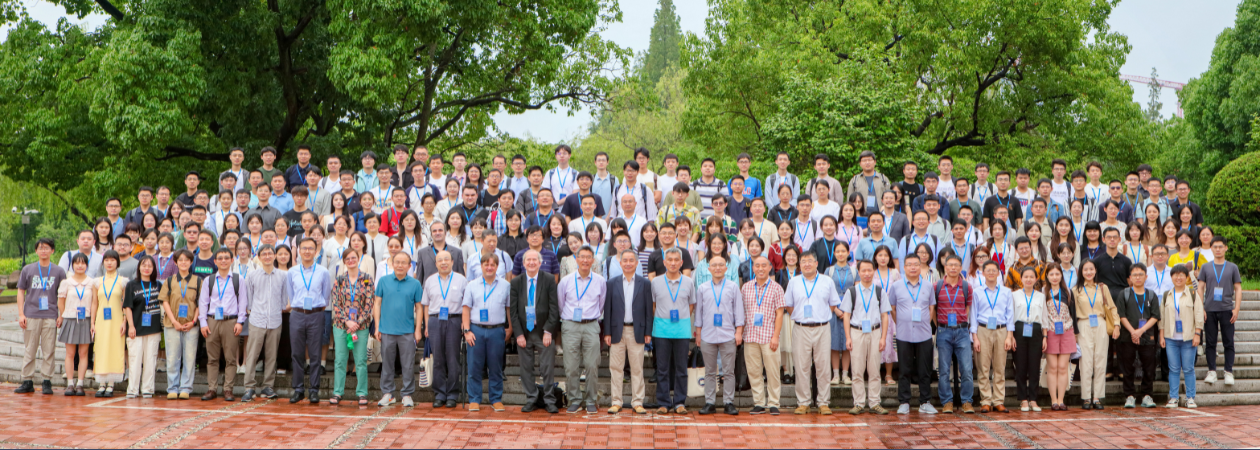 | |
| A Shining Memory: Group photo taken for the 10th Summer School for Quantitative History cum International Symposium on Quantitative History | |
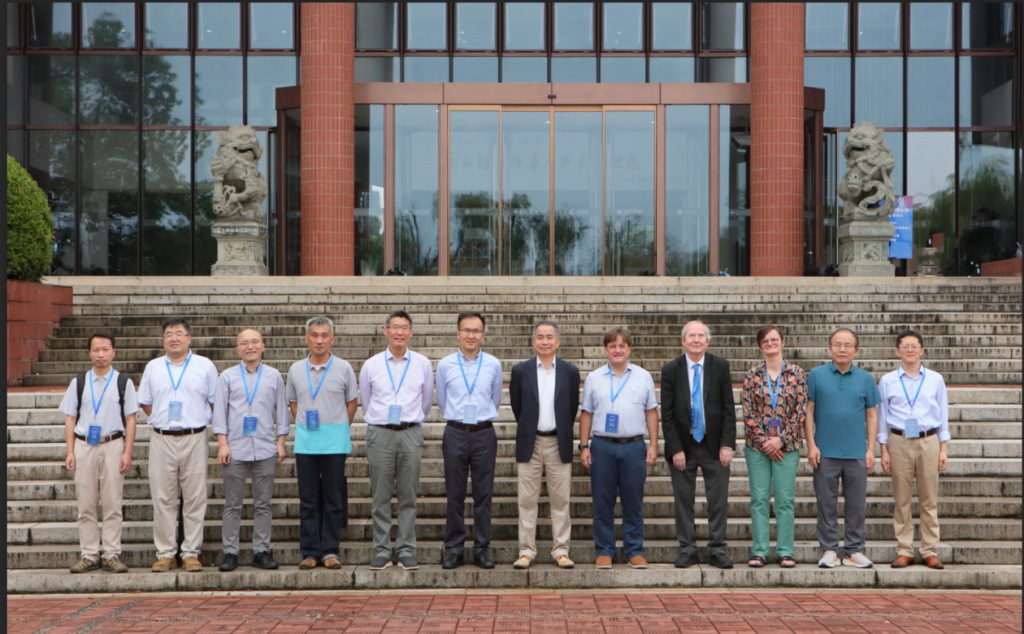 | 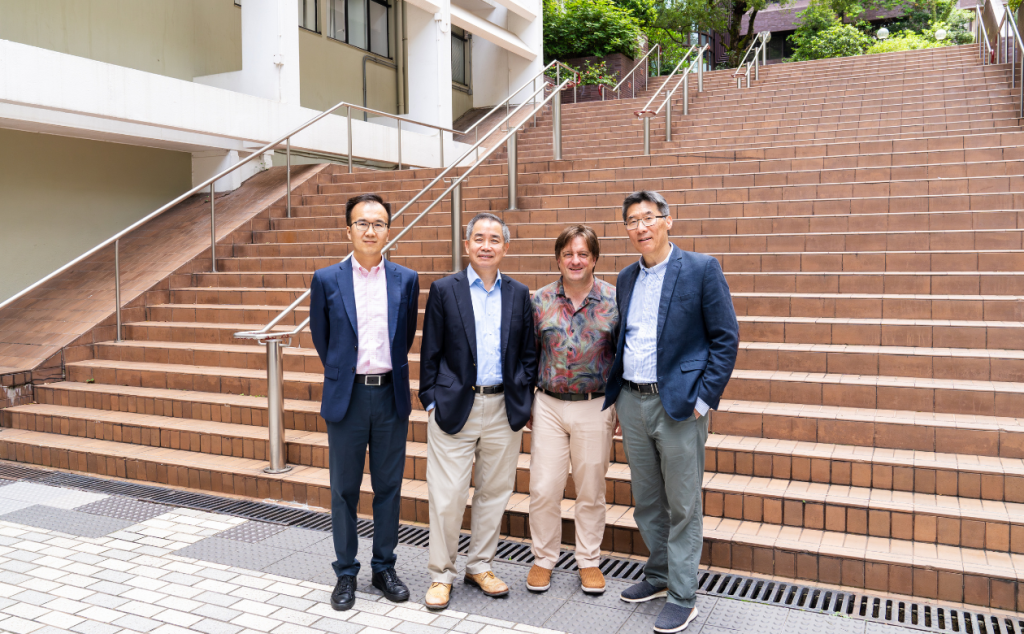 |
| CQH Team and Advisory Board members bring momentum to Shanghai Jiao Tong University for the AoE-Quantitative History project From Left to Right: Prof. Kaixiang Peng (Wuhan), Prof. Nan Li (Fudan), Prof. Ying Bai (CUHK), Prof. William Guanglin Liu (LingU), Prof. Debin Ma (Oxford), Prof. Chicheng Ma (HKU Business School), Prof. Zhiwu Chen (HKU Business School), Prof. Cameron Campbell (HKUST), Prof. Stephen Broadberry (Oxford), Prof. Hilde De Weerdt (KU Leuven), Prof. Shuji Cao (SJTU and HKU Business School) and Prof. Zhan Lin (Renmin) | HKU Business School: Leading regional quantitative history research as coordinating university for the AoE research grant From Left to Right: Prof. Chicheng Ma (HKU Business School), Prof. Zhiwu Chen (HKU Business School), Prof. Cameron Campbell (HKUST) and Prof. Debin Ma (Oxford) |