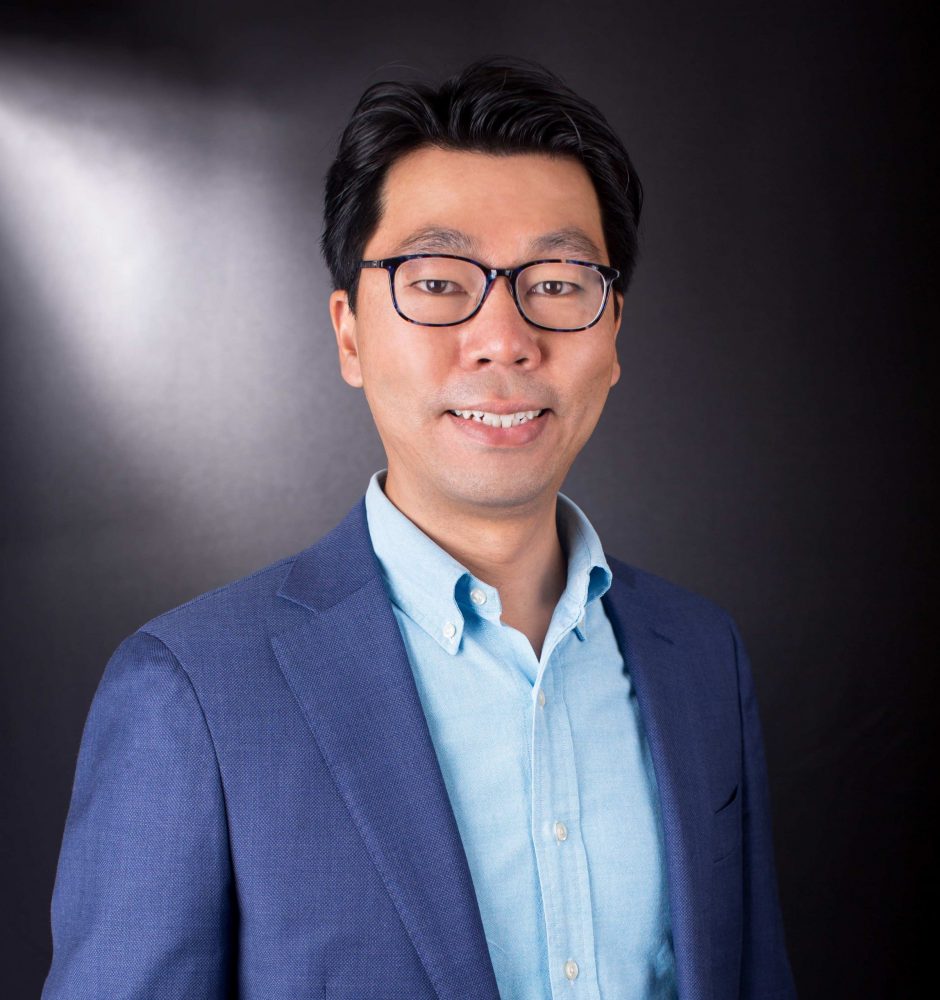
Prof. Heiwai Tang is the Victor and William Fung Professor in Economics at the University of Hong Kong (HKU), where he also serves as Director of the Asia Global Institute, Associate Vice President (Global) of the university, and Associate Dean for External Relations at the Business School. Before joining HKU, he was a tenured Associate Professor of International Economics at the School of Advanced International Studies (SAIS) of Johns Hopkins University.
He is affiliated with the Center of Economic Studies and Ifo Institute (CESifo) in Germany, the Asian Bureau of Finance and Economic Research (ABFER) in Singapore, the Kiel Institute for the World Economy in Germany, and the Globalization and Economic Policy (GEP) Center in the U.K. as a research fellow. He has consulted for organizations such as the World Bank, the International Finance Corporation, the United Nations, and the Asian Development Bank. He has also held visiting positions at the International Monetary Fund (IMF), Stanford University, the Massachusetts Institute of Technology (MIT), and Harvard University.
He has previously served as the Managing Editor of the Pacific Economic Review, and as an Associate Editor for the Journal of International Economics, the Journal of Comparative Economics, and the China Economic Review. Since 2021, he has been involved with several public and regulatory bodies in Hong Kong SAR, including the Currency Board Sub-Committee of the Hong Kong Monetary Authority’s Exchange Fund Advisory Committee, the Industry Advisory Committee of the Insurance Authority, the Securities and Futures Appeals Tribunal, the Land and Development Advisory Committee, and the Minimum Wage Commission, among others.
Heiwai holds a Ph.D. in economics from MIT and a Bachelor of Science in mathematics from UCLA. His research interests span a wide range of theoretical and empirical topics in international trade, with a specific focus on production networks, global value chains, and China. His research has been published in leading economics journals, including the American Economic Review and the Journal of International Economics. His research and opinions have been featured in the BBC, Bloomberg, China Daily, CNA, CNN, Financial Times, New York Times, Al Jazeera, Foreign Policy, South China Morning Post, and various think tanks, including the Brookings Institution and the Peterson Institute for International Economics.
Teaching
Columbia-LBS-HKU EMBA: The New World Order
HKU-PKU DBA: Frontiers in Economics Research
Fudan-HKU IMBA: The New World Order
HKU: Undergraduate Common Core – China in the Global Economy; MBA – Global Economy; Master of Economics – Economic Policy
Research Interest
International Trade, Global Value Chains, Development Economics
Selected Publications
Towards the Future of BRICS+, Eds (with Brian YS Wong), HKU Press, August 2025
“Trade Networks and Firm Value: Evidence from the US-China Trade War,” Journal of International Economics, forthcoming. (with Yi Huang, Chen Lin, and Sibo Liu)
“Currency Carry Trade by Trucks: The Curious Case of China’s Massive Imports from Itself”, Review of Finance, 27(2), March 2023, pp. 469–493. (with Xuepeng Liu, Zhi Wang, and Shang-Jin Wei)
“Do Multinationals Transfer Culture? Evidence on Female Employment in China”, Journal of International Economics, 133, Nov 2021, 103518. (with Yifan Zhang)
“Domestic Segment of Global Value Chains in China under State Capitalism”, Journal of Comparative Economics, 48(4), Dec 2020, pp. 797-821. (with Fei Wang and Zhi Wang)
“Why is China Investing in Africa? Evidence from the Firm Level”, World Bank Economic Review, 32(3), Oct 2018, pp. 610-632. (with Wenjie Chen and David Dollar)
“Are Foreign Firms Favored in China? Firm-level Evidence on the Collection of Value-Added Tax”, Journal of International Business Policy, 1(2), Inaugural Issue, Jun 2018, pp. 71-91. (with Yasheng Huang)
“Domestic Value Added in Exports: Theory and Firm Evidence from China”, American Economic Review, 106(6), Jun 2016, pp. 1402-1436. (with Hiau Looi Kee)
“Learning to Export from Neighbors”, Journal of International Economics, 94(1), Sep 2014, pp. 67-84. (with Ana Fernandes)
“Factor Intensity, Product Switching, and Productivity: Evidence from Chinese Exporters”, Journal of International Economics, 92(2), Mar 2014, pp. 349-362. (with Yue Ma and Yifan Zhang)
“International Politics and Import Diversification”, Journal of Law and Economics, 56(4), Nov 2013, pp. 1091-1121. (with Sergey Mityakov and Kevin Tsui)
“Determinants of Vertical Integration in Export Processing: Theory and Evidence from China”, Journal of Development Economics, 99(2), Nov 2012, pp. 396-414. (with Ana Fernandes)
“Labor Market Institutions, Firm-specific Skills, and Trade Patterns”, Journal of International Economics, 87(2), Jul 2012, pp. 337-351.
Awards and Honours
MAS Term Professor in Economics and Finance, 2024
APEC Study Center Financial Support from the HKSAR Government, PI, HKD 2,500,000, 2022-2027