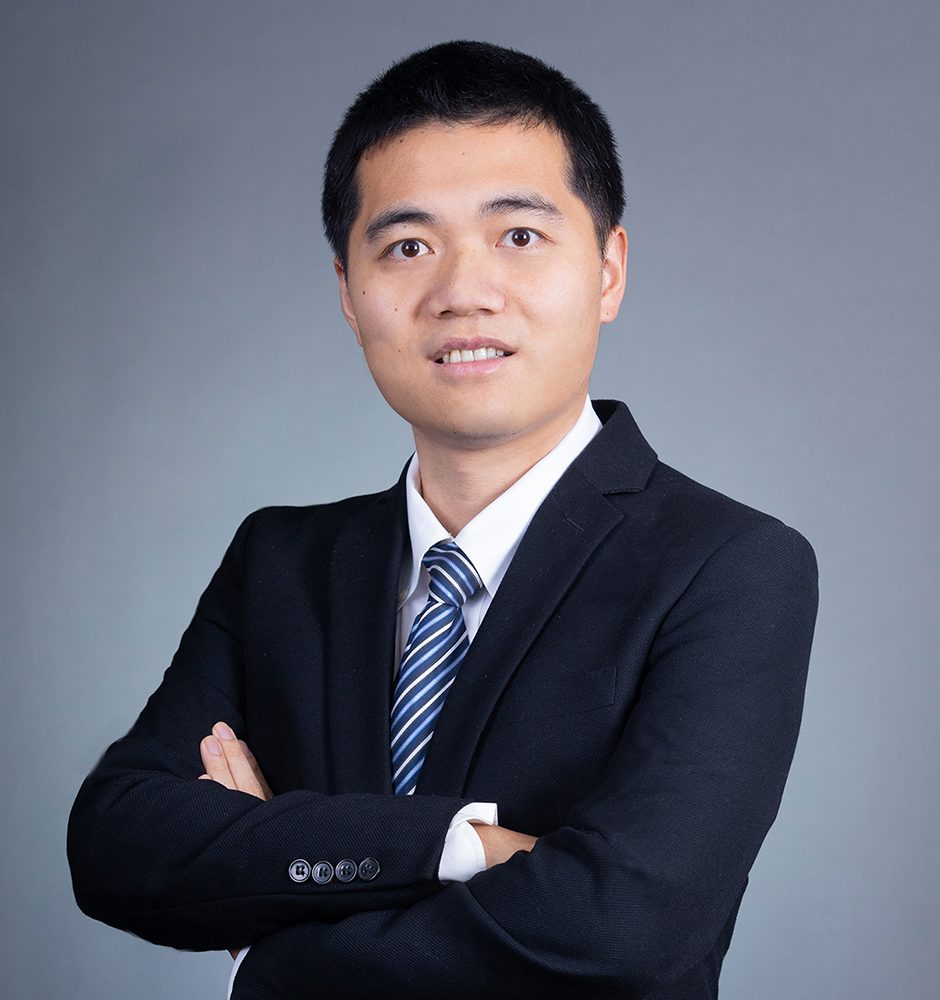
Dr. Yifei Zhang is a senior lecturer at the HKU Business School. Prior to joining the University of Hong Kong, he taught at the Hong Kong Polytechnic University and Beijing Normal University-Hong Kong Baptist University United International College.
Dr. Zhang’s research interests include Chinese Economy, Development Economics, and Political Economy. Upon graduation, he did Ph.D. internship at the Hong Kong Institute for Monetary Research (HKIMR) and worked at the Chinese University of Hong Kong as a postdoctoral fellow. His works appear in peer-reviewed journals such as Journal of Comparative Economics, Economics Letters, Small Business Economics, China Economic Review, etc.
Dr. Zhang has experience teaching various economics courses, such as Chinese Economy, Econometrics, Game Theory, etc. He also has a passion for supervising and collaborating with his students. The co-authored works have been published in academic journals such as: Journal of Comparative Economics, Economics Letters, Small Business Economics, Applied Economics, International Review of Economics & Finance, and International Studies of Economics.
- Chinese Economy
- Development Economics
- International Finance
- Political Economy
Selected Working Papers
- Zhang, Q. & Zhang, Y. “Competitive Borrowings in Squeezing Marriages.”
- Bu, J., Du, J., & Zhang, Y. “Host-State-Friendly BIT Reforms and Foreign Direct Investment.”
Journal Articles
- Ashton, J., Wang, Y., & Zhang, Y. (2024). “Does Mutual Fund Ownership Increase Corporate Environmental Spending?” Journal of Business Research, 184, 114878.
- Du, J., & Zhang, Y. (2024). ISDS Disputes, Adjudications and Cross-Border M&As. Journal of Corporate Finance, 87, 102594.
- Wang, Y., Chen, X., Zhang, Y.(2024). “Do Alumni Relationships between Executive Directors and Auditors Matter for Financial Reporting Quality?” Accounting Forum, forthcoming.
- Wang, Y., Zhang, Y., Chang X., Wei, K., (2024). “CEO Tenure and Environmental Fraud for Listed Family Firms.” Business Strategy and the Environment, 33(3), 1887-1905.
- Du, J., & Zhang, Y. (2024). “The Impact of ISDS Arbitration Claims and Adjudication on Cross-Border Direct Investment.” Transnational Corporations Review, forthcoming.
- Liu, Y., Zhang, Y., Yang, Y., & Chen, X. (2023). Dark Side of Environmental Regulation: Wage Inequality Cost. Journal of Comparative Economics, 51(2), 524-544.
- Rouse, M., Ottemoesoe, S., Wang, Y., Zhang, Y. (2023). “Do Female Independent Directors Reduce Corporate Risk Taking During COVID-19?” Asia-Pacific Journal of Accounting & Economics, 1-20.
- Liu, Y., Zhang, Y., Zhang, Y., & Xiao, H. (2022). Small business owners’ Fintech credit in crises: Theory and evidence from farmers under the COVID-19. Pacific-Basin Finance Journal, 71, 101692.
- Liu, Y., Zhang, Y., Fang, H., & Chen, X. (2022). SMEs’ line of credit under the COVID-19: evidence from China. Small Business Economics, 58(2), 807-828.
- Wang, Y., Zhang, Y., Kang, W., & Ahmed, A. H. (2022). Female analysts and COVID-19 corporate donation. Emerging Markets Review, 100941.
- Zhang, Y., Liu, Y., Zhang, Y., & Chen, X. (2022). Globalization blueprint and households’ fintech debt: Evidence from China’s One Belt One Road initiative. International Review of Economics & Finance, 79, 38-55.
- Chen, X., Fang, H., Liu, Y., & Zhang, Y. (2022). Does Chinese policy banks’ overseas lending favor Belt Road Initiative countries?. International Studies of Economics.
- 张云, 刘芸, & 章逸飞. (2022). “房住不炒” 政策的股市溢出效應 ——包含房產要素的動態均衡模型與資產定價研究. 系統工程理論與實踐, 865-878.
- Liu, Y., Zhang, Y., Chen, X., & Yang, Y. (2021). Superstition and farmers’ life insurance spending. Economics Letters, 206, 109975.
- Xiao, H., Chen, X., Fang, H., & Zhang, Y. (2021). Insider share pledging and firm value consequences under the COVID-19: evidence from China. Applied Economics, 53(56), 6522-6534.
- Chen, X., Xiao, H., & Zhang, Y. (2021). To what extent did independent directors help firms’ recovery during the COVID-19 pandemic? Evidence from China. Applied Economics, 53(38), 4464-4480.
- Wang, Y., & Zhang, Y. (2020). Do state subsidies increase corporate environmental spending?. International Review of Financial Analysis, 72, 101592.
- Du, J., & Zhang, Y. (2018). Does one belt one road initiative promote Chinese overseas direct investment?. China Economic Review, 47, 189-205. (Elsevier Awards for the Best Papers published in China Economic Review in 2018.)
Book Chapters
- Wang, Y., Zhang, Y., & Chen, X. (2023). “Detecting financial statement fraud using the machine learning methods.” FinTech Research and Applications: Challenges and Opportunities. World Scientific.
- Du, J., & Zhang, Y. (2022). “In Fear of Trojan Horse? China’s Cross-Border Acquisitions in Europe amid the One-Belt-One-Road Initiative.” China and the Belt and Road Initiative: Trade Relationships, Business Opportunities and Political Impacts. Springer: Understanding China Series.
- Du, J., Fang, H., & Zhang, Y. (2021). “One Belt One Road Initiative and China’s Overseas Lending.” Belt and Road Initiative (BRI): China’s Global Business Footprint. Centre for Business & Economic Research.
- Du, J., & Zhang, Y. (2019). “One Belt One Road Initiative and China’s Overseas Direct Investment.” In Yuan Li, Markus Taube (Ed.), How China’s Silk Road Initiative is Changing the Global Economic Landscape (pp. 130-165). Routledge.
20Aug2026年6月香港零售業總銷貨價值315億港元,連續14個月實現正增長,惟網購佔比僅約9.4%,反映實體零售仍佔主導地位。線下消費蓬勃,循環時尚成新亮點,日本高端古着品牌RAGTAG近期進駐香港,門店人流暢旺。
20 Aug 2026
教學人員
25Jul內地企業離岸發債總額約七成在港進行,中國人民銀行宣佈將債券通「南向通」年度投資淨額由人民幣5,000億元提升至人民幣8,000億元,港大經管學院章逸飛博士接受《新華網》訪問時表示,「南向通」原有額度一直偏緊,這次加碼可說是及時回應市場需求。
25 Jul 2026
教學人員
22Jul香港郵政連續8 年錄得虧損。港大經管學院章逸飛博士接受《大公報》訪問時認為,癥結在於「定位不清」:其長遠定位究竟應為政府部門、自負盈虧機構,還是引入私營資本、走向「公私營合作模式」?
22 Jul 2026
教學人員
21Jun港大經管學院經濟學高級講師章逸飛博士接受《大公報》訪問時指出,當「我想念父親」被翻譯成「該買什麼」,市場在降低表達成本的同時,也將無價的心意重新定價為可比較、可炫示、可外包的消費行為。
21 Jun 2026
教學人員
19Jun港大經管學院的章逸飛博士接受BBC中文訪問時稱土地財政是一次性出讓,賣一塊少一塊;股權財政是循環投資,可增值退出再投入,且可以撬動社會資本,培育產業、並能為高研發風險的領域分擔風險。
19 Jun 2026
教學人員
17Jun在夢想與現實的對壘之中,故事讓人憧憬未來,數字則助人認清現況;投資者兼聽則明,偏信則暗。今次史詩級招股最實用的一課,未必是應否追捧,而是學會分清故事與數字;作出決定前,不妨先問自己願意為想像力付出多少溢價,再按能夠承受的波幅去調整注碼。畢竟在資產配置的世界裏,再壯麗的星辰大海,也只應是組合裏的一部分,而非整體。
17 Jun 2026
教學人員