Ph.D. in Business Administration, with specialization of Operations and Management Science
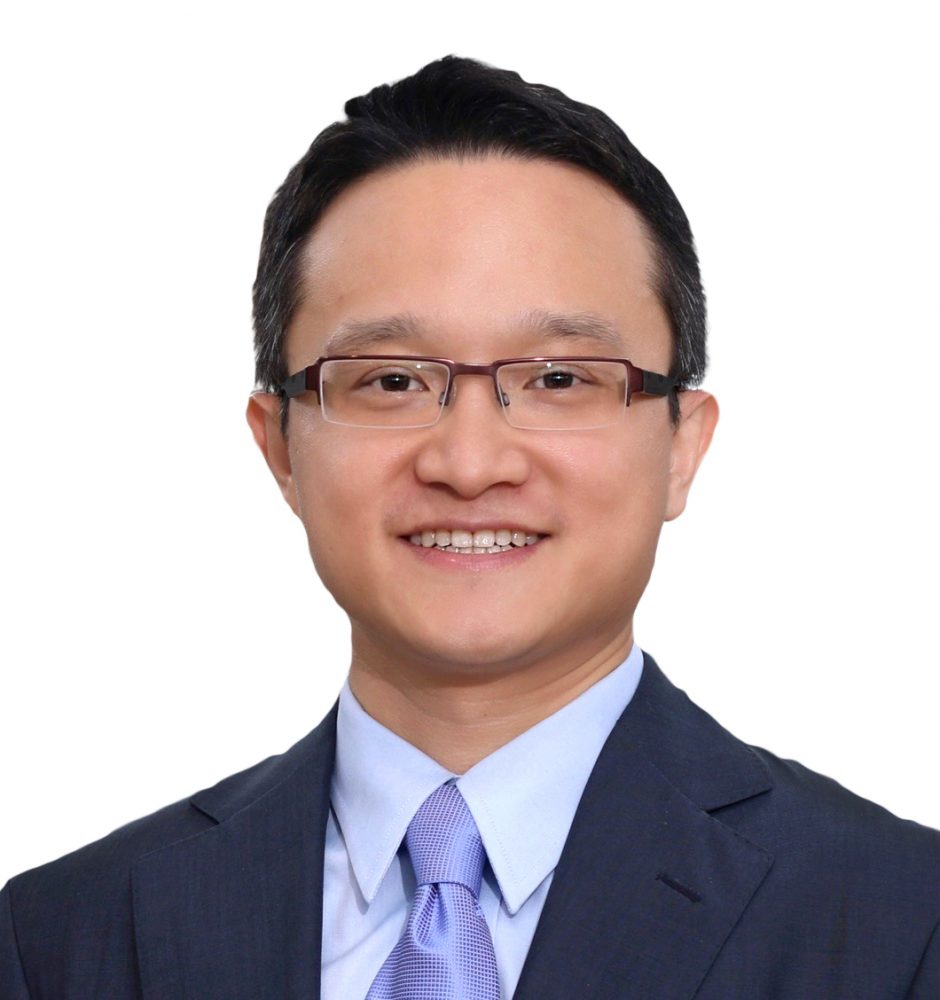
Zhixi Wan is professor in the area of Innovation and Information Management. His expertise includes supply chain management, value chain strategies, and marketplace economics and operations. His research on these topics has been published in top-tier research journals including Management Science, Operations Research, Manufacturing and Service Operations Management, Strategic Management Journal, and Production & Operations Management.
He received his Ph.D. in Operations and Management Science from the Ross School of Business at the University of Michigan, Ann Arbor. Before joining the University of Hong Kong, he was a tenured associate professor at the University of Oregon, and an assistant professor at HEC Paris and an assistant professor at the University of Illinois, Urbana-Champaign. He was on an academic leave and worked in Didichuxing, a leading ride-hailing platform firm, as DiDi Economist and the head of the company’s research center of Innovation and Operations Management.
Professor Wan obtained his Bachelor of Engineering degree from the Tsinghua University, and studied in the area of Automation Engineering (1999-2003).
- Supply Chain and Logistics Management
- Geospatial Data & Business Analytics
- Supply and Value Chain Management
- Platform Economics and Operations
- Sourcing and Procurement Strategies in Supply Chains
- Auctions and Mechanism Design
- Behavioral Operations and Experimental Studies
- Tianqin Shi, Dilip Chhajed, Zhixi Wan, and Yunchuan Liu. 2020. Distribution Channel Choice and Divisional Conflict in Remanufacturing Operations, Production and Operations Management, 29 (7), 1702-1719.
- Hao Sun, Hai Wang, and Zhixi Wan. 2019. Model and Analysis of Labor Supply for Ride-Sharing Platforms in the Presence of Sample Self-Selection and Endogeneity, Transportation Research Part B, 125, 76-93
- Guangrui Ma, Michael Lim, Ho-Yin Mak, and Zhixi Wan. 2019. Promoting Clean Technology Adoption: To Subsidize Products or Service Infrastructure? Service Science, 11 (2), 75-95
- Xing Hu, Zhixi Wan, and Nagesh Murthy. 2019. Dynamic Pricing of Limited Inventories with Product Returns, Manufacturing & Service Operations Management, 21(3): 501-518.
- Timophey Shalpegin, Svenja Sommer, and Zhixi Wan. 2017. Collaborative Prototyping of Alternative Designs Under a Target Costing Scheme, Production & Operations Management, 27 (3), 496-515.
- Shanshan Hu, Zhixi Wan, Qing Ye, and Wei Chi. 2017. Supplier Behavior in Capacity Investment Competition: An Experimental Study, Production and Operations Management, 26 (2), 273-291.
- Cuihong Li and Zhixi Wan. 2017. Supplier Competition and Cost Improvement, Management Science, 63 (8), 2460-2477.
- Zhixi Wan and Brian Wu. 2017. When Suppliers Climb the Value Chain: A Theory of Value Distribution in Vertical Relationships, Management Science, 63 (2), 477-496.
Distinguished Paper Award 2015, Business Policy and Strategy division of the Academy of Management
Strategic Management Society 2015 Best Conference Paper Prize Honorable Mention - Zhixi Wan and Damian Beil. 2014. Bid-taker Power and Supply Base Diversification, Manufacturing & Service Operations Management, 16 (2), 300-314.
M&SOM 2008 Student Paper Competition Finalist - Brian Wu, Zhixi Wan, and Daniel Levinthal. 2014. Complementary Assets As Pipes and Prisms: Innovation Incentives and Trajectory Choices, Strategic Management Journal, 35 (9), 1257-1278 (lead article).
- Zhixi Wan, Damian Beil, and Elena Katok. 2012. When Does It Pay to Delay Qualification Screening? Theory and Experiments, Management Science, 58 (11), 2057-2075.
- Zhixi Wan and Damian Beil. 2009. RFQ Auctions with Supplier Qualification Screening, Operations Research, 57 (4), 934-949.
- MBA (International) Programme Teaching Award 2021-22, HKU Business School & School of Management of Fudan University
- Second Prize of the 2018 CSAMSE Annual Conference Best Paper Award
- Distinguished Paper Award 2015, Business Policy and Strategy division of the Academy of Management
- Strategic Management Society 2015 Best Conference Paper Prize Honorable Mention
- CSAMSE Annual Conference Best Paper Honorable Mention (2012)
- M&SOM Student Paper Competition Finalist (2008)
4Feb在全球新能源汽车的补能进化史中,换电技术(battery-swapping technology)经历了一场戏剧性的重生。早在2007年,以色列公司Better Place就构想了自动化换电的蓝图,试图通过物理更换电池消除续航焦虑。2013年,美国电动车生产商特斯拉(Tesla)曾高调演示了90秒换电技术,速度完胜燃油车加油。
4 Feb 2026
教学人员
28Jan回望过去5年,全球汽车产业经历了上半场的剧变,期间的竞争主题是“能源定义汽车”,即电池技术与续航里程的竞赛。展望未来5年之下半场,其焦点无可争议将转向“演算法定义汽车”,即人工智能、大数据与算力驱动的智能驾驶技术。根据摩根士丹利的预测,到2030年,采用部分或全自动驾驶技术的车辆将创造高达 2000 亿美元的市场规模。
28 Jan 2026
教学人员
21Jan笔者上周深入剖析了香港电动汽车充电市场面临的结构性矛盾:土地资源极度稀缺且电力容量受限;依赖“堆砌硬体”的粗放式增长殊不明智。当务之急,在于构建一个根据不同场景和用户需求精准配置、异构化的充电基础设施网络:快慢并存,精准接轨。
21 Jan 2026
教学人员
14Jan电动汽车充电技术正处于一个迭代爆发期。早期的交流慢充已经进入待淘汰序列,直流快充标准已成为入门级配置。随着兆瓦级充电系统的研发推进,峰值功率甚至已触及1兆瓦的边界。但电力增容、线缆铺设、硬体采购、持续运营等成本带来的投资回报周期往往长达5至8年,在土地成本极高的香港甚至需时更久。
14 Jan 2026
教学人员
10Dec对于许多香港电动车主而言,下班后,在住所附近的停车场“兜圈”寻找一个可用的充电位,已是家常便饭;周末驱车前往商场,充电车位寥寥无几。在“一换一”计画等需求侧政策的强力驱动下,电动私家车保有量从2019年的约1.4万辆,以前所未有的速度激增至2025年9月的13.5万辆,新车销售渗透率更是攀升至惊人的71.04%。
10 Dec 2025
教学人员
1Oct2020年疫情以来,港人的消费习惯受到衝击,不得不发生转变。居家隔离迫使人们线上购物,病毒传播迫使人们减少现金的使用,包括现在政府发行消费券,都使得旧有的路径依赖强行变换轨道。而随着线下商店线上化、物流配送更加完善等基础设施建设,是否说明香港未来的电子商贸将走上畅通无阻的康莊大道?
1 Oct 2021
教学人员