




Over the past decades, research on gender bias in leader evaluations has proliferated across multiple disciplines, significantly expanding contexts, outcomes, and theoretical perspectives examined. Despite these valuable contributions, the literature remains fragmented in explaining the persistent variability in how and why gender bias manifests, from severe penalties against women leaders in certain contexts to evaluative advantages in others. To resolve these discrepancies, we shift the focus from leaders to the motivated processes driving observer evaluations. We begin with an integrative review of research, revealing that observers, ranging from supervisors and subordinates to clients and investors, are not conduits of stereotypes but active evaluators whose motives shape how they selectively appraise women leaders. Drawing on motivated cognition theory, we develop a novel motive-driven process model that identifies three core directional motives: identity protection, value alignment, and resource dependence. Using this model, we integrate the literature by highlighting individual-level and contextual antecedents of each motive and explicating how motives drive distinct selective appraisal processes. By unpacking “why” and “how” observers evaluate women leaders through motivated processes, our model also offers targeted interventions that address observer motives rather than changing women’s behaviors, underscoring a pressing need to engage various stakeholders in addressing gender bias in leader evaluations.
3917 8348
KK 1207
- Ph.D. (Management), Pennsylvania State University
- M.A. (Psychology), Seoul National University
- B.A. (English Language and Literature, Psychology), Seoul National University
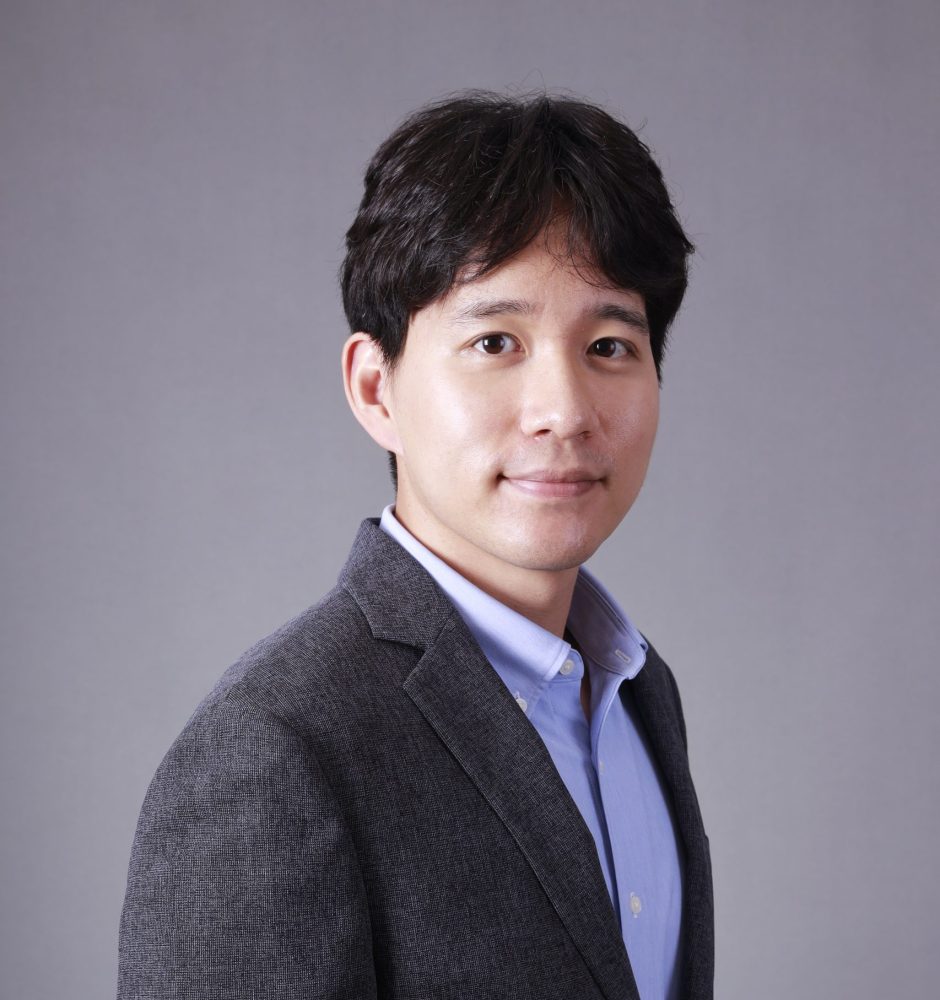
Soojin Oh is an assistant professor of management and strategy at the HKU Business School. His research mainly focuses on uncovering novel mechanisms underlying gender and racial bias in the evaluation of underrepresented leaders and founders. He received his PhD from Penn State and both MA and BA from Seoul National University.
- Diversity & Inclusion at Workplace
- Leadership
- Career Outcomes
- Oh, S., Joshi, A., & Polineni, S. (2026). An Integrative Conceptual Review of Gender Bias in Leader Evaluations: An Observer-Focused Motive-Driven Process Model. Journal of Applied Psychology, 111(6), 689-713.
- Dang, C. T., Oh, S., & Joshi, A. (2026). Can Ally Work Mobilize Voice? Male Leaders’ Ally Work on Women’s Pro‐Group Voice. Journal of Organizational Behavior, 47(1), 25-43.
- Joshi, A., Oh, S., & DesJardine, M. (2024) A New Perspective on Gender Bias in the Upper Echelons: Why Stakeholder Variability Matters. Academy of Management Review, 49(2), 322-343.
We introduce a novel stakeholder-oriented framework that highlights variance in the application and expression of gender bias in the upper echelons. Directed by their relationship with the firm’s leadership, we theorize that stakeholders’ appraisals of top female leaders map onto a categorical and complex continuum. At the “categorical” end of this continuum, stakeholders neither have access nor are attentive to capability cues from the leader, increasing their reliance on stereotypes and gender biases in their leader evaluations. At the “complex” end of the continuum, stakeholders have access and are attentive to capability cues from the leader, decreasing their reliance on stereotypes and increasing their ability to accurately evaluate the leader. Between these ends, stakeholders evaluate female leaders by applying stereotypes and striving for accuracy to varying degrees. Each region on this continuum is linked to an array of behavioral responses, directed by stakeholders toward a target leader, that differ in valence and intensity. Our framework has significant implications for understanding a variety of social biases beyond gender, and enables the development of tailored strategies that can be used to facilitate accurate leader evaluations by all stakeholders.